Azad Kashmir Faces Unrest: Protests Turn Violent, Claiming Lives
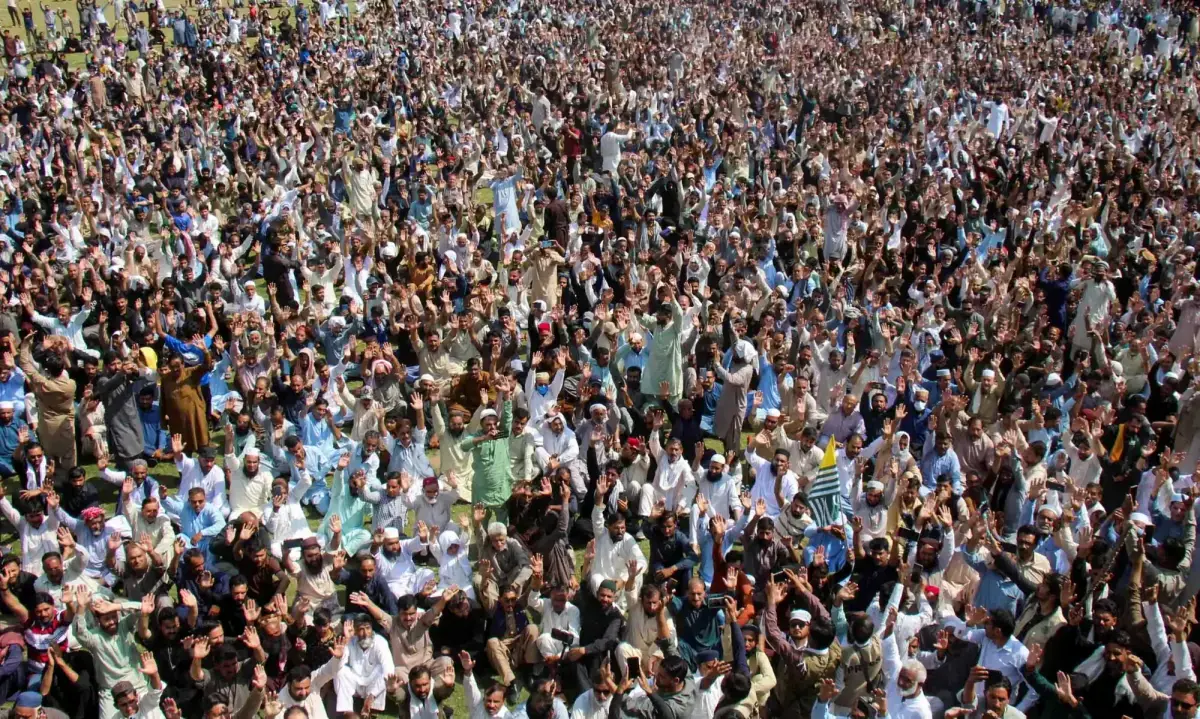
Since early June, Azad Kashmir has experienced severe disruptions to daily life as the regional administration attempts to control protests by the now-banned Joint Awami Action Committee (JAAC). This coalition of political and civil society groups has engaged in violent confrontations with security forces, resulting in approximately 30 fatalities among both security personnel and protesters since last month. Rawalakot, a central hub for the movement, has been under curfew for roughly six weeks. While many of the JAAC's demands concerning governance and economic issues have been met by authorities, a deadlock persists over its call to abolish legislative seats allocated to refugees from Indian-held Kashmir. Recent violent clashes on Tuesday led to at least nine deaths, and the JAAC initiated a 'long march' towards Muzaffarabad yesterday. The immediate priority for all involved is to restore calm, as too many lives have been lost. Although armed elements involved in attacks on law enforcement must face legal consequences, a political resolution is deemed the only viable path forward. Officials report that some JAAC activists are armed, and while the group's demands are considered pressing, armed opposition to the state is unacceptable. Authorities and the JAAC are urged to de-escalate tensions, demonstrating flexibility and engaging in dialogue rather than entrenching their positions. The administration should engage with the JAAC through political channels, acknowledging that while their methods and some demands may be contentious, attempting to suppress the group has historically proven counterproductive. The JAAC, in turn, should present its demands peacefully and recognize that constitutional matters, such as refugee representation, are best resolved through legislative processes, not street demonstrations. Political figures within Azad Kashmir and Pakistan are encouraged to facilitate a negotiated solution. PPP chief Bilawal Bhutto-Zardari has proposed a truth and reconciliation commission, while the Jamaat-i-Islami has formed a mediation jirga. The PTI has called for a multi-party conference to build consensus, especially concerning upcoming regional elections. Fair elections necessitate a peaceful environment and equitable conditions for all candidates.
The escalating violence in Azad Kashmir highlights a critical tension between state authority and citizen demands, exacerbated by the use of administrative and security measures over political engagement. The situation underscores the systemic risk of governance models that fail to integrate diverse voices, leading to polarization and conflict. As AI capabilities advance, the potential for both sophisticated state surveillance and decentralized citizen mobilization increases, making transparent and inclusive dialogue paramount for conflict prevention. Future governance frameworks must prioritize adaptive policy-making and robust communication channels to address grievances proactively, preventing the escalation from localized disputes to widespread unrest. The current impasse suggests a need for mechanisms that can bridge divides and foster trust, recognizing that long-term stability is contingent on addressing root causes of discontent through political and legislative means, rather than solely through security responses.
AI-generated to prompt reflection — not editorial opinion, not advice, not a statement of fact. How this works.