Bahia Cocoa Farmer Boosts Production with Rural Credit Support
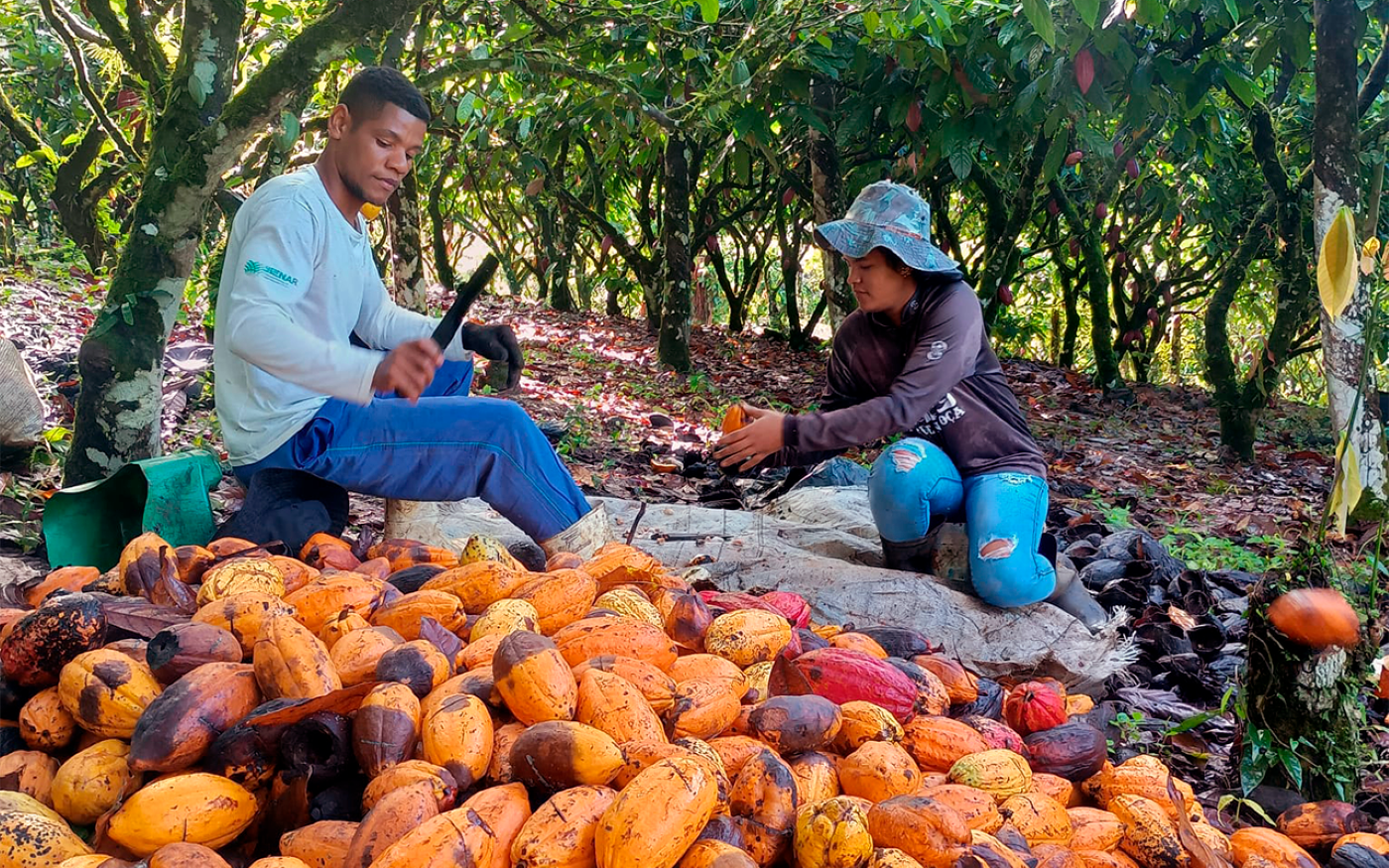
Rural credit is a key driver for Brazilian cocoa farming, enabling producers to invest in crop improvements, expand output, and enhance efficiency and sustainability through programs like Plano Safra. Brazil ranks seventh globally in cocoa production, with an estimated 9% growth to 294,000 tons between 2020 and 2025, according to IBGE. Bahia, responsible for about 70% of national cocoa output, particularly benefits from credit access. Cresol, a credit cooperative with over 1.1 million members, facilitates access to National Program for Strengthening Family Agriculture (Pronaf) lines for producers. Tiago dos Santos, a Cresol member in Ituberá, Bahia, relies on cocoa farming for his family's income, cultivating it on two hectares alongside other crops like palm hearts and guaraná. He and his wife, Sara Lima dos Santos, manage all cultivation stages, from handling to fermentation and drying, using a small solar dryer. Accessing Pronaf's credit line via Cresol was crucial for Tiago's farm maintenance and productivity. The credit allowed for two additional fertilizations, significantly increasing his yield from 60-65 arrobas per hectare to 108 arrobas. Tiago highlights Cresol's efficient and agile process for credit access, having been a member for over five years. The Plano Safra, a significant agribusiness incentive since 2003, offers various credit lines for rural properties. Tiago's story is part of a special series on Plano Safra, showcasing how producers utilize these funds. Cresol, with 31 years of history and over a million members, is a major cooperative financial institution in Brazil, offering tailored financial solutions.
The case of Tiago dos Santos illustrates how targeted financial instruments, such as the Plano Safra and Pronaf credit lines facilitated by Cresol, can directly impact agricultural productivity and farmer livelihoods. This highlights the critical role of accessible credit in modernizing and scaling agricultural operations, particularly in regions like Bahia, which is central to Brazil's cocoa industry. The cooperative model appears effective in streamlining access to these government-backed programs, suggesting potential for broader application in enhancing rural economic development. Future considerations may involve exploring how such credit mechanisms can be further optimized to promote sustainable practices and resilience against market volatility, ensuring long-term viability for smallholder farmers in the evolving global agricultural landscape.
AI-generated to prompt reflection — not editorial opinion, not advice, not a statement of fact. How this works.