Balochistan CM Claims 75 Militants Killed Since July 5 Amidst Crackdown
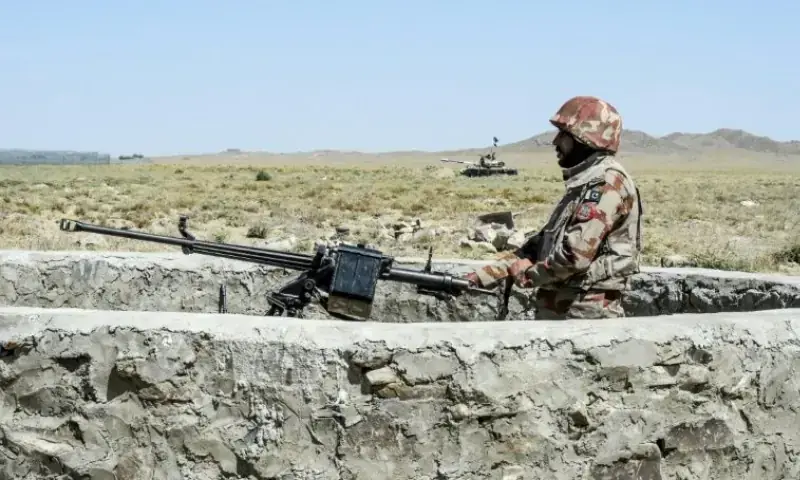
Balochistan Chief Minister Sarfraz Bugti announced on Friday that 75 "terrorists" have been eliminated in the province since July 5, following a series of intelligence-based operations. He reported that "Operation Shaban," launched after an attack on the Mangi Dam Police Station, has resulted in the deaths of 39 militants through joint ground and air efforts by the Pakistan Army, Frontier Corps, and Balochistan Police in mountainous regions. Bugti also stated that a terrorist attempt on the Zehri Police Station was thwarted. He affirmed the state's commitment to maintaining its authority in Balochistan. This comes after Prime Minister Shehbaz Sharif declared a unified civil and military decision to eradicate terrorism, following multiple significant attacks in Balochistan. During a meeting of the Provincial Apex Committee in Quetta, attended by Chief of Defence Forces Field Marshal Asim Munir, Sharif emphasized a collective approach to ending the menace. The Prime Minister's visit followed a military briefing revealing that at least 42 individuals, primarily security personnel, have died in attacks and subsequent operations since July 5. The military's spokesperson highlighted three major incidents: an attack near Quetta on July 5, an assault on a Ziarat police post on July 6, and an ambush of an army convoy in Bela. The Director General of Inter-Services Public Relations, Lt Gen Ahmed Sharif Chaudhry, warned of severe repercussions for terrorists and their supporters, also attributing the attacks to India and forces hostile to Pakistan's stability.
The Balochistan provincial government's announcement of significant militant casualties highlights an escalating security challenge and a determined state response. The coordinated messaging from the Chief Minister and Prime Minister, emphasizing a unified civil-military approach, suggests a strategic recalibration in counter-terrorism efforts. The attribution of attacks to external actors, specifically India and Afghanistan, serves to consolidate domestic support and frame the conflict within a geopolitical context. This narrative may influence regional dynamics and international perceptions of Pakistan's internal security situation. Looking ahead, the sustainability of this intensified counter-terrorism campaign will depend on addressing the underlying socio-economic and political factors that may contribute to instability in the region, alongside continued military operations and diplomatic engagement.
AI-generated to prompt reflection — not editorial opinion, not advice, not a statement of fact. How this works.