Balochistan Faces Escalating Terrorist Violence, Leaders Convene
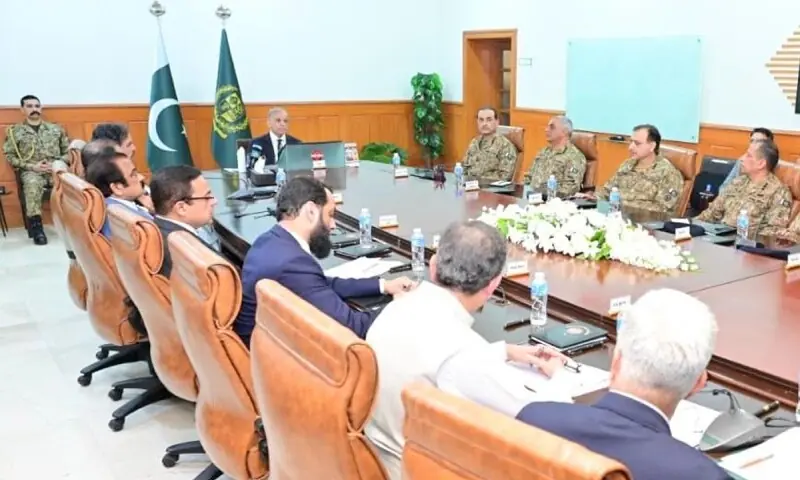
Balochistan is experiencing a significant increase in terrorist violence, leading to substantial casualties among security forces and civilians. The gravity of the situation prompted a high-level meeting in Quetta attended by Pakistan's prime minister and chief of defence forces to assess the security landscape. The chief of the Inter-Services Public Relations (ISPR) recently detailed the escalating violence, noting that since July 5, numerous security personnel and civilians have been killed. Specific incidents include four civilian deaths in Hanna Urak, at least 27 police officers in Ziarat, and 11 soldiers in Bela-Winder, with retaliatory operations resulting in the elimination of several terrorists. The ISPR attributed the Ziarat attack to the banned Tehrik-i-Taliban Pakistan (TTP) and the Bela ambush to the proscribed Baloch Liberation Army (BLA). The ISPR chief emphasized the state's resolve against terrorists and pointed to the involvement of hostile foreign forces in fueling the violence. The chief of defence forces echoed these concerns, citing "state-sponsored… hostile intelligence agencies" aiming to destabilize Pakistan. The recent spate of attacks highlights the convergence of ideologically distinct groups, the religious extremist TTP and the separatist BLA, necessitating a thorough investigation into any potential linkages and their dismantling by the state. Pakistan has indicated diplomatic responses are needed concerning alleged Indian involvement and the role of Taliban-ruled Afghanistan in supporting the TTP, noting prior actions against the Taliban and exposed Indian activities. While acknowledging the necessity of kinetic action to restore state authority and dismantle terrorist infrastructure, the report stresses that a long-term solution for Balochistan lies in a political approach. Opposition leaders and a recent multiparty meeting in Islamabad have underscored the need for a political strategy and solution. The state is urged to engage in dialogue with Baloch nationalists and other stakeholders who commit to the Constitution and non-violent means, while simultaneously addressing the province's socioeconomic disparities, which are seen as contributing factors to recruitment by terrorist groups.
The escalating violence in Balochistan, involving both religiously motivated and separatist groups, presents a complex security challenge for Pakistan. The official attribution of attacks to groups like the TTP and BLA, alongside allegations of foreign state sponsorship, points to a multifaceted conflict. Addressing this requires a dual strategy: robust kinetic action against immediate threats to re-establish state writ, and a sustained political process to tackle the underlying grievances. The socioeconomic disparities and historical political alienation in Balochistan are critical factors that, if unaddressed, can continue to fuel instability and recruitment by extremist elements. Future policy must balance security imperatives with inclusive governance and equitable development to foster lasting peace and prevent the exploitation of local discontent by external actors.
AI-generated to prompt reflection — not editorial opinion, not advice, not a statement of fact. How this works.