Bangladesh Bank Eyes Inflation-Targeting Framework for Trillion-Dollar Economy Goal
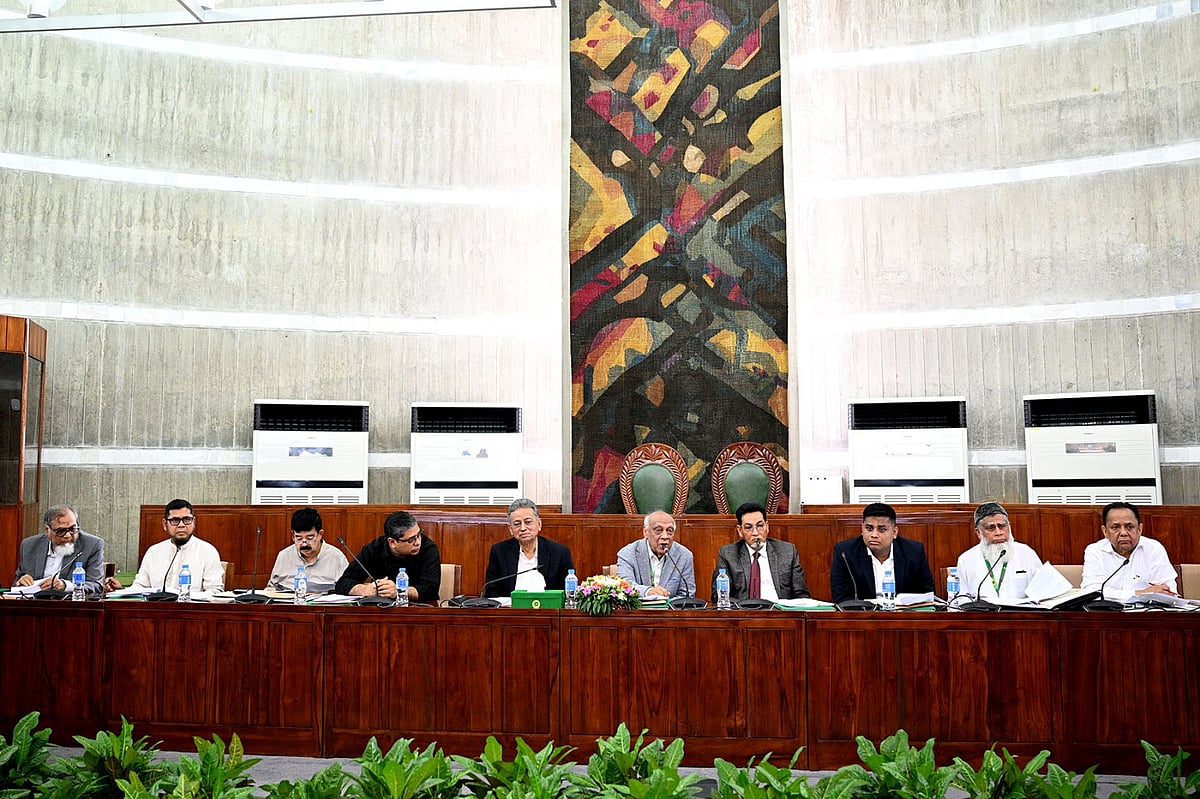
Bangladesh Bank is planning to transition from its current interest rate-based monetary policy to an inflation-targeting framework to help achieve the goal of becoming a trillion-dollar economy. This economic milestone signifies an annual Gross Domestic Product (GDP) of $1 trillion. The central bank emphasized that monetary policy plays a crucial role in this transformation. Currently, efforts to control inflation involve adjusting interest rates, but a shift is necessary for future economic growth. To facilitate this, the bank proposes developing an inflation-targeting monetary policy structure and suggests amending the Bangladesh Bank Order of 1972 to modernize and strengthen the institution. These points were detailed in a written submission by Bangladesh Bank during the first meeting of the Parliamentary Standing Committee on the Ministry of Finance, held on Sunday at the National Parliament House. Deputy Governor Habibur Rahman presented a six-page paper titled 'Bangladesh Bank and Monetary Policy' at the meeting, which was chaired by Committee Chairman Mushfiqur Rahman and attended by various members of parliament, including the Finance Minister, and senior officials from the Ministry of Finance, National Board of Revenue, and Economic Relations Division. The committee members expressed concerns about high interest rates and persistent inflation, indicating that future meetings would involve more in-depth discussions. Bangladesh Bank outlined its current monetary policy tools, including its approach to money supply, interest rates, policy instruments, and coordination with exchange rate and fiscal policies. The bank aims to maintain price stability, boost production, create employment, and ensure financial sector stability through its monetary policy. Additionally, Bangladesh Bank manages foreign exchange reserves, ensures payment system efficiency, and supervises financial institutions. The central bank has evolved its monetary policy framework since its inception, moving from direct control of financial instruments to a more market-based approach. Since July 1, 2023, a new interest rate-based framework has been in place, utilizing an interest rate corridor to manage market rates and achieve policy objectives. However, the bank acknowledges that inflation, currently above 9% for three consecutive months, remains a challenge due to international volatility, supply chain weaknesses, and high inflation expectations. The effectiveness of the government's Tk 63,000 crore stimulus package in boosting growth and employment is noted, though it may also exert inflationary pressure. An inflation-targeting framework would involve setting a specific inflation goal, with all monetary policy tools, including interest rates, directed towards achieving it, unlike the current system where interest rates are the primary tool. This transition requires central bank independence, reliable inflation forecasting, effective transmission of policy rates to market rates, and coordination between fiscal and monetary policies. A committee member also raised concerns about non-performing loans and suggested extending the one-time loan repayment deadline, advocating for single-digit interest rates to ease business operations.
The Bangladesh Bank's proposed shift towards an inflation-targeting monetary policy framework signals a strategic recalibration in response to persistent inflation and aspirations for significant economic expansion. This move acknowledges the limitations of a purely interest rate-driven approach in achieving macroeconomic stability and growth targets. By focusing on inflation as the primary objective, the central bank aims to anchor public expectations and create a more predictable economic environment conducive to investment and consumption. However, the successful implementation of such a framework hinges on several critical preconditions, including robust institutional independence for the central bank, enhanced forecasting capabilities, and effective coordination with fiscal policy. The current economic landscape, marked by global uncertainties and domestic supply-side issues, presents considerable challenges to achieving specific inflation targets. The effectiveness of this policy transition will be a key determinant of Bangladesh's trajectory towards its trillion-dollar economy goal over the next decade, requiring careful management of trade-offs between price stability, economic growth, and financial sector health.
AI-generated to prompt reflection — not editorial opinion, not advice, not a statement of fact. How this works.