Bangladesh Flooded: Daily Life Disrupted by Heavy Rains
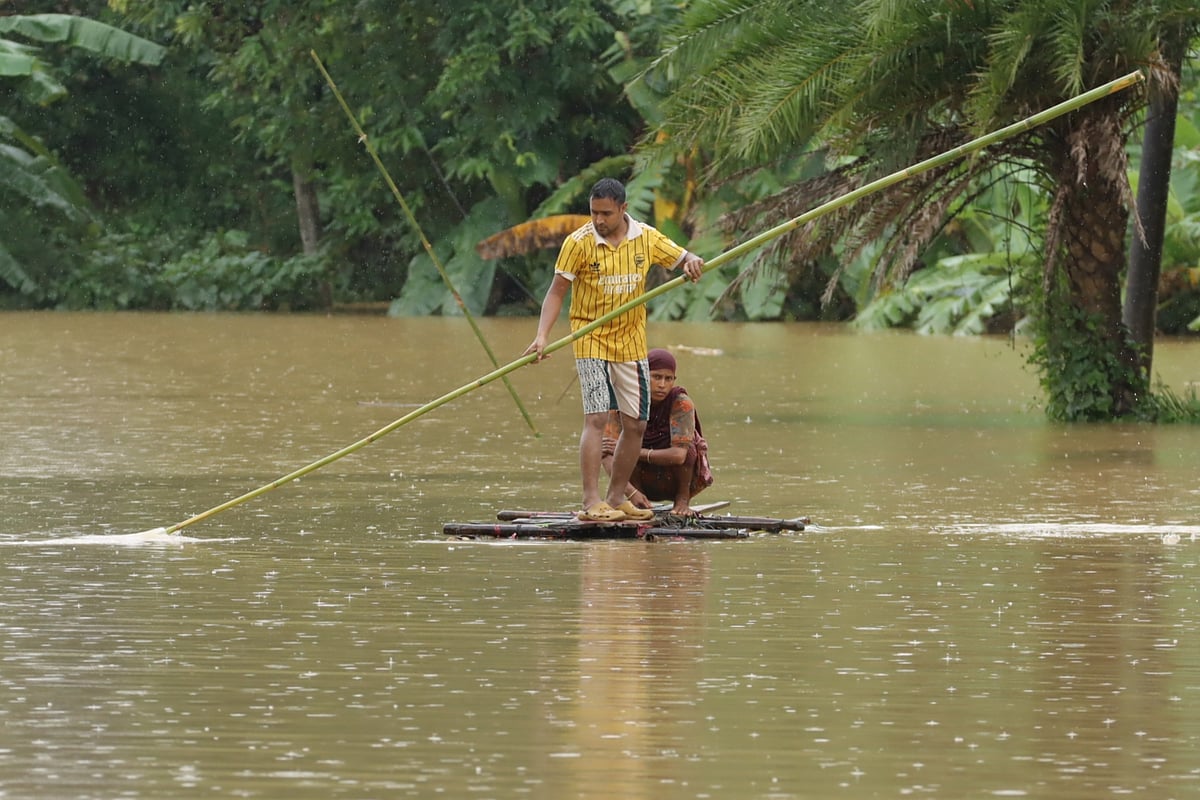
Heavy monsoon rains have caused widespread flooding across Bangladesh, disrupting daily life and damaging infrastructure. In Ramjadi, Bandarban, residents are using bamboo rafts to navigate flooded streets, with one boy seen traveling with his mother on a raft. Elsewhere, in Atipara, Daudkandi, Cumilla, a man transported two boats via rickshaw-van from Elliotganj market, likely for use in catching fish from village fields and cutting grass for livestock during the monsoon season. The Khoyai River dam breach in Hobigonj has submerged the Hobigonj-Dhuliahal-Mirpur road under two feet of water. In Chittagong, the Puichhari Union in Banshkhali Upazila is underwater. Meanwhile, in Rangpur, a farmer was seen packing bitter gourds into crates for sale. In Dighinala, Tarabunia, rural roads have been damaged by continuous rainfall. The disruption has led to unusual scenes, such as boats navigating roads in the Merung area of the Dighinala-Longdu road. Despite the adverse weather, children in Sairai Sadar Upazila, Brahmanbaria, played football in the mud. In Sreepur, Gazipur, villagers were seen netting small fish that had overflowed into low-lying areas from swollen ponds. The First আলো (Prothom Alo) newspaper's Chandpur unit organized a tree-planting event at the Chandpur Press Club for World Environment Day, attended by Managing Editor Anisul Hoque.
The recurring monsoon flooding in Bangladesh highlights the persistent vulnerability of low-lying regions to extreme weather events, exacerbated by climate change. The images depict the immediate impact on transportation, livelihoods, and community activities, underscoring the need for robust, long-term infrastructure solutions and disaster preparedness strategies. As the region faces increased climate variability, understanding the interplay between natural cycles, human settlement patterns, and adaptive capacity will be crucial for developing resilient communities over the next decade. Investments in early warning systems, climate-resilient agriculture, and improved drainage infrastructure could mitigate future disruptions.
AI-generated to prompt reflection — not editorial opinion, not advice, not a statement of fact. How this works.