Bangladesh Forest Department Installs Ropeways for Monkeys to Cross Highways
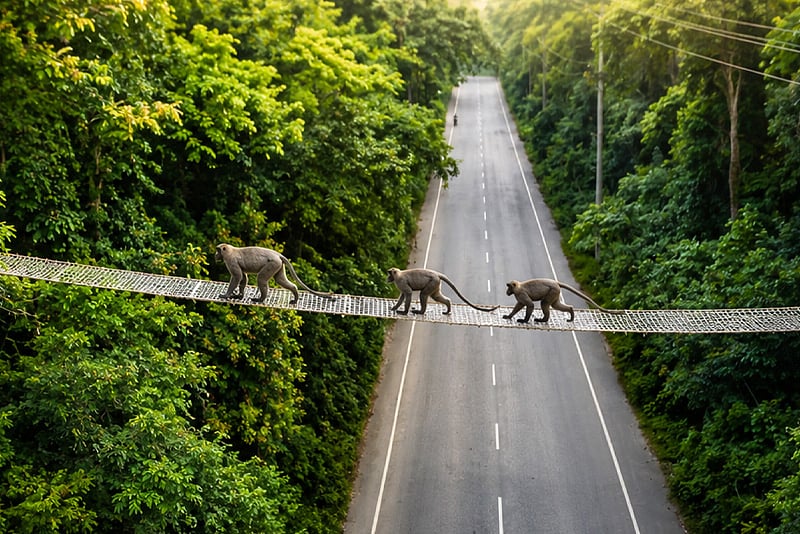
To reduce wildlife mortality, the Bangladesh Forest Department has installed five ropeways across highways in the Modhupur forest. These elevated pathways are specifically designed to aid monkeys and langurs in safely crossing the busy roads. This initiative aims to prevent animals from being hit by vehicles, a common cause of death for wildlife in the region. The ropeways provide a secure alternative route, allowing arboreal species to traverse the landscape without encountering traffic hazards. The Forest Department's innovative approach highlights a growing awareness of the need for human infrastructure to coexist with wildlife. This project is expected to significantly decrease the number of monkey and langur deaths on these routes. The success of this pilot program could lead to similar installations in other critical wildlife corridors across the country. Further details are available in a video report.
The Forest Department's installation of ropeways for arboreal wildlife represents a pragmatic adaptation to mitigate human-wildlife conflict arising from road infrastructure. This initiative addresses the direct mortality risk faced by monkeys and langurs, acknowledging the ecological impact of habitat fragmentation. By providing a safe passage, the department is attempting to balance development needs with conservation imperatives. Future considerations might include evaluating the long-term efficacy of these structures, their maintenance requirements, and potential broader applications for other species or in different geographical contexts. This approach offers a model for infrastructure projects to incorporate biodiversity considerations proactively, fostering a more sustainable coexistence between human development and natural ecosystems in the face of increasing urbanization and transportation networks.
AI-generated to prompt reflection — not editorial opinion, not advice, not a statement of fact. How this works.