Bangladesh Government Vows to Implement July Charter Reforms
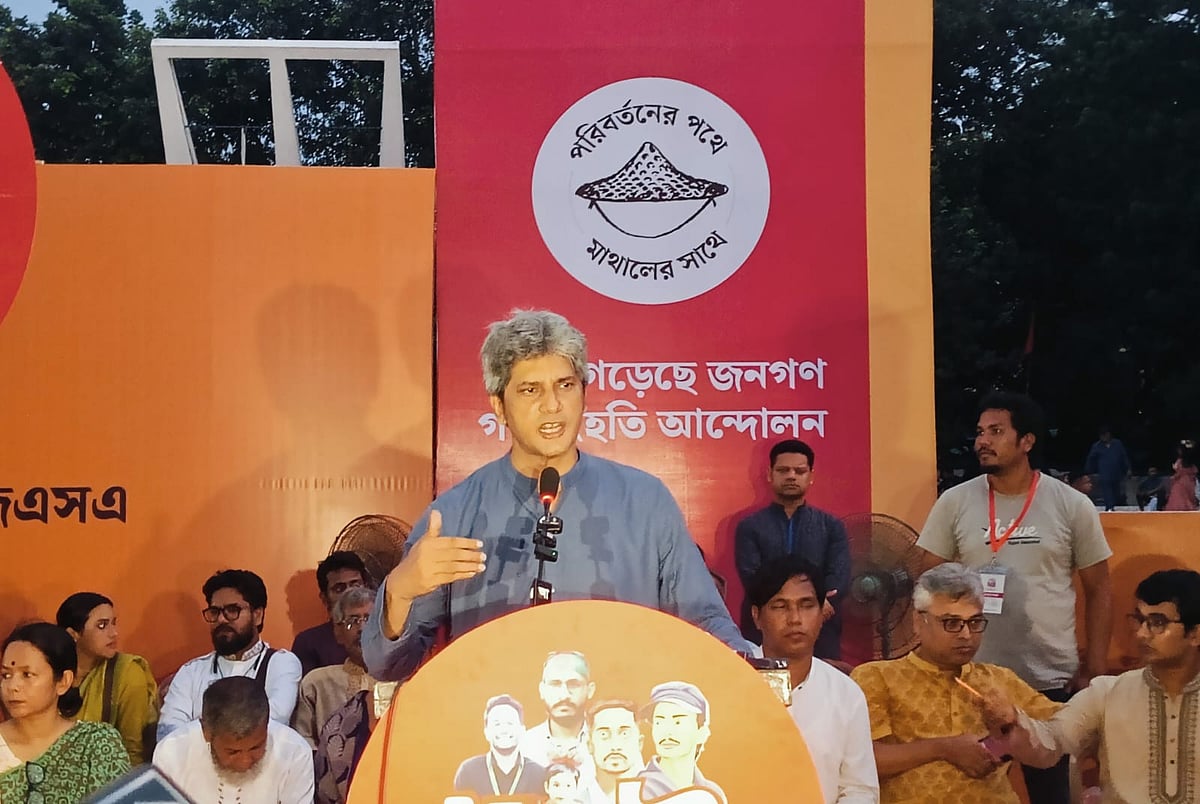
Bangladesh's Planning Minister, Junaid Saki, has pledged that the government will make every effort to implement the political and constitutional reforms outlined in the 'July National Charter,' based on the people's mandate. He stated that efforts to reform the state system would continue from within the government and parliament. Saki made these remarks while addressing the 'July Public Gathering' organized by the Gono Songhoti Andolon (GSA) at the Central Shaheed Minar in Dhaka on Friday afternoon. He announced that the first meeting of the parliamentary committee formed to achieve these reforms is scheduled for August 4th. The 'July National Charter,' which includes 31 points agreed upon by political parties, will be pursued for implementation, emphasizing that democratic transition is impossible without minimal national consensus. The 31 points encompass not only political but also economic, social, and cultural reforms aimed at creating a new direction for a Bangladesh free from inequality. The minister also warned against new forms of fascism, distinguishing them from the departed "nationalist fascism." He cautioned that new divisions are being created through religious narratives and specific interpretations, aiming to destabilize the situation by inciting mobs. However, he asserted that mob rule would not be allowed to infringe upon citizens' rights, regardless of the basis of identity. Saki highlighted the government's initiative to implement a 'One Citizen, One Number' policy to ensure dignity and equitable participation in development activities for all citizens. In response to the economic crisis, he stated that the social safety net sector is being prioritized to channel funds to ordinary people. The government aims to allocate 5% of GDP to education and health sectors, with 2% for education and 1% for health in the first phase this year, targeting full achievement within five years. He also noted that 2.8 trillion Taka were previously laundered due to the destruction of the financial sector, and policies are now being developed to restore order and attract investment. During the rally, Dewan Abdur Rashid, acting chief coordinator of Gono Songhoti Andolon, expressed that while an interim government was tasked with justice, reform, and elections, public disappointment stems from unfulfilled reform expectations. He mentioned that the demand for a police reform commission, though raised by the BNP, has not yet been established, and initiatives related to women and education reforms are stalled due to opposition.
The Bangladeshi government's commitment to implementing the 'July National Charter' signals an intent to address systemic governance issues. The emphasis on political, constitutional, economic, and social reforms suggests a broad agenda for national development. However, the success of these initiatives will hinge on navigating entrenched political interests and ensuring broad-based consensus, as democratic transitions are noted to be impossible without national unity. The government's stated focus on social safety nets, education, and health, alongside efforts to restore financial sector discipline, reflects a response to current economic pressures and past financial mismanagement. The warning against 'new fascism' and the call for citizen vigilance against mob incitement highlight the challenge of maintaining social cohesion amidst divisive narratives. The long-term effectiveness of reforms will depend on institutional capacity, transparency, and the equitable distribution of benefits, particularly in the context of evolving global economic and geopolitical landscapes over the next decade.
AI-generated to prompt reflection — not editorial opinion, not advice, not a statement of fact. How this works.