Bangladesh Jamaat-e-Islami Chief Condemns Cases Against NCP Leaders, Warns Against Fascism
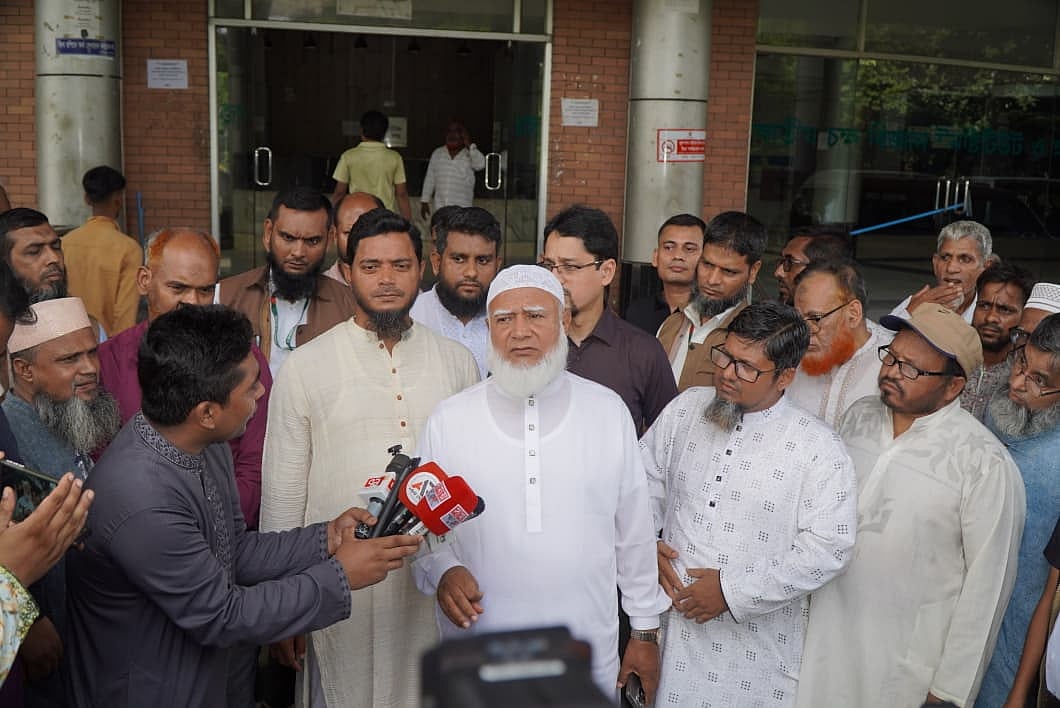
Shofiqur Rahman, leader of the opposition and chief of Bangladesh Jamaat-e-Islami, has condemned the cases filed against leaders of the National Citizens Party (NCP). He visited Alif Chowdhury, a student who sustained a severe eye injury during an attack on an NCP rally in Habiganj, at the National Institute of Ophthalmology and Hospital in Dhaka. Rahman expressed deep sympathy for Chowdhury and his family, wishing him a speedy recovery. He stated that such violence, leading to the loss of an eye, is unimaginable after the "2024 mass uprising" and called for the perpetrators to be brought to justice. Rahman warned that the nation would not accept or tolerate fascism again after overthrowing it, emphasizing that governments come and go and lessons should be learned from the past. He criticized the act of taking the law into one's own hands, suggesting that if the government becomes an aggressor rather than a protector of the law, societal order will break down. Rahman questioned why the NCP was obstructed from Habiganj to Moulvibazar despite a Section 144 being imposed in Habiganj. He also sarcastically referenced a past case against the current education minister for alleged handbag theft, implying the current charges might be politically motivated. Rahman predicted that while Alif Chowdhury, the victim, might see no action against his attackers, those falsely implicated in the counter-case would face consequences. Alif Chowdhury, an organizer for the NCP's student wing in Habiganj, is a second-year college student who underwent surgery on his left eye and is currently receiving treatment.
The events described highlight a pattern of political conflict and alleged state overreach in Bangladesh. The opposition leader's condemnation of legal actions against NCP members and his framing of the situation as a resurgence of fascism suggest a deep distrust in the ruling administration's adherence to due process and democratic norms. The reference to past politically motivated cases, such as the one against the education minister, serves to question the legitimacy of current charges and implies a potential for retaliatory or fabricated legal actions against political opponents. This dynamic points to a broader systemic issue where legal and security apparatus may be perceived as tools for political suppression rather than impartial arbiters of justice. The incident underscores the fragility of civil liberties and the potential for escalating tensions when political discourse devolves into physical confrontation and legal battles, particularly in the context of upcoming political events.
AI-generated to prompt reflection — not editorial opinion, not advice, not a statement of fact. How this works.