Bangladesh Monsoon Floods and Landslides Kill 50, Displace Thousands
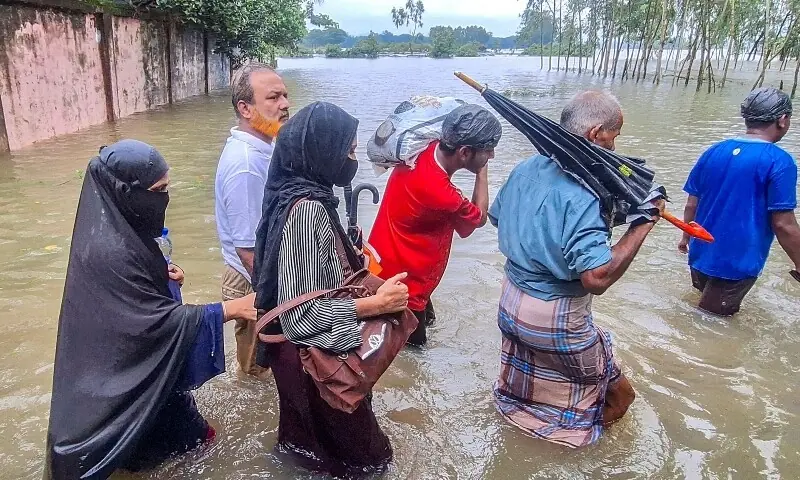
At least 50 people have died in Bangladesh over the past week due to flash floods and landslides caused by monsoon rains, with tens of thousands displaced from their homes. The low-lying nation is particularly vulnerable to such events, and scientists suggest climate change is exacerbating their frequency and intensity. Army and border guard personnel are using boats to deliver essential supplies to cut-off communities in the southeastern districts. The Chattogram district has been the hardest hit, recording 50 deaths, including 29 from landslides, and leaving two people still missing. Approximately 35,000 individuals have sought refuge in government-run shelters, while authorities have opened around 4,000 shelters for displaced residents. The crisis is compounded by shortages of food and safe drinking water, with many homes and kitchens submerged. In Cox's Bazar, heavy rains last week caused landslides in Rohingya refugee camps, resulting in 15 fatalities among the over 1.2 million refugees living in unstable hillside settlements. While the situation in the southeast may improve soon, the monsoon remains active in the northeast and north, posing a risk of further inundation. Both President Asif Ali Zardari and Prime Minister Shehbaz Sharif have offered condolences to the affected families and prayed for the recovery of the injured.
This event underscores the profound vulnerability of low-lying delta regions to extreme weather, a challenge amplified by climate change. The displacement of tens of thousands and the tragic loss of life highlight systemic issues in disaster preparedness and response, particularly in densely populated areas and refugee settlements where environmental degradation increases risk. The reliance on boat transport for aid indicates infrastructure limitations in reaching affected populations. Future resilience will depend on integrated climate adaptation strategies, including improved land-use planning, early warning systems, and robust infrastructure capable of withstanding intensified monsoon cycles. Addressing the root causes of climate change and supporting vulnerable communities in adapting to its impacts are critical for mitigating future humanitarian crises.
AI-generated to prompt reflection — not editorial opinion, not advice, not a statement of fact. How this works.