Bangladesh PM Meets Allies: Focus on Unity Amidst Political Realignment
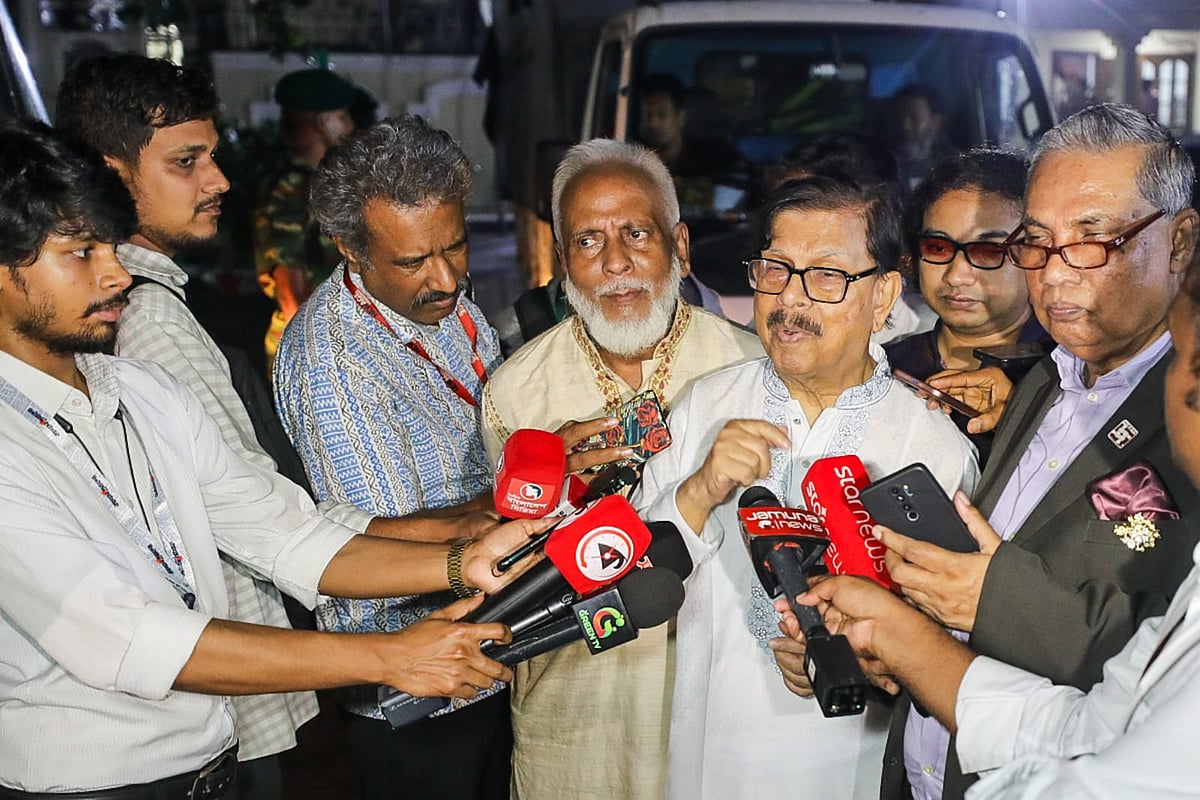
Mahmudur Rahman Manna, president of the Nagorik Oikya (Citizen's Unity) party, revealed details following a meeting with Prime Minister Sheikh Hasina at the state guesthouse Jamuna on Monday night. Manna stated that the Prime Minister's primary objective was to ensure that allied parties participating in the simultaneous movement did not distance themselves from the government. He perceived the Prime Minister's attitude as an effort to retain close associates who might otherwise drift away. Manna described the meeting as formally positive but lacking a specific agenda, with some attendees expressing interest in joining the government and others voicing concerns about their lack of involvement in current governance. Discussions also touched upon the government's performance over the past few months. The meeting involved leaders of political parties allied with the BNP in their simultaneous movement. When questioned about the opposition's strong protests, governance based on 31 points, and future plans with BNP allies, Manna clarified that while his party would observe the opposition's programs, their own reform proposals, particularly concerning judicial independence and judicial appointments, did not align with the BNP's current stance or activities. He emphasized that these specific points were not discussed in detail due to time constraints. Manna also noted that while his party is committed to the movement, they desire the government to succeed through its own merits, rather than offering assistance during crises. He expressed cautious optimism regarding the BNP Secretary General's promise of more frequent meetings with allies, hoping it would translate into concrete action.
This meeting highlights a strategic maneuver by the Prime Minister to consolidate political support by engaging with allied parties. The emphasis on preventing allies from distancing themselves suggests a focus on maintaining coalition stability, particularly in anticipation of future political developments. The lack of a formal agenda and the varied expressions of interest from attendees point to a dynamic political landscape where parties are navigating their positions relative to power and opposition. The Prime Minister's outreach can be viewed as an attempt to manage perceptions and secure broader backing, while the allies' responses reflect a complex interplay of participation demands and ideological alignment. Future political stability may depend on the government's ability to address the underlying concerns of these allied groups and bridge the gaps in their reform proposals.
AI-generated to prompt reflection — not editorial opinion, not advice, not a statement of fact. How this works.