Bangladesh President Mohammed Shahabuddin Resigns Citing Health Issues
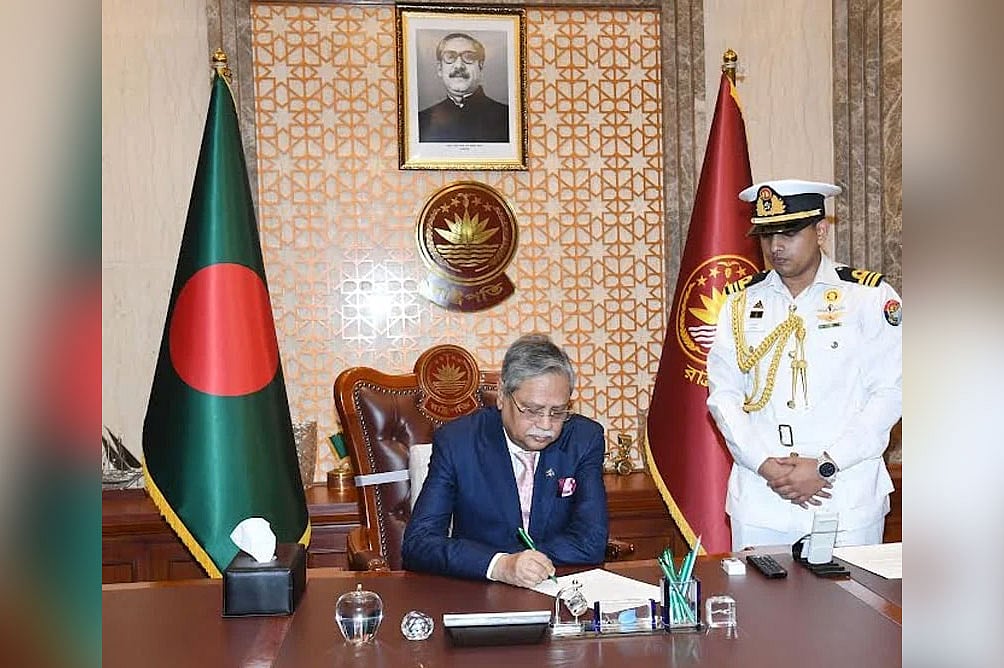
Mohammed Shahabuddin, the 22nd President of Bangladesh, has formally resigned from his post. He took the oath of office on April 24, 2023, and stated he had diligently served the nation with integrity and constitutional loyalty. His resignation comes after a period of significant political upheaval, including the July 2024 'mass uprising' that led to the ousting of the Awami League government under which he was elected. Following this uprising, student leaders had previously called for his resignation, and the presidential palace was even surrounded. Despite these demands, Shahabuddin continued to serve through the subsequent national parliamentary elections held on February 12, 2024, and the formation of the new government. In his resignation letter, submitted on Friday afternoon to Speaker Hafiz Uddin Ahmad, Shahabuddin detailed the constitutional crisis that emerged after the August 5, 2024, uprising. He explained that he had sought an advisory opinion from the Appellate Division of the Supreme Court under Article 106 of the constitution to navigate this crisis. Subsequently, acting on the court's advice, he facilitated the formation of an interim government, which then organized general elections. The current government was formed based on these election results and is now in power, with both ruling and opposition parties actively participating in parliamentary democracy. Shahabuddin asserted that his actions prevented a constitutional collapse. He cited severe health complications, including heart disease, high blood pressure, diabetes, and kidney issues, along with a history of bypass surgery and a recent diagnosis of Autonomic Neuropathy. This condition causes intermittent unconsciousness, rendering him physically and mentally unable to fulfill the demanding duties of the presidency. He indicated a need for long-term medical treatment and is resigning in accordance with Article 50(3) of the constitution.
The resignation of President Mohammed Shahabuddin, citing severe health issues following a period of significant political transition, highlights the complex interplay between constitutional roles and emergent political realities. His letter emphasizes his efforts to maintain constitutional order during a crisis, including seeking judicial counsel and facilitating interim governance and elections. This suggests a governance model where the presidency acts as a stabilizing force, leveraging legal and constitutional mechanisms to navigate societal upheaval. However, the context of his election under a government later ousted by a 'mass uprising' raises questions about the legitimacy and perceived neutrality of the presidency in deeply divided political landscapes. The described health conditions, while presented as the direct cause for resignation, also occur at a juncture where the president's symbolic and functional capacity might be scrutinized amidst ongoing political recalibration. Future leadership transitions in Bangladesh may need to consider robust mechanisms for ensuring public trust and perceived impartiality, particularly when assuming office during or after periods of significant political contestation.
AI-generated to prompt reflection — not editorial opinion, not advice, not a statement of fact. How this works.