Bangladesh President Shahabuddin Resigns Due to Health Issues
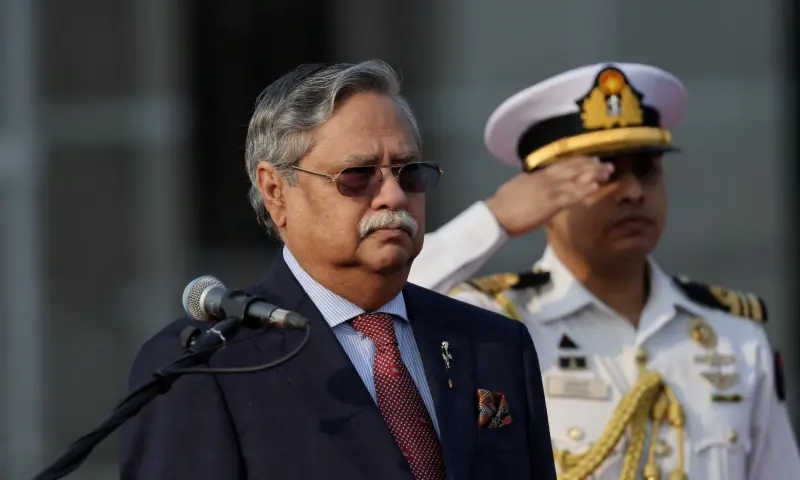
Bangladesh President Mohammed Shahabuddin, aged 76, has resigned from his largely ceremonial post, citing significant health concerns. His office announced the resignation on Friday, stating that recent medical examinations revealed a diagnosis of autonomic neuropathy, which causes occasional momentary loss of consciousness. Shahabuddin, who assumed the presidency in April 2023, expressed in his resignation letter to the speaker of the Jatiya Sangsad that his deteriorating physical and mental capacity makes it impossible to fulfill the responsibilities of the office. The speaker of the national parliament will temporarily assume presidential duties until a new president is elected. Shahabuddin, formerly an ally of ousted Prime Minister Sheikh Hasina, was elected with support from Hasina's Awami League party. His resignation comes during a turbulent period following a student-led uprising in 2024 that led to Hasina's flight to India and subsequent legal challenges for her party. Shahabuddin had previously denied allegations of speaking with Hasina while undergoing medical treatment in London in May. His departure leaves Hasina without allies in high office ahead of her anticipated return, with her party banned and many members facing legal action or in hiding.
The resignation of President Shahabuddin, attributed to health reasons, occurs amidst a significant political transition in Bangladesh following a major student-led uprising and the ousting of Prime Minister Sheikh Hasina. While the stated cause is medical, the timing, occurring shortly after Hasina's departure and with her party facing severe restrictions, invites scrutiny of the broader political landscape. The president's role, though ceremonial, is a key constitutional position. His departure, coupled with the ban on the Awami League and the jailing of its members, suggests a potential consolidation of power or a restructuring of the political order. Future governance will likely be shaped by the dynamics between emerging political forces and the lingering influence of established parties, with implications for democratic institutions and public trust in the coming decade.
AI-generated to prompt reflection — not editorial opinion, not advice, not a statement of fact. How this works.