Bangladesh Reduces Export Target for FY2026-27 to $63.4 Billion Amidst Economic Challenges
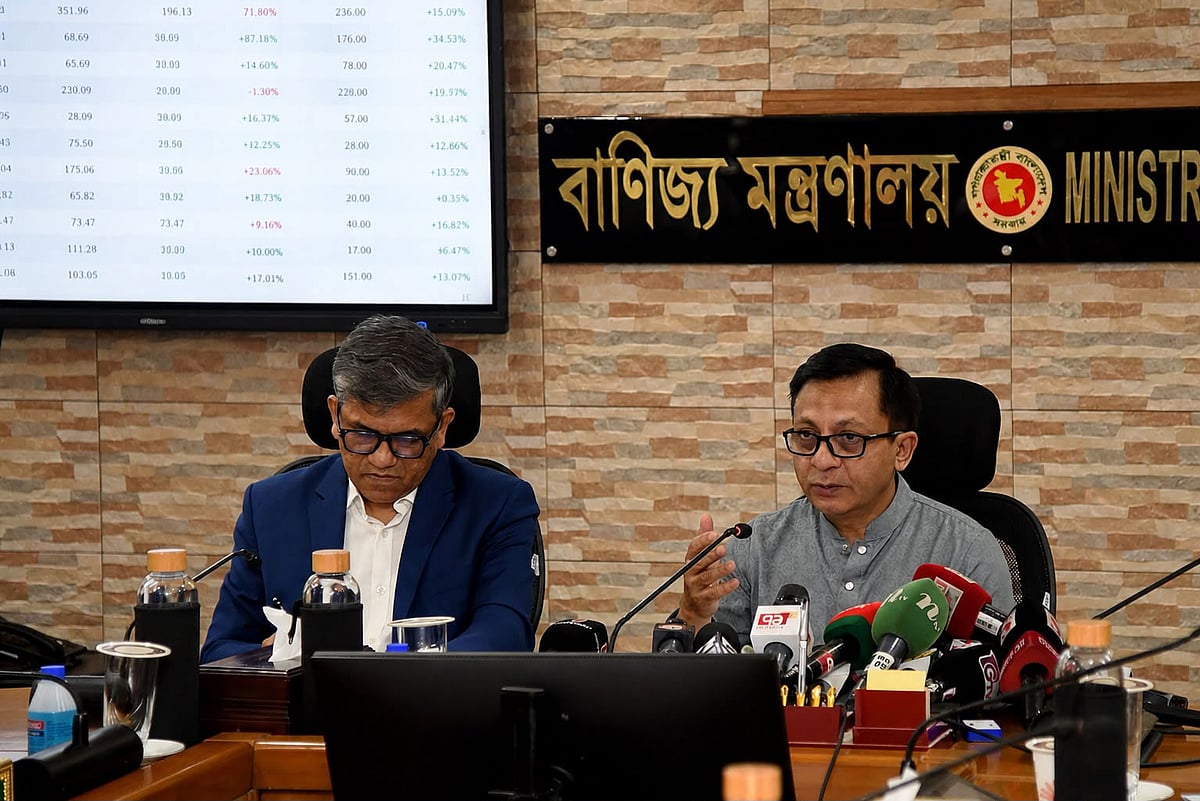
Bangladesh has set a reduced export target of $63.4 billion for the fiscal year 2026-27, a slight decrease from the previous year's goal. The new target comprises $55.2 billion from the product sector and $8.2 billion from the service sector. This announcement was made by Commerce Minister Khondaker Abdul Muktadir after a meeting at the secretariat, attended by Commerce Secretary Md. Ataur Rahman Khan, EPB Vice Chairman Mohammad Hasan Arif, and leaders of major export sector organizations. The target for the outgoing fiscal year 2025-26 was $63.5 billion, with $55 billion for products and $8.5 billion for services. Despite the reduction, the minister expressed optimism that the target would be achieved through a conducive business environment, ease of doing business, and bilateral cooperation with export destination countries. He acknowledged that the previous fiscal year's target was not met in reality, with product exports declining by 15% to $48 billion, while service exports reached $7 billion, though final figures for services are still pending. The minister attributed the recent export slowdown to reduced consumption in developed countries due to global conflicts, leading to negative growth. To address this, Bangladesh plans to sign Free Trade Agreements (FTAs) with countries including South Korea and initiate discussions for an FTA with the European Union. Recognizing the over-reliance on the garment sector, which accounts for 85% of export earnings, the government is focusing on diversifying exports to other promising sectors, with specific initiatives to be revealed soon. The minister envisions a future where Bangladesh achieves $80 billion from garments and a total of $100 billion in exports through diversified sectors. He believes policy stability, business-friendly reforms, new FTAs, and increased buyer confidence will enable the achievement of future export goals. Regarding US tariffs, the minister stated that changes in tariff names would not affect the existing 10% rate, thus posing no new negative impact on exports. On the energy crisis, he noted that domestic gas production cannot be increased and the country is importing 900-950 million cubic feet of LNG, with no immediate improvement expected. The Economic Partnership Agreement (EPA) with Japan will be presented in the upcoming parliamentary session for ratification and subsequent implementation.
The recalibration of Bangladesh's export target reflects a pragmatic response to global economic headwinds and domestic challenges, moving away from potentially aspirational figures towards more achievable goals. The acknowledged slowdown, linked to international conflicts impacting consumer demand in key markets, highlights the vulnerability of export-dependent economies to geopolitical instability. The strategic push for export diversification beyond the dominant garment sector, coupled with the pursuit of Free Trade Agreements with major economic blocs like the EU and countries like South Korea and Japan, signals a forward-looking approach to mitigate risks and unlock new growth avenues. However, the persistent energy supply constraints, as indicated by the minister, represent a critical infrastructure bottleneck that could impede the realization of these diversification and growth ambitions. Future success will likely hinge on effectively addressing these systemic issues alongside leveraging new trade agreements and fostering a robust domestic business environment.
AI-generated to prompt reflection — not editorial opinion, not advice, not a statement of fact. How this works.