Bangladesh Remains Second in US Apparel Exports Despite Decline; Vietnam Leads
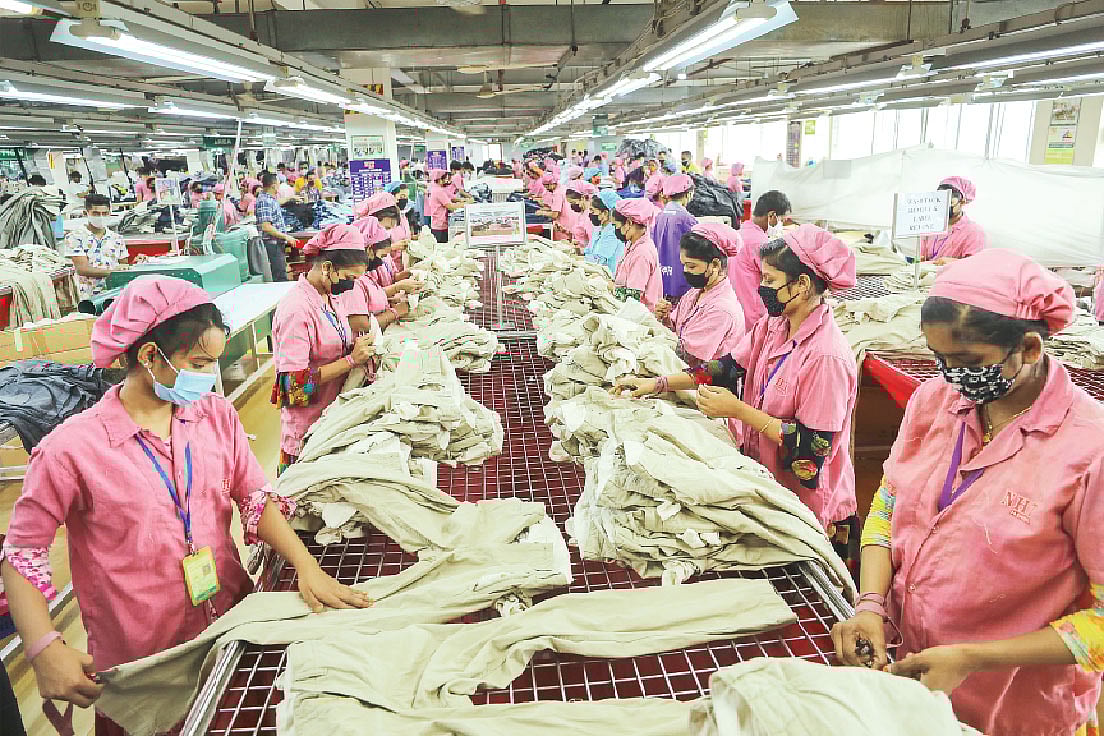
In the first five months of the current year (January-May), Bangladesh maintained its position as the second-largest exporter of ready-made garments to the United States, although its exports saw a decrease. In contrast, Vietnam, the top exporter, experienced an increase in its shipments.
According to data from the U.S. Office of Textile and Apparel (Otexa), Bangladesh exported $3.25 billion worth of garments during this period, an 8.1% decline compared to the same period last year. This decrease is slightly less than the overall contraction in the U.S. apparel import market, suggesting that reduced demand is the primary driver of Bangladesh's export drop. Vietnam, however, strengthened its lead, exporting $6.39 billion worth of garments, a 1.5% increase year-on-year.
Overall U.S. apparel imports fell by 9.25% to $28.77 billion in January-May, down from $31.71 billion in the previous year. Mohammad Hatem, President of the Bangladesh Knitwear Manufacturers and Exporters Association (BKMEA), noted that while demand in the U.S. market is slightly improving, it has not fully recovered, limiting immediate export growth prospects. He also pointed to ongoing U.S. investigations into various countries, including Bangladesh, which could lead to new tariffs and make buyers more cautious with new orders. Effective government action is needed regarding these investigations, he stated.
China, a long-time top supplier, is losing market share significantly, with exports dropping by 42.75% to $2.80 billion in the first five months, attributed to geopolitical factors and retaliatory tariffs. Indonesia and Cambodia have benefited from China's decline, with their exports rising by 5.49% and 14.9% respectively. India's apparel exports decreased by 26.37% to $1.79 billion, causing it to drop from fourth to fifth place, with Indonesia now holding the fourth position and Cambodia sixth.
While overall demand was low early in the year, May showed a positive trend with a 2.77% increase in U.S. imports and a nearly 6% rise in Bangladesh's garment exports for that month. However, other competitors like China, Indonesia, and Cambodia saw higher export growth rates in May. Regarding unit prices, Bangladesh's average unit price was $2.99, slightly lower than the global average of $3.14, and lower than competitors like Vietnam ($3.39) and Indonesia ($3.77), but higher than China ($1.43) and Pakistan ($2.59).
Bangladesh's sustained second-place ranking in the U.S. apparel market, despite a recent export decline, highlights the complex interplay of global demand, geopolitical factors, and competitive dynamics. While reduced U.S. demand explains some of the downturn, the increasing strength of competitors like Vietnam and the strategic shifts away from China suggest a broader market recalibration. Potential new tariffs stemming from U.S. investigations introduce significant uncertainty, impacting buyer confidence and future order volumes. For Bangladesh to maintain and grow its market share, it must navigate these trade policy risks while focusing on competitive pricing and potentially diversifying its export destinations. The long-term outlook will depend on adapting to evolving trade landscapes and addressing any identified compliance issues that could affect market access.
AI-generated to prompt reflection — not editorial opinion, not advice, not a statement of fact. How this works.