Bangladesh's 'Bangla QR' Sees Over $200 Million in Transactions in Two Days
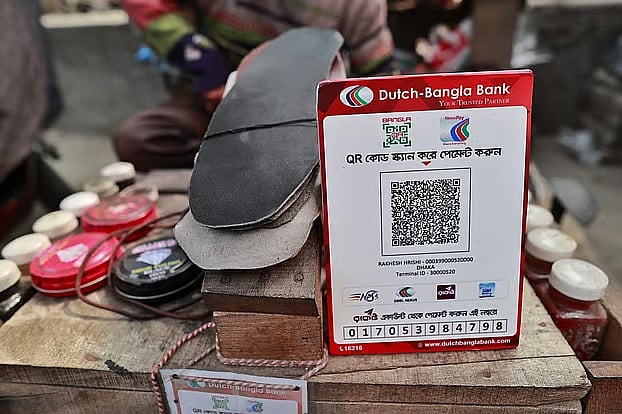
Bangladesh Bank has mandated the use of 'Bangla QR' (Quick Response) codes to simplify, reduce costs, and universalize the nation's digital transaction system. Over the two-day period of June 30 and July 1, transactions totaling 220 million Bangladeshi Taka (approximately $200 million USD) were conducted using Bangla QR codes. During this period, 77,165 transactions were completed for the purchase of goods and services via Bangla QR. The pilot project for Bangla QR was launched on January 18, 2023, in Motijheel, Dhaka. By November 1, 2025, 46 banks, 7 Mobile Financial Services (MFS), and 4 Payment Service Providers (PSPs) had joined the Bangla QR service, with 963,000 merchants adopting the system. Instant inter-transaction services among all banks, PSPs, Payment Service Operators (PSOs), and MFS providers commenced on November 1, 2025, with Bangla QR becoming mandatory from the following Wednesday. Leading QR code providers include bKash with approximately 900,000, Nagad with 450,000, and Dutch-Bangla Bank (including Rocket) with 270,000. Other banks like Pubali Bank, Islami Bank, Sonali Bank, Mutual Trust Bank, and City Bank also have significant numbers of QR codes now converted to Bangla QR. This initiative follows similar successful digital transaction systems in countries like China, Estonia, and India, promoting a simpler and more transparent cashless economy. Future plans include making Bangla QR mandatory for all government service financial transactions and enabling transactions via Bangla QR without internet access.
The mandatory adoption of Bangla QR by Bangladesh Bank signifies a strategic push towards a more inclusive and efficient digital payment infrastructure, mirroring global trends seen in countries like China and India. This policy aims to consolidate fragmented QR systems into a unified national standard, potentially reducing transaction friction and enhancing transparency. The rapid transaction volume in the initial two days suggests strong underlying demand for digital payments. However, the success of this mandate will depend on continued merchant and consumer adoption, robust security measures, and the seamless integration of diverse financial service providers. Future plans for offline capabilities and integration with government services could further accelerate financial inclusion, but require significant technological development and widespread accessibility.
AI-generated to prompt reflection — not editorial opinion, not advice, not a statement of fact. How this works.