Bangladesh's Barind region farmers rely on tube wells for Aman rice cultivation due to low rainfall
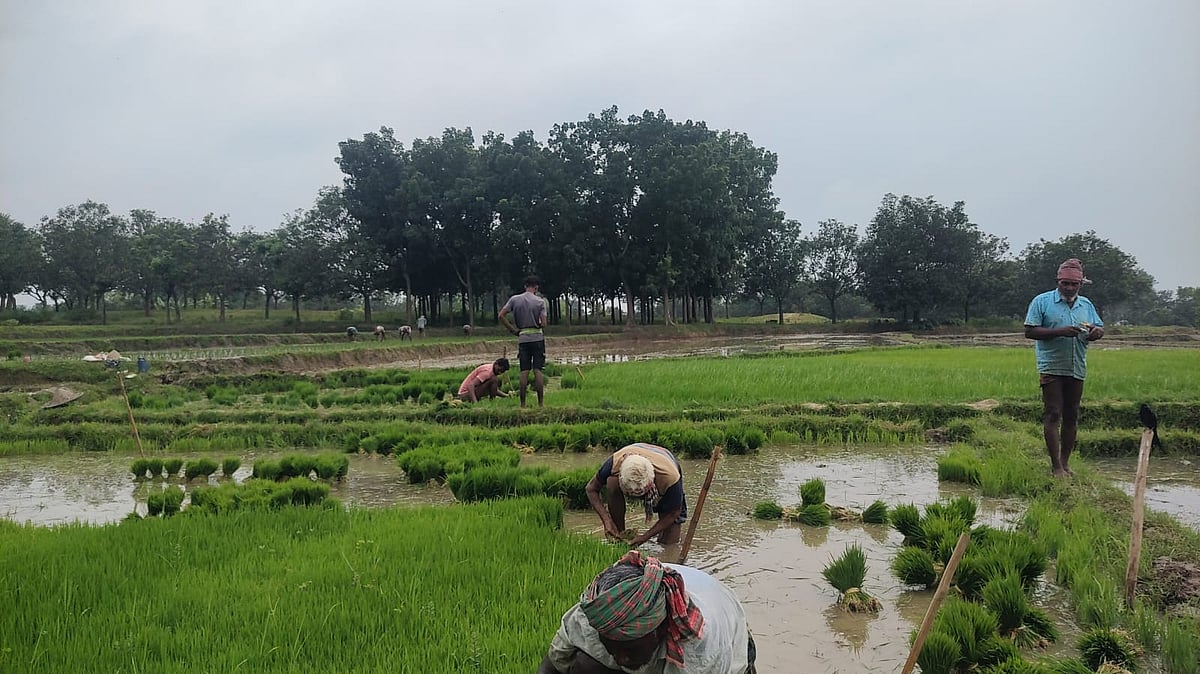
Farmers in the Barind region of Bangladesh are increasingly dependent on deep tube wells for irrigating their Aman rice crops, as rainfall has become insufficient during the monsoon season. The months of Asharh and the first five days of Srabon have passed without the usual heavy rains, forcing farmers to use irrigation systems even in fields that should be naturally flooded. This trend has been observed by farmers in Chapainawabganj for several years, indicating a significant impact of climate change on agricultural practices. Farmers like Mohammad Nasim from Chapainawabganj Sadar Upazila report that their Aman cultivation now requires tube well water annually, a stark contrast to previous years when planting would be substantially completed by the end of Asharh. This year, even by the fifth day of Srabon, less than 10% of his land was cultivated. Another farmer, Monirul Islam from Nachol Upazila, had to irrigate six out of his ten bighas of land, incurring significant costs for irrigation, labor, and seedlings. He expressed concerns about rising cultivation expenses not being matched by increased paddy prices and uncertainty about selling at government-set rates, questioning the profitability of rice farming. Data from the District Agricultural Extension Department in Chapainawabganj confirms a consistent decrease in average rainfall during June, July, and August over the past six years, directly affecting Aman cultivation. Md. Atiqul Islam, Deputy Director of the Agricultural Extension Department in Chapainawabganj, stated that rainfall has been below normal this year, necessitating increased irrigation. The district aims to cultivate 53,800 hectares of Aman rice, with 2,490 hectares cultivated as of Monday.
The shift towards artificial irrigation for Aman rice cultivation in Bangladesh's Barind region highlights the growing vulnerability of rain-fed agriculture to climate change. This reliance on deep tube wells, while ensuring crop survival, introduces new economic pressures on farmers due to increased energy and operational costs. The observed trend suggests a potential systemic challenge where traditional agricultural calendars and practices are becoming misaligned with actual weather patterns. This could lead to a future where food security is increasingly tied to energy infrastructure and governmental subsidies for irrigation, potentially exacerbating existing rural economic disparities. Farmers' concerns about profitability and government procurement prices underscore the need for adaptive strategies that consider both environmental shifts and market economics.
AI-generated to prompt reflection — not editorial opinion, not advice, not a statement of fact. How this works.