Bangladesh's Barrage Projects: A Mirage of Water Security?
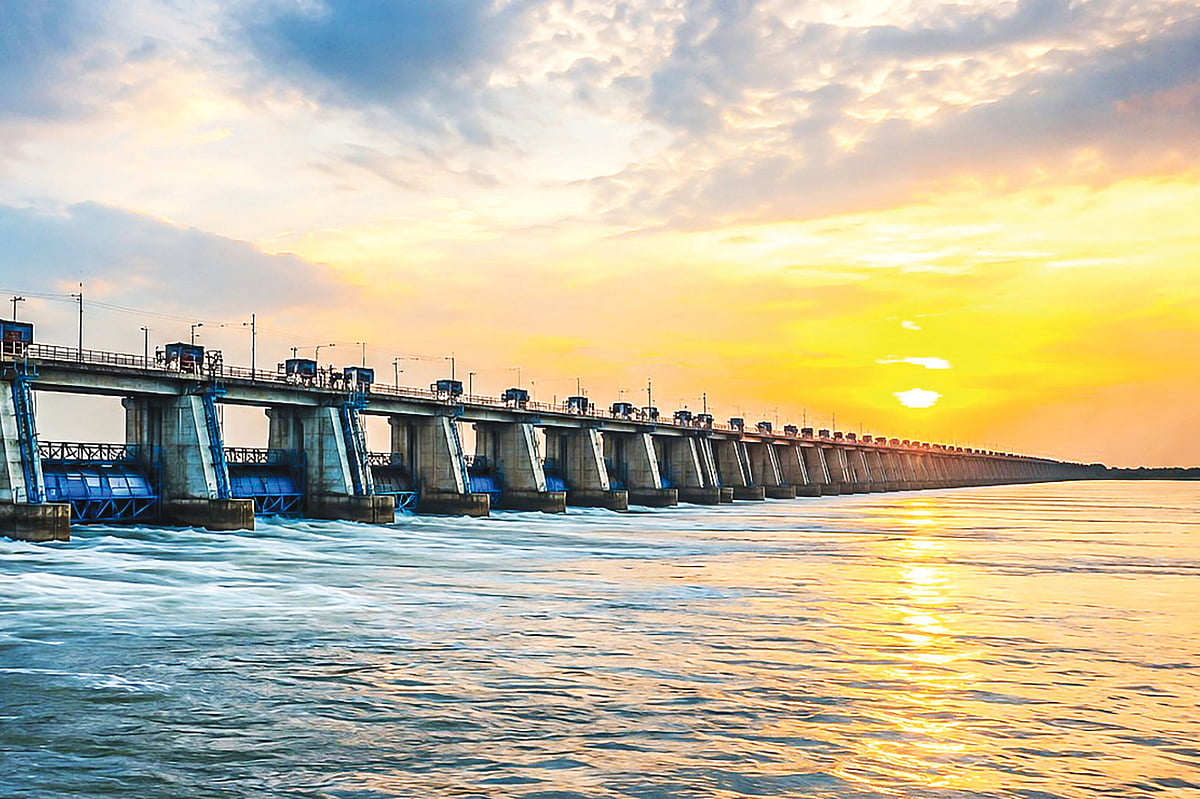
Recent discussions in Bangladesh surrounding proposed barrage projects, particularly the Ganges (Padma) Barrage, have raised concerns about their true effectiveness and potential negative impacts. Government officials and proponents suggest these barrages will capture monsoon flows for dry-season use, a claim questioned by experts. A feasibility report for the Ganges Barrage indicates it could store 289 million cubic meters of water, a mere 1.04% of the monsoon flow. This stored water, if used alone, would be depleted in just 7.5 days, suggesting that water supply to canals and pumps would primarily rely on current river flow, not stored reserves. The report also projects that the barrage would divert approximately 45% of the dry-season Ganges flow away from downstream areas in Bangladesh, mirroring the situation caused by India's Farakka and Ghazaldoba barrages. This diversion would lead to a significant reduction in dry-season water availability in downstream rivers, exacerbating seasonal flow variations, increasing salinity in the Barisal region and Meghna estuary, and potentially hindering delta formation. The article draws parallels with the Teesta Barrage, noting that despite its existence, the Teesta River faces water scarcity in the dry season. Furthermore, the article contrasts barrages with dams, highlighting the Kaptai Dam's reservoir capacity, which is significantly larger relative to its river's flow compared to the proposed Ganges Barrage. Even the Kaptai Dam's effectiveness is diminishing due to siltation, illustrating the long-term challenges of water storage and management. The author concludes that the promise of seasonal water redistribution through barrages is a mirage, with existing projects like Farakka and Ghazaldoba serving as cautionary tales of downstream impacts.
The analysis of Bangladesh's proposed barrage projects reveals a potential disconnect between stated objectives and hydrological realities. The narrative of capturing monsoon water for dry-season use, as promoted by government bodies, appears to be undermined by the limited storage capacity relative to total river flow. This suggests that the primary function might be flow diversion rather than substantial water storage, a dynamic that has historically led to downstream water scarcity, as evidenced by the Farakka and Ghazaldoba barrages. The article's critique highlights the importance of considering downstream impacts and the long-term sustainability of such infrastructure, particularly in the context of climate change and increasing water stress. Future water management strategies may need to prioritize integrated basin-wide planning and explore more robust storage solutions beyond simple barrages to ensure equitable water distribution and environmental integrity.
AI-generated to prompt reflection — not editorial opinion, not advice, not a statement of fact. How this works.