Bangladesh Seeks 3-Year Extension for LDC Graduation
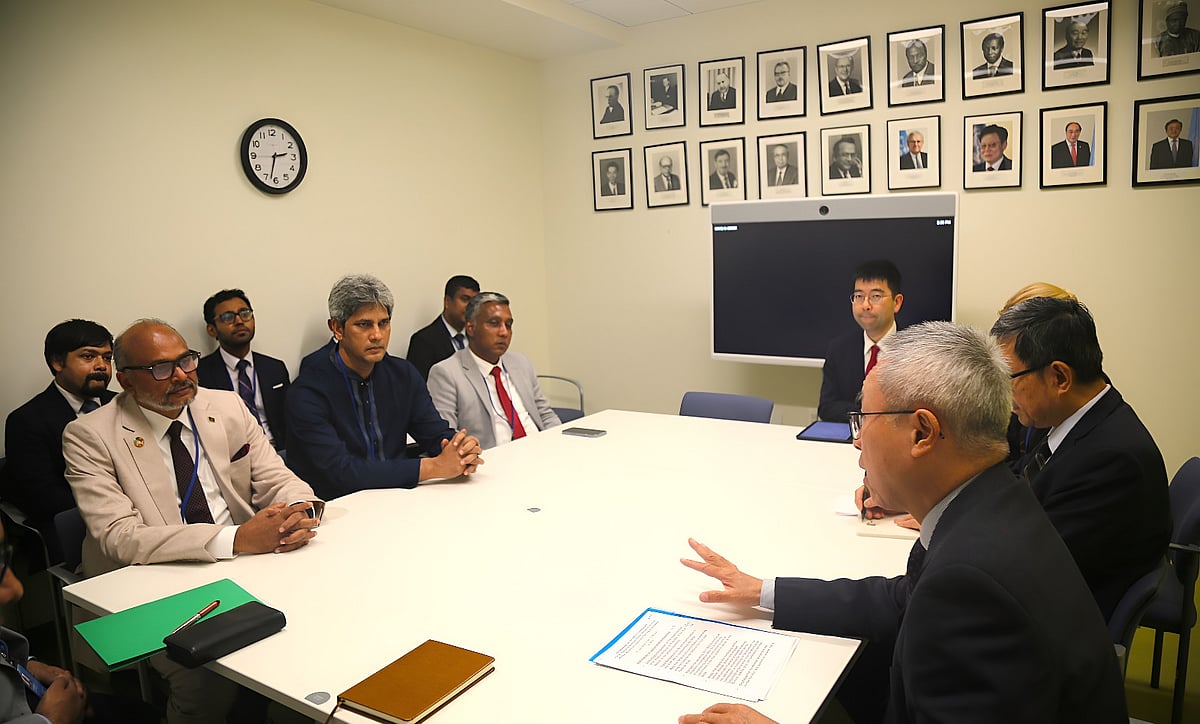
Bangladesh has formally requested a three-year extension for its graduation from Least Developed Country (LDC) status, seeking to extend the transition period until November 2029. The request was made by Prime Minister's Economic and Planning Advisor, Rashed Al Mahmud Titumir, during meetings at the UN Headquarters in New York. Titumir met with UN Under-Secretary-General for Economic and Social Affairs, Li Junhua, and other high-ranking UN officials, including Armida Salsiah Alisjahbana, Executive Secretary of the UN Economic and Social Commission for Asia and the Pacific (UN-ESCAP), and Kanni Wignaraja, Regional Director for the Asia and Pacific Bureau of UNDP. The primary reasons cited for the extension include ensuring macroeconomic stability, effectively implementing a smooth transition strategy, and guaranteeing a sustainable and irreversible graduation. Titumir emphasized that this additional time is a strategic necessity for consolidating institutional reforms, strengthening accountable governance, and advancing pro-people development programs, especially following the recent national election. He also highlighted the need for continued international support for LDCs facing unprecedented political, economic, environmental, and global shocks. The advisor presented five priority areas for urgent action, including increased concessional financing, investment in education, health, and infrastructure, and reforms to the international financial architecture to address debt risks and improve access to finance. Furthermore, he called for market access expansion for LDCs and enhanced cooperation in technology transfer and digital transformation to bridge the digital divide and accelerate sustainable development.
The request for an extended transition period from LDC status reflects a common challenge faced by developing nations navigating complex global economic shifts and domestic reform agendas. While the stated goals of ensuring macroeconomic stability and sustainable development are valid, the extension highlights the persistent structural vulnerabilities and external shocks impacting these economies. The appeal for increased concessional financing and market access underscores systemic issues within the international financial and trade architecture, which may require more fundamental reforms than incremental adjustments. Looking ahead, the ability of nations to achieve sustainable development goals will increasingly depend on their capacity to foster domestic innovation, build resilient infrastructure, and adapt to technological advancements, particularly in the context of climate change and digital transformation. The effectiveness of such extensions hinges on leveraging the additional time to implement robust, long-term strategies that address these underlying challenges, rather than merely deferring graduation.
AI-generated to prompt reflection — not editorial opinion, not advice, not a statement of fact. How this works.