Bangladesh Seeks Enhanced Japanese Cooperation in Human Resources and Investment
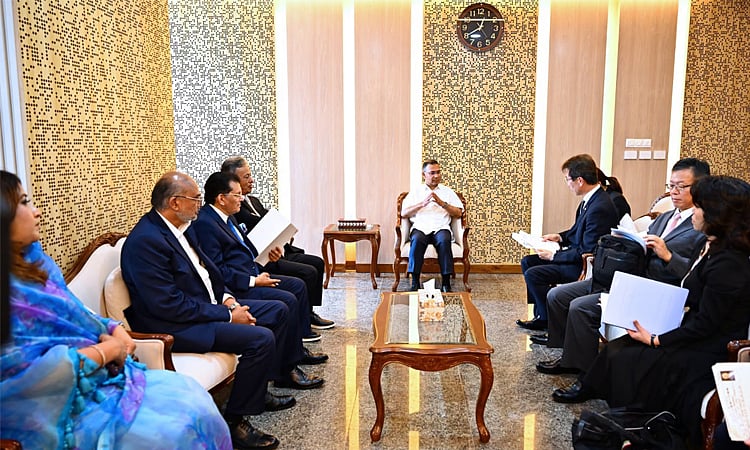
Prime Minister Tareque Rahman has requested increased Japanese cooperation in various sectors, particularly in human resource development and skill enhancement. He urged Japan to initiate efforts for recruiting skilled healthcare workers, agricultural laborers, and drivers from Bangladesh. This appeal was made during a courtesy meeting with Mr. Uno Yoshimasa, Special Advisor to the Prime Minister of Japan, at the Prime Minister's Office in the Bangladesh Secretariat on Tuesday. The discussions focused on strengthening the strategic partnership between Bangladesh and Japan and elevating bilateral relations to new heights. Prime Minister Rahman also encouraged greater investment by Japanese companies in Bangladesh and offered full government support for establishing additional industrial parks, similar to the one in Arai Hazar, Narayanganj. Both nations agreed to collaborate on expanding trade and economic cooperation. The meeting also covered infrastructure development, including the upcoming inauguration of the third terminal at Shahjalal International Airport on December 16 and the progress of the ongoing Mass Rapid Transit (MRT) project. Several ministers and advisors from Bangladesh attended, alongside Japanese officials including Assistant Vice-Minister for International Aviation Affairs, Nakayama Ryeko, and the Japanese Ambassador to Bangladesh, Saida Shinichi.
This engagement highlights Bangladesh's strategic focus on leveraging international partnerships for economic development, particularly in human capital export and attracting foreign direct investment. The emphasis on skilled labor recruitment and industrial park development signals a policy aimed at maximizing comparative advantages in a globalized economy. From a forward-looking perspective, such bilateral efforts, when structured with clear governance and mutual benefit, can foster sustainable growth. However, ensuring that these initiatives align with long-term national development goals and labor standards will be crucial. The success of these collaborations will depend on robust implementation frameworks that address potential skill mismatches and ensure fair labor practices, thereby contributing to both nations' economic resilience in the coming decade.
AI-generated to prompt reflection — not editorial opinion, not advice, not a statement of fact. How this works.