Bangladesh Textile Mills Association Demands Increased Cash Support, Tax Reforms
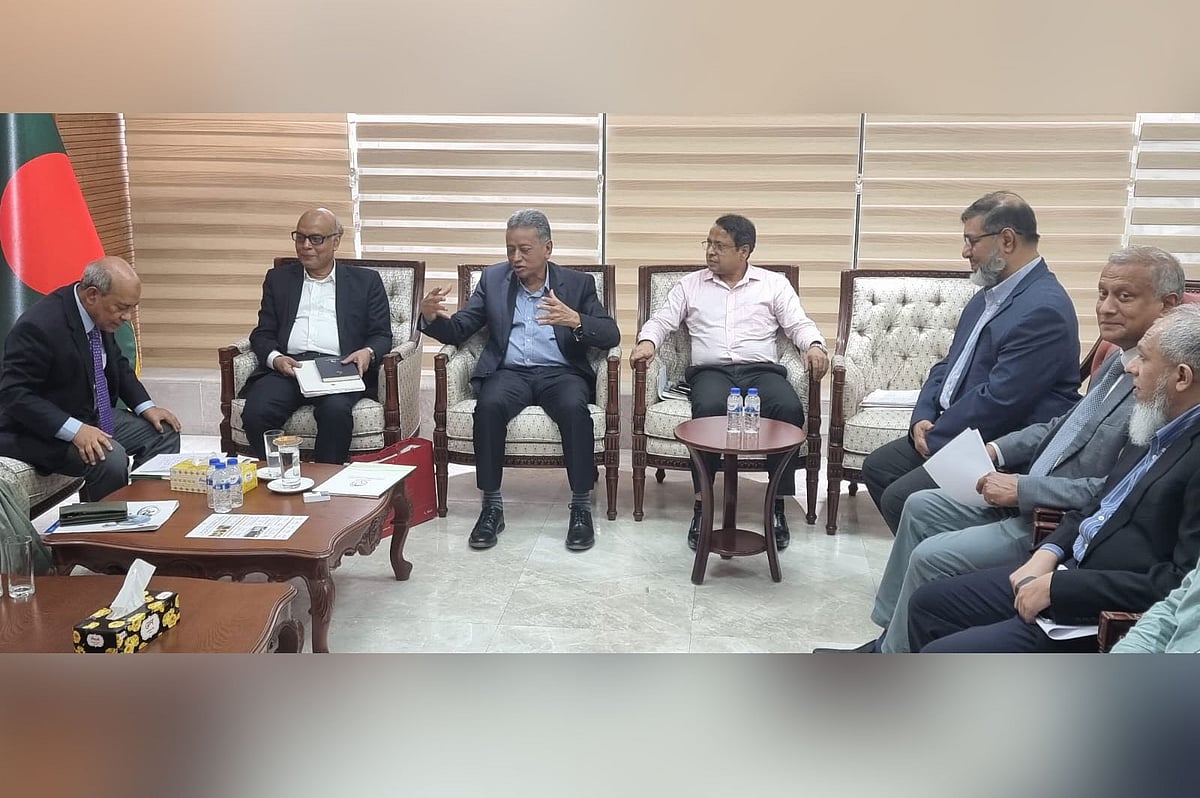
The Bangladesh Textile Mills Association (BTMA) has presented a six-point demand to the government to sustain the domestic textile and spinning industries. Key proposals include increasing cash assistance, revising income tax rates, and withdrawing duties on raw materials. A BTMA delegation, led by President Shawkat Aziz Russell, met with Finance Minister Amu Khosru Mahmud Chowdhury at the NBR building in Agargaon, Dhaka, to convey these demands. The meeting also included discussions on various aspects of the textile sector, with the participation of Finance Secretary Md. Khairuzzaman Majumder, NBR Chairman Ahsan Habib, and other senior officials. Former BTMA president Matin Chowdhury and Member of Parliament and Vice President Abul Kalam were also present.
The BTMA highlighted that the textile sector, encompassing spinning, weaving, dyeing, printing, and finishing, has attracted approximately $20 billion in investment. This industry provides direct and indirect employment to millions and is a significant contributor to the country's export earnings. However, the sector is facing challenges due to reliance on imported yarn and raw materials, rising production costs, and international competition.
Among their specific demands, BTMA seeks the reinstatement of the 30% value addition condition to maintain local value addition and export capability. They also proposed increasing the cash incentive for garment exporters using local yarn from 1.5% to 5%. Furthermore, the association requested the extension of the 12% income tax rate for the primary textile sector until 2030, the withdrawal of import duties on Polyester Staple Fiber (PSF), PVC resin, and PET resin, and the treatment of withholding tax on cash incentives as final tax. BTMA also called for an exemption from certain sections of the Income Tax Act concerning inter-company loans to ensure business continuity. Finance Minister Chowdhury acknowledged the demands, stating that some issues were resolved during the meeting, while others would be considered by the government.
The Bangladesh Textile Mills Association's demands highlight the systemic pressures facing a crucial export-oriented industry. The call for increased cash support and tax concessions reflects a strategy to mitigate the impact of rising global input costs and competitive market dynamics. The industry's reliance on imported raw materials, despite significant domestic investment, points to a potential vulnerability in supply chain resilience. Rebalancing incentives to favor local value addition and domestic sourcing, as proposed, could foster greater self-sufficiency but may also necessitate adjustments in trade policies and international agreements. The government's consideration of these demands will likely involve balancing the immediate needs of the textile sector against broader fiscal stability and trade objectives, particularly in the context of evolving global economic conditions and the increasing importance of sustainable manufacturing practices in the coming decade.
AI-generated to prompt reflection — not editorial opinion, not advice, not a statement of fact. How this works.