Bangladesh to Import 71,000 Crore Taka LNG from US Firm Over 13 Years
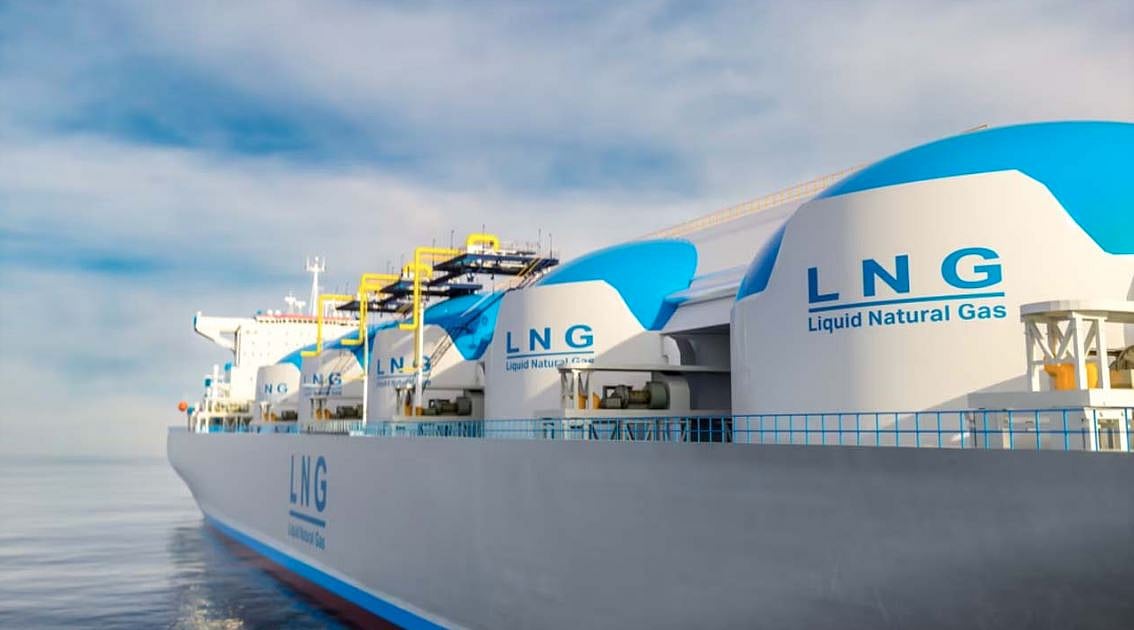
The Bangladesh government has granted in-principle approval to import liquefied natural gas (LNG) from the US-based private company, Gunvor USA LLC. This agreement, spanning 13 years, will involve the import of 78 cargo shipments of LNG, valued at approximately 71,495 crore Bangladeshi Taka at current market prices. Six cargo shipments are slated for import annually, starting from 2026 and continuing until 2039. The decision was made during a meeting of the cabinet committee on economic affairs, chaired by Finance and Planning Minister Amir Khosru Mahmud Chowdhury, in Dhaka. While the Finance Minister did not brief reporters, the Ministry of Finance confirmed the approval via a press release. The implementing agency for this procurement will be Petrobangla, an organization under the Ministry of Energy and Mineral Resources. Petrobangla currently has seven agreements with five companies from the US, Qatar, Oman, and Saudi Arabia for both short and long-term LNG imports, aiming to ensure a continuous gas supply to meet the country's existing and growing demand. A single cargo contains approximately 3.36 million MMBtu of LNG, equivalent to about 95 million cubic meters of natural gas. The current international market price for LNG is between $21.5 to $22 per MMBtu. At $21 per MMBtu, one cargo is valued at $739.2 million, or about 916.61 crore Taka, with the total 78 cargoes reaching 71,495 crore Taka based on an exchange rate of 124 Taka per dollar.
The government's decision to procure LNG from a private US entity, Gunvor USA LLC, under a Government-to-Government (G2G) framework raises questions regarding procedural adherence and the definition of G2G agreements. While the stated objective is to secure energy supply and meet domestic demand, the selection of a private company for a G2G process, which typically involves state-owned entities, warrants scrutiny. The Energy Minister's statement indicates a phased approach, with the 13-year term contingent on initial performance, suggesting an acknowledgment of potential risks or uncertainties. Future energy procurement strategies should prioritize transparent processes that align with international best practices and domestic regulations, ensuring both value for money and robust supply chains. This situation highlights the ongoing challenge of balancing urgent energy needs with the imperative of maintaining rigorous public procurement standards, particularly in a global energy market susceptible to price volatility and geopolitical influences.
AI-generated to prompt reflection — not editorial opinion, not advice, not a statement of fact. How this works.