Bangladesh trails competitors in global apparel exports, WTO report reveals
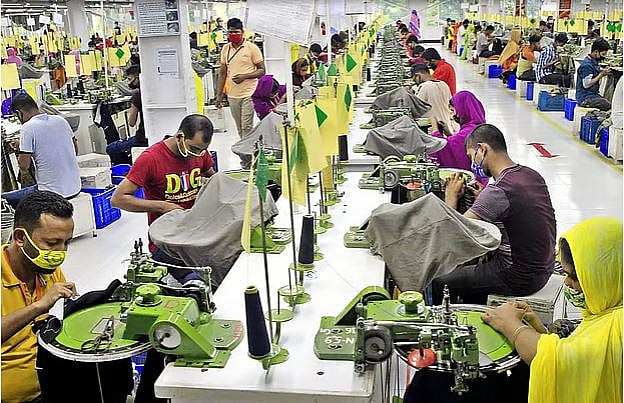
Bangladesh has maintained its position as the second-largest global exporter of ready-made garments, but is falling behind competitors in terms of growth. In the past year, Bangladesh's apparel exports grew by only 0.89%, a stark contrast to Vietnam's 10.5%, India's 5%, Cambodia's nearly 17%, Pakistan's 6%, and Indonesia's 5% growth during the same period. This information comes from the World Trade Organization's (WTO) "World Trade Statistics: Key Insights and Trends in 2025" report. The report indicates that global merchandise and services trade increased by 7% to $34.65 trillion last year, with merchandise trade growing by 6% and services trade by 8%. Bangladesh's apparel exports have remained stagnant at $38 billion for two consecutive years, with last year's exports reaching $38.82 billion. This growth rate is not only lower than that of competing nations but also below the overall global growth in apparel exports, causing Bangladesh's market share to shrink to 6.76% from 7% in 2024. While China's market share has declined due to trade wars, Vietnam and Cambodia have successfully capitalized on this opportunity to expand their own market presence. Vietnam, in particular, has seen consistent growth, exporting $37.51 billion worth of apparel last year, a 10.5% increase. India also experienced growth, exporting $17 billion with a 5.5% increase, raising its market share to 3%. Conversely, Turkey's exports decreased by nearly 6%, leading to a reduction in its market share.
The WTO report highlights a critical juncture for Bangladesh's apparel export sector, indicating a deceleration in growth relative to key competitors like Vietnam and Cambodia. This divergence suggests that while Bangladesh has established a strong base, its strategies for market expansion and product diversification may not be evolving as rapidly as those of its rivals. Factors such as government support, aggressive marketing, and investment in higher-value product segments, as observed in Vietnam and Cambodia, appear to be crucial differentiators. To regain momentum, Bangladesh may need to reassess its national strategy, potentially adopting a more agile and integrated approach to manufacturing, innovation, and international trade engagement. The next decade, characterized by evolving consumer demands and technological advancements in manufacturing, will likely reward nations that can adapt swiftly and invest strategically in their industrial capabilities.
AI-generated to prompt reflection — not editorial opinion, not advice, not a statement of fact. How this works.