Bangladesh will not allow conspiracies based on religion or caste: Information Minister
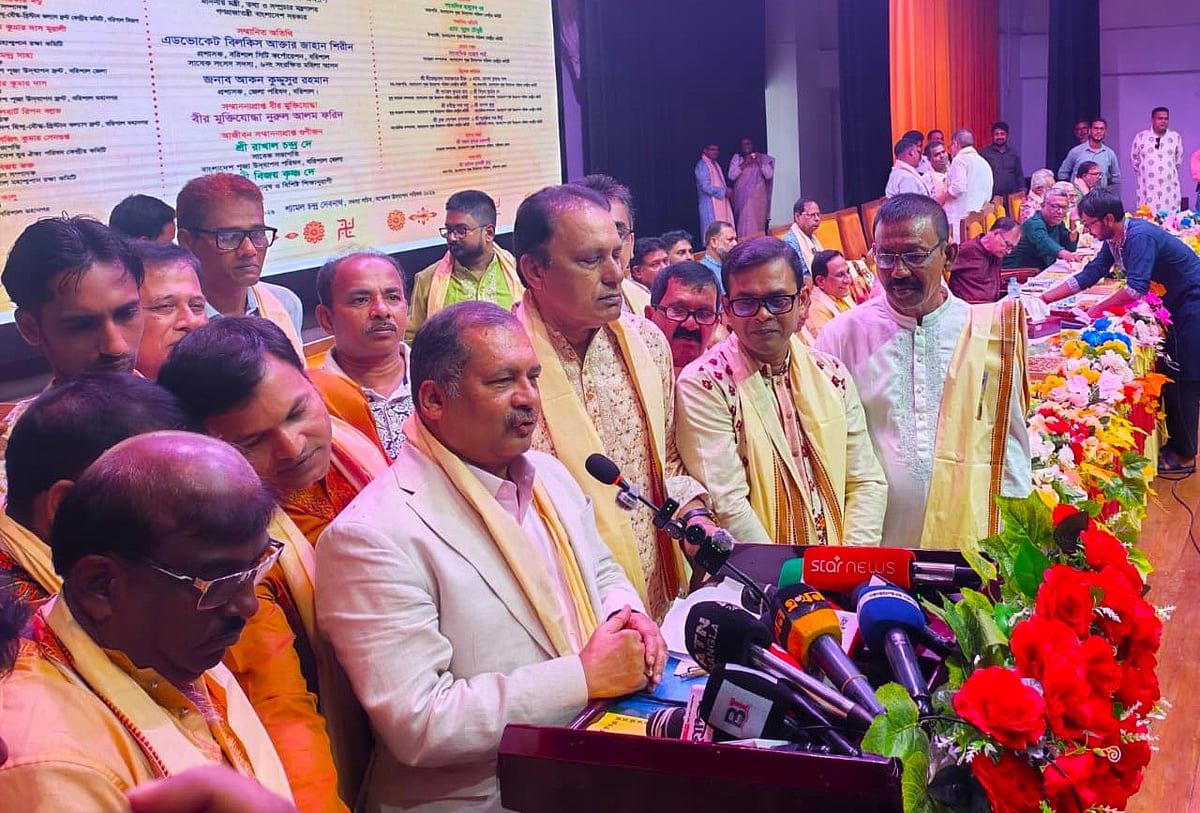
Information and Broadcasting Minister of Bangladesh, Zahidul Hassan Swapan, stated that the Prime Minister's declaration, 'Religion is personal, the state is for all,' forms the foundation of harmony in the nation. He emphasized that if any group attempts to exploit religious beliefs for selfish gains, the devout will identify them. The minister asserted that Bangladesh will not permit any conspiracies based on religion or caste to be implemented. He made these remarks while attending the biennial conference of the Barisal District Puja Udjapon Parishad in Barisal city. Swapan characterized the national struggle as one between good and evil, and humanity against anti-humanitarian forces. He further explained that religious practice is only meaningful when one can identify and understand those who commercialize religion. He urged citizens to practice their own religions diligently while equally respecting those of other faiths. When any group attempts to subtly manipulate religious beliefs into a communal agenda, such religious profiteers must be identified. The minister distinguished political philosophy, thought, and ideology from religious ideals, noting that politics centers on public interest, while religion revolves around the Almighty. He advised that political leaders' statements and actions should serve the public welfare, and their acceptability depends on the people's perception of their beneficial programs. He reiterated that if the current government, elected by the people, fails to fulfill its promises, it could face a similar downfall as in past history. Therefore, he echoed the message from party leadership: 'Religion is personal, the state is for all.' The event was presided over by Manik Lal Mukherjee, president of the Barisal District Puja Udjapon Parishad, with several local dignitaries and leaders in attendance. Following this, the minister attended a discussion meeting with the Barisal Television & Multimedia Association and the District Journalist Torture Prevention Committee, where he announced that a media commission is being formed to ensure accountability and professional journalism.
The Information Minister's address underscores a delicate balancing act in Bangladesh, aiming to foster national unity while acknowledging diverse religious practices. The rhetoric emphasizes a commitment to preventing religious or caste-based manipulation for political gain, aligning with the state's secular principles. However, the historical context of political parties leveraging religious sentiment suggests an ongoing challenge in ensuring that 'religion is personal, the state is for all' translates into consistent policy and public trust. The minister's call for identifying 'religious profiteers' could be interpreted as a mechanism to both empower citizens and potentially consolidate state control over religious discourse. Looking ahead, the effectiveness of such pronouncements will be tested by the government's ability to address underlying socio-economic grievances that can be exploited by divisive ideologies, particularly in an era where digital platforms can rapidly amplify both unity and discord.
AI-generated to prompt reflection — not editorial opinion, not advice, not a statement of fact. How this works.