Bangladeshi Scientist Dr. Tahmeed Ahmed Pioneers Child Malnutrition Treatment
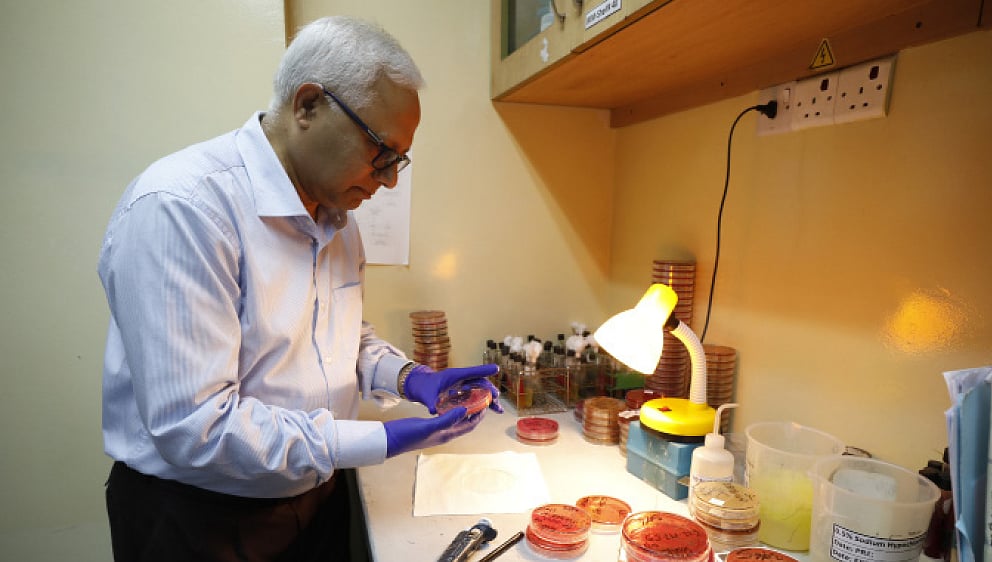
Dr. Tahmeed Ahmed, Executive Director of ICDDR,B, has pioneered a groundbreaking approach to treating child malnutrition using locally sourced ingredients. His four decades of research demonstrate that the solution to malnutrition lies not only in food but also in gut health. Recently, he was recognized among Asia's top 100 scientists by Asian Scientist Magazine. Dr. Ahmed began his medical career witnessing the devastating effects of malnutrition, particularly among children and pregnant women, which spurred his commitment to finding simpler, more effective treatments. He observed that even with nutritious food, many severely malnourished children failed to thrive, leading him to investigate internal bodily processes affecting nutrient absorption.
His research, utilizing accessible ingredients like lentils, chickpeas, soybeans, peanuts, and green bananas, has led to an innovation now gaining international attention. This work, developed under his leadership in Bangladesh, has earned him a place on the Asian Scientist's list, signifying global recognition for a scientific concept born in a Bangladeshi laboratory. This follows his inclusion in TIME magazine's 2025 list of the world's 100 most influential people in health. Dr. Ahmed highlights that severely malnourished children face a twelve-fold higher risk of mortality compared to healthy children.
The developed therapeutic food, named 'Swarnali,' is designed to be nutrient-dense and effective in small quantities, aiding recovery within one to two months. Beyond food, his research, in collaboration with Professor Dr. Jeffrey Gordon, explores the crucial role of gut microbiota. They found that deficiencies in safe water, sanitation, and hygiene contribute to 'enteropathy,' damaging the gut lining and impairing nutrient absorption. Their innovative food, Microbiota-Directed Complementary Food-2 (MDCF-2), aims to promote beneficial gut bacteria to improve nutrient utilization, with findings published in prestigious scientific journals like Science.
This research highlights a critical shift in understanding malnutrition, moving beyond simple caloric deficiency to encompass the complex interplay of gut health, sanitation, and accessible nutrition. By leveraging local ingredients, Dr. Ahmed's work offers a sustainable and scalable model for developing nations, addressing both the immediate nutritional needs and the underlying physiological barriers to recovery. The focus on gut microbiota underscores the growing recognition of the microbiome's profound impact on overall health and development, suggesting future interventions may increasingly target microbial communities. This approach challenges traditional public health paradigms by integrating environmental factors and internal biological processes, offering a more holistic pathway to improving child survival and well-being.
AI-generated to prompt reflection — not editorial opinion, not advice, not a statement of fact. How this works.