Bardiya Distributes Land Ownership Certificates to 29 Landless Families
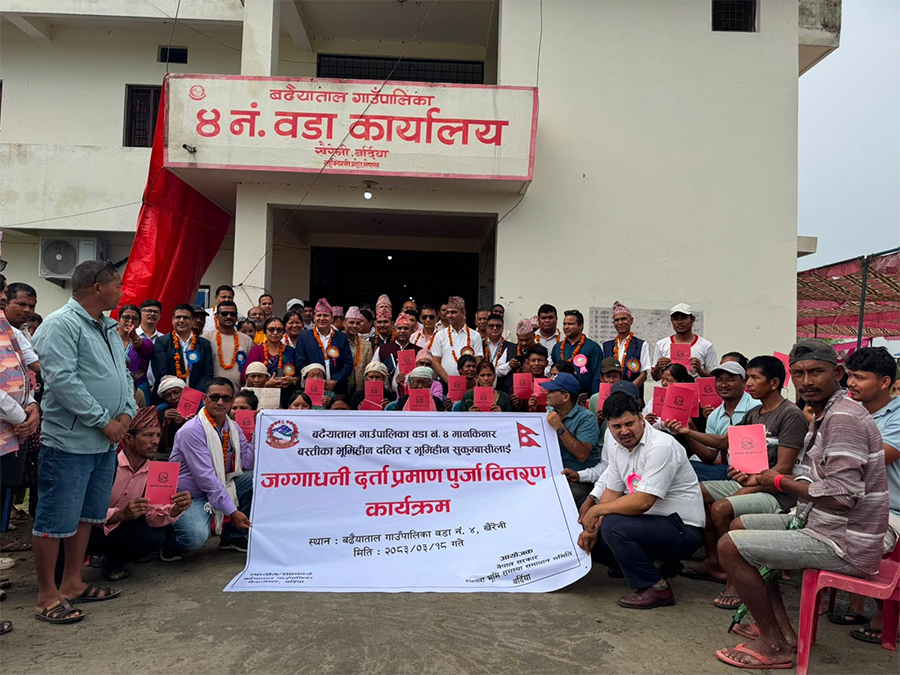
The government has commenced the distribution of land ownership certificates (Lalpurja) in Bardiya district. Specifically, 29 landless Dalit and landless squatters families from Badhaiyatal Rural Municipality-4 in Bardiya district received their Lalpurjas. These local residents, who had been without legal land ownership for an extended period, have now officially become landowners. This initiative marks a significant step in addressing landlessness and providing legal tenure security to vulnerable populations within the district. The distribution aims to formalize land rights and empower families who have historically lacked access to property ownership. This development is expected to have a positive impact on the socio-economic status of the recipients, enabling them to utilize their land more effectively for housing and livelihood. The process ensures that these families are recognized as legitimate owners, paving the way for potential future development and investment in their land. The government's commitment to land reform is demonstrated through this tangible distribution in Bardiya.
The distribution of land ownership certificates to landless families in Bardiya addresses a long-standing issue of land tenure insecurity. By providing legal titles, the government empowers these families, potentially improving their economic stability and access to resources. This action aligns with broader goals of social equity and development, aiming to reduce disparities in land ownership. However, the long-term impact will depend on the sustainability of these land rights, the availability of support services for the new landowners, and the broader land governance framework. Future initiatives should consider how to scale such programs effectively and ensure equitable access to land resources across the nation, navigating potential challenges related to land disputes and resource management in the coming decade.
AI-generated to prompt reflection — not editorial opinion, not advice, not a statement of fact. How this works.