Barge freed from Icaraí beach after breaking from tow
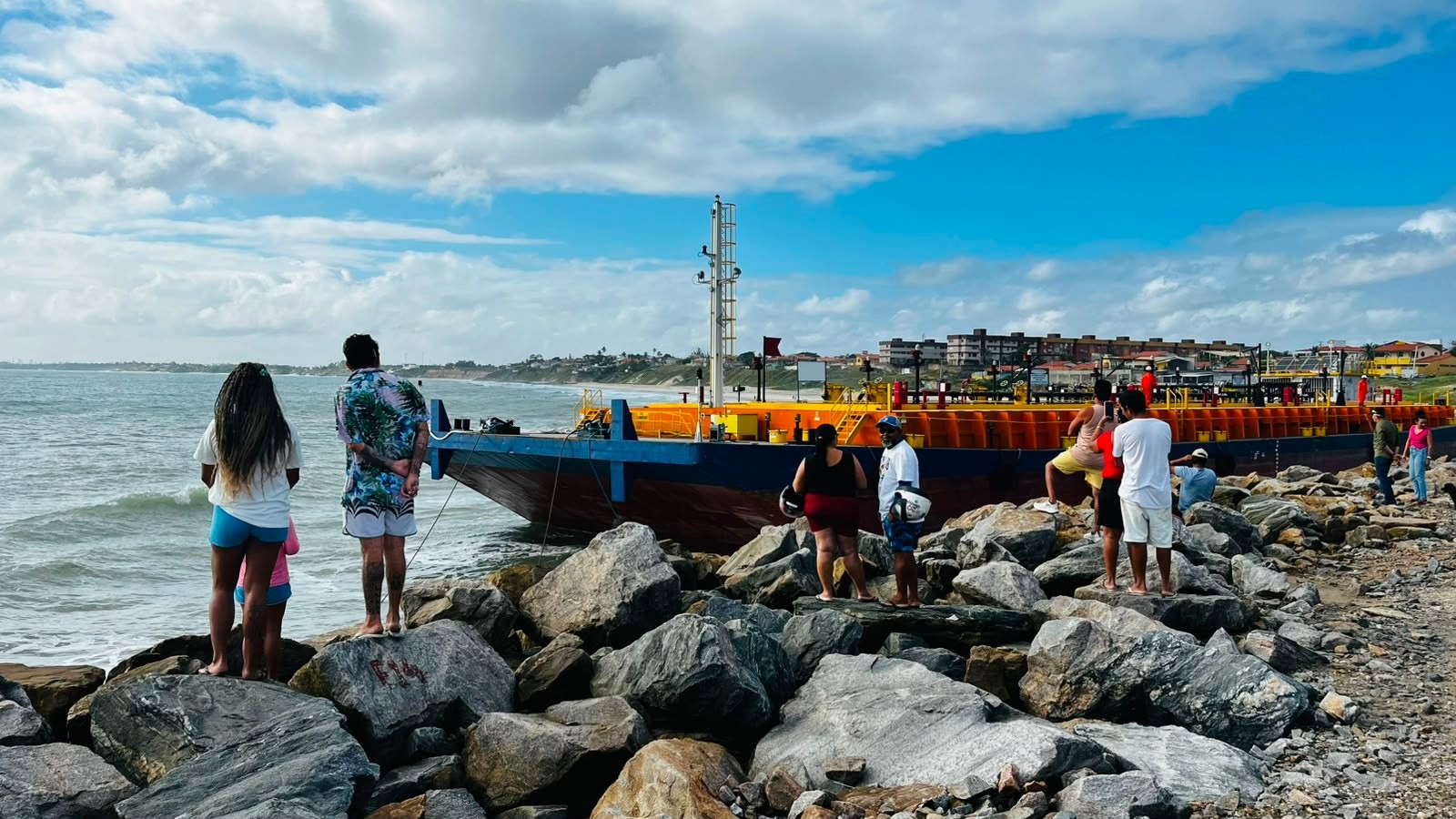
A barge, identified as "FLU-IPÊ," that ran aground on Icaraí beach in Caucaia, Ceará, Brazil, was successfully refloated on Wednesday, March 22nd. The unmanned vessel had become detached from its towing convoy, which was en route to Rio Grande do Norte, due to a broken connection. The barge drifted and eventually grounded in approximately 60 centimeters of water on Icaraí beach. Its unexpected presence turned the grounded barge into a temporary tourist attraction, drawing visitors to the shore. Sulnorte Serviços Marítimos Ltda., the company responsible for the barge, confirmed the successful removal operation, stating it was conducted in compliance with approved operational plans and safety standards, with no reported environmental impacts. The barge is expected to proceed to Rio de Janeiro. The Brazilian Navy reported that the barge was being towed by the vessel "SN CARAÍVA." The Capitania dos Portos do Ceará will initiate an administrative inquiry to investigate the causes, circumstances, and responsibilities of the incident, with an initial 90-day period for its conclusion. Sulnorte Serviços Marítimos Ltda. stated that they immediately notified the authorities and are cooperating fully with the investigation, emphasizing that all safety and emergency response protocols were followed, and no environmental damage or product leaks occurred.
The grounding of the "FLU-IPÊ" barge highlights the inherent risks in maritime towing operations, particularly concerning the integrity of tow systems and the potential for cascading failures. While the company asserts adherence to safety protocols and claims no environmental impact, the incident necessitates a thorough review of the towing company's operational procedures and equipment maintenance. The administrative inquiry by the Capitania dos Portos do Ceará will be crucial in determining accountability and identifying systemic vulnerabilities. Future maritime logistics will increasingly rely on robust autonomous systems and advanced predictive maintenance to mitigate such occurrences, especially as global trade volumes grow and operational complexities increase. The event serves as a reminder of the need for continuous improvement in maritime safety regulations and enforcement to prevent future disruptions and protect coastal environments.
AI-generated to prompt reflection — not editorial opinion, not advice, not a statement of fact. How this works.