Barnard's Star Planets: Worlds of Desolation Next Door
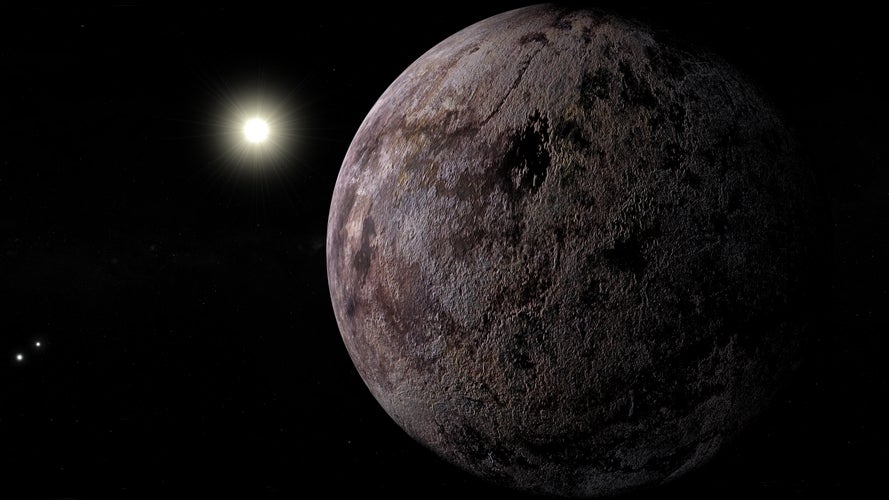
While the exploration of space often ignites hope for habitable planets in our immediate cosmic vicinity, a closer examination of data frequently reveals a far harsher reality beyond Earth. This is particularly true for the planets orbiting Barnard's Star, located just six light-years away. Despite initial excitement about potential exoplanets, detailed analysis indicates these worlds are likely entirely uninhabitable. The conditions present on these celestial bodies preclude the possibility of life as we know it. Further scientific investigation is required to fully understand the extreme environments of these neighboring planets. The findings underscore the challenges in discovering truly Earth-like exoplanets, even in our closest stellar systems. This reality check tempers the optimistic search for extraterrestrial life, highlighting the rarity of suitable conditions for habitability.
The discovery of exoplanets, especially those in close proximity to our solar system like Barnard's Star's system, initially fuels public imagination regarding extraterrestrial life. However, scientific scrutiny often reveals that the physical conditions on these worlds are incompatible with life as we understand it. This discrepancy between initial excitement and scientific reality highlights the need for robust, data-driven analysis over speculative optimism. Future space exploration efforts will likely focus on refining detection methods and developing more sophisticated atmospheric analysis techniques to identify truly habitable exoplanets, rather than relying solely on proximity or initial detection signals. The long-term implications suggest that while the universe is vast, the specific conditions required for habitability may be exceedingly rare, necessitating a more targeted and scientifically rigorous approach to the search for life beyond Earth.
AI-generated to prompt reflection — not editorial opinion, not advice, not a statement of fact. How this works.