Bavaria and Hungary Leaders Call for Easing of Internal Combustion Engine Ban
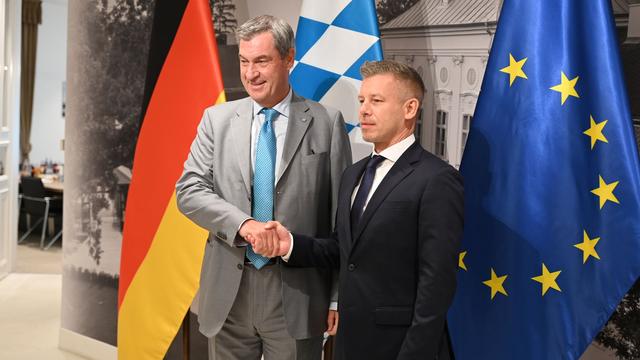
Bavarian Minister-President Markus Söder and Hungarian Prime Minister Viktor Orbán held a joint summit. During their meeting, both leaders expressed a desire for a relaxation of the European Union's ban on internal combustion engine vehicles. Söder and Orbán specifically called for a loosening of the regulations surrounding this ban. The summit focused on strengthening bilateral relations between Bavaria and Hungary. Discussions also likely covered areas of mutual interest and potential collaboration. The call for easing the combustion engine ban highlights a divergence of views within Europe on environmental policy and the pace of the transition to electric mobility. This meeting underscores the political alignment between the Bavarian state government and the Hungarian national government on this specific issue.
The joint stance by Bavarian and Hungarian leaders advocating for a delay or modification of the EU's internal combustion engine ban reflects a tension between immediate economic concerns and long-term environmental objectives. This position may be influenced by the automotive industry's significant role in their respective economies and potential impacts on employment and industrial competitiveness. The call for leniency could be interpreted as a strategic maneuver to allow more time for technological adaptation and infrastructure development, or it might signal a broader resistance to centralized EU climate policy directives. Examining this from a systems perspective, the challenge lies in balancing diverse national economic interests with the collective imperative to address climate change, necessitating innovative policy frameworks that accommodate phased transitions and technological neutrality.
AI-generated to prompt reflection — not editorial opinion, not advice, not a statement of fact. How this works.