Bayeux Tapestry: Five Key Scenes Depicting William the Conqueror's Rise to Power
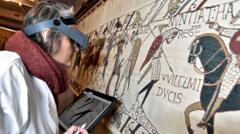
The Bayeux Tapestry vividly illustrates the medieval power struggle between William the Conqueror and King Harold for control of England. This iconic embroidered cloth, dating back to the 11th century, chronicles the events leading up to and including the Norman Conquest of England. It is a crucial historical document, offering a unique visual narrative of the era's political landscape and military campaigns. The tapestry's detailed scenes provide insights into the customs, clothing, and warfare of the period. Specifically, five key scenes are highlighted for their narrative significance in telling the story of William's ambition and conquest. These scenes collectively depict a medieval 'game of thrones,' culminating in William's victory and subsequent rule over England. The artwork serves as both a historical record and a masterpiece of early medieval art.
The Bayeux Tapestry, by visually narrating the Norman Conquest, offers a valuable lens through which to examine historical state-building and the consolidation of power. Its depiction of conflict and succession highlights the enduring dynamics of leadership and territorial control. The narrative's focus on a single victor's perspective invites analysis of how historical accounts are shaped by the victors, influencing subsequent interpretations of national identity and historical events. Understanding such narratives is crucial in an era where digital information flows rapidly, as it underscores the importance of critically evaluating sources and recognizing potential biases in historical and contemporary accounts.
AI-generated to prompt reflection — not editorial opinion, not advice, not a statement of fact. How this works.