Beekeepers Generate Income in Aracruz Using Environmental Preservation Areas for Honey Production
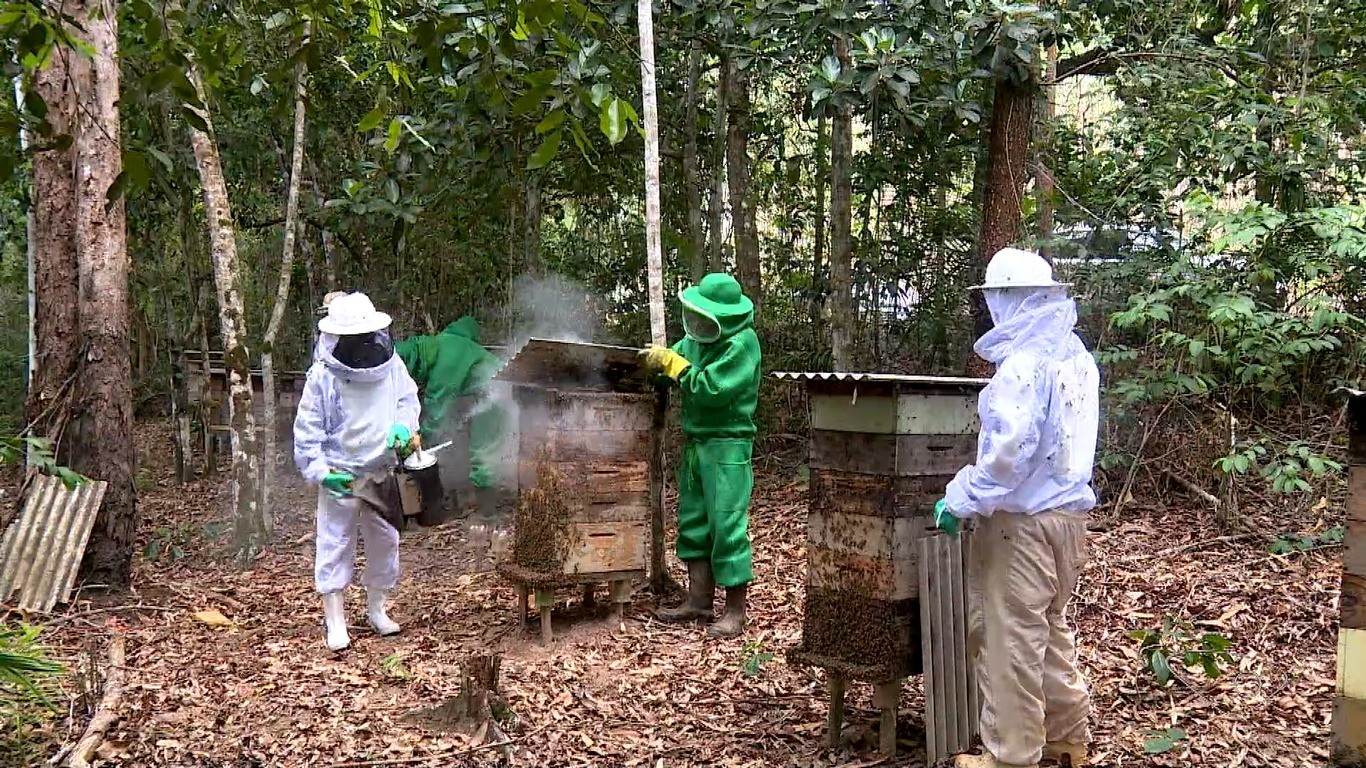
In Aracruz, located in the North of Espírito Santo, Brazil, beekeepers are leveraging environmental preservation areas owned by a cellulose industry to produce honey and generate income for dozens of families. This initiative has positioned Aracruz as one of the state's largest honey producers. The program, "Apicultura Sustentável" (Sustainable Beekeeping), launched in Brazil in 2005 and in Espírito Santo in 2014, aims to strengthen the state's honey production chain by organizing associations and providing technical and administrative support. Sebastião Grazziotti, a beekeeper with over 50 years of experience, utilizes approximately 30 apiaries, each with 20 hives, within the well-maintained forest areas, noting the abundance of natural resources. The program currently supports six beekeeper associations, totaling 1,170 hives. With an average production of nearly 35 kg per hive, the collective yield is approximately 40.9 tons of honey twice annually. A key challenge addressed by the program is the lack of space for beekeepers, many of whom do not own rural property, making partnerships with entities possessing protected areas crucial for hive placement and bee sustenance. Beyond providing space, the program offers training, access to supplies, technologies, and equipment, and assists beekeepers in obtaining professional credentials for secure product commercialization. The initiative not only boosts income but also contributes to environmental balance through pollination, a vital service for biodiversity. Aracruz leads Espírito Santo's honey production, accounting for 10.6% of the state's output, which reached 846,000 kg in 2024, a significant increase from 544,000 kg in 2016, with the production value more than doubling to R$ 12.3 million.
This initiative demonstrates a symbiotic relationship between industrial land management and local economic development, leveraging environmental conservation areas for productive purposes. The "Sustainable Beekeeping" program effectively addresses the dual challenge of providing economic opportunities for rural communities while potentially enhancing biodiversity through managed apiculture within protected zones. The success in Aracruz highlights a model where corporate environmental stewardship can align with social and economic benefits, fostering a more integrated approach to land use. Future considerations might involve scaling this model to other regions and ensuring long-term ecological monitoring to confirm sustained environmental benefits alongside economic gains, particularly as honey production increases.
AI-generated to prompt reflection — not editorial opinion, not advice, not a statement of fact. How this works.