Beetle's Abdomen Mimics Termite to Infiltrate Colonies, Researchers Discover
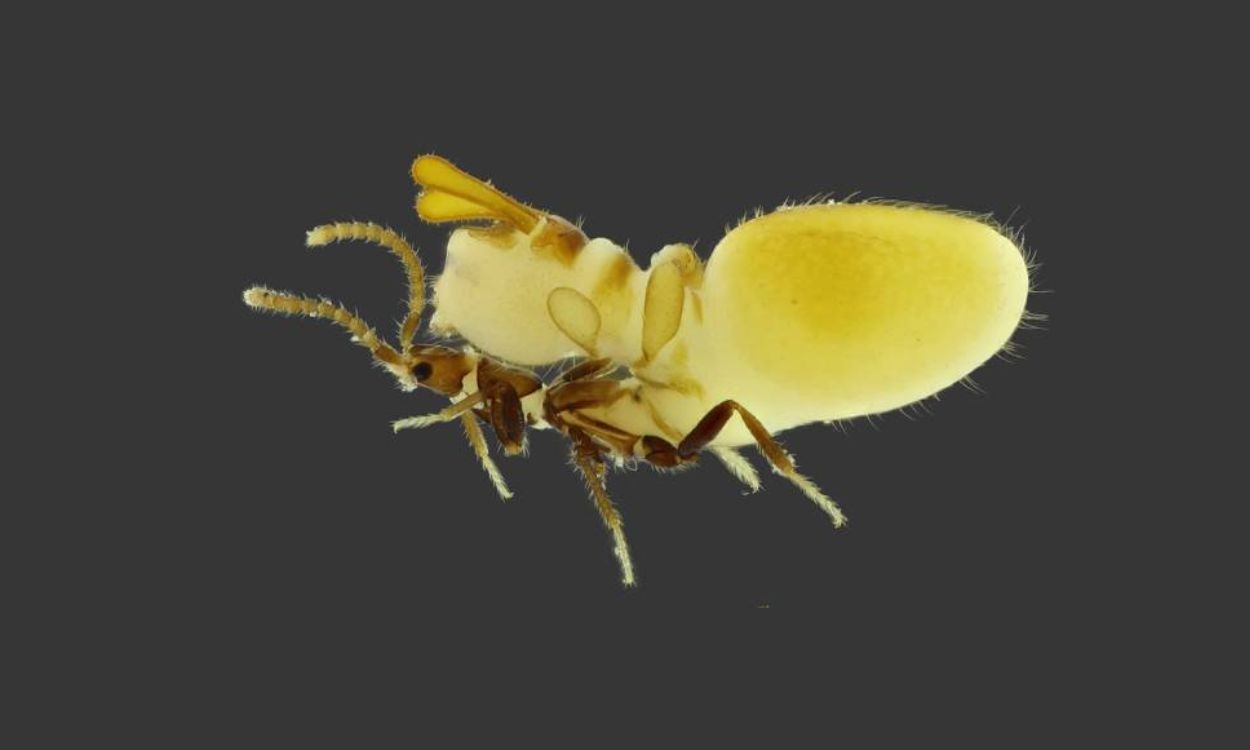
Researchers from the University of São Paulo (USP) have described a remarkable adaptation in the beetle species Austrospirachtha carrijoi, which was first documented in 2023. This beetle possesses an unusually expanded abdomen that closely resembles a termite worker, serving as a sophisticated disguise to live undetected within termite colonies. The primary scientific hypothesis suggests this mimicry allows the beetle to infiltrate termite nests and potentially receive food through trophallaxis, a process of oral food exchange among insects. While this specific feeding behavior has not yet been directly observed, the anatomical features of the beetle and existing knowledge of other termitophilous beetles support this theory. The adaptation is so detailed that it creates a 'termite puppet' on the beetle's abdomen, a result of evolutionary processes shaping the membranous abdominal region. This mimicry is crucial because termites rely less on vision for colony recognition, primarily using tactile and chemical cues. Therefore, the beetle's physical resemblance is likely complemented by chemical mimicry, reproducing compounds that mask its presence and imitate the colony's chemical signals. Additionally, the beetle is believed to mimic termite behavior to further avoid detection as an intruder. Specimens were initially collected in northern Australia in 2014 by entomologist Tiago Carrijo. The beetle's mouthparts are reduced, suggesting a dependency on termites for sustenance, likely through regurgitated, semi-digested food. This specialized feeding, known as stomodeal trophallaxis, is common in other termitophilous beetles. Intriguingly, the beetle does not hatch with this appearance; its abdomen expands after the pupal stage through post-imaginal growth. Austrospirachtha carrijoi is only the second species known in its genus, with the previous one described about 50 years prior, and only females have been identified so far. This discovery highlights the intricate evolutionary strategies employed by insects to thrive within highly organized social structures.
The discovery of Austrospirachtha carrijoi's elaborate mimicry illustrates a fascinating evolutionary arms race between predator and prey, or in this case, symbiont and host. The beetle's sophisticated adaptation, involving physical, chemical, and behavioral mimicry, underscores the power of natural selection in generating complex strategies for survival and resource acquisition. From a systems perspective, this case highlights the vulnerabilities inherent even in highly organized social insect colonies, where specialized sensory cues can be exploited by external agents. Looking ahead, understanding such biological systems of deception and infiltration could offer insights into novel approaches for security, biomimicry in robotics, or even pest control, by identifying critical authentication mechanisms within complex networks.
AI-generated to prompt reflection — not editorial opinion, not advice, not a statement of fact. How this works.