Before the Big Bang: From Quantum Vacuum to Galaxy Formation
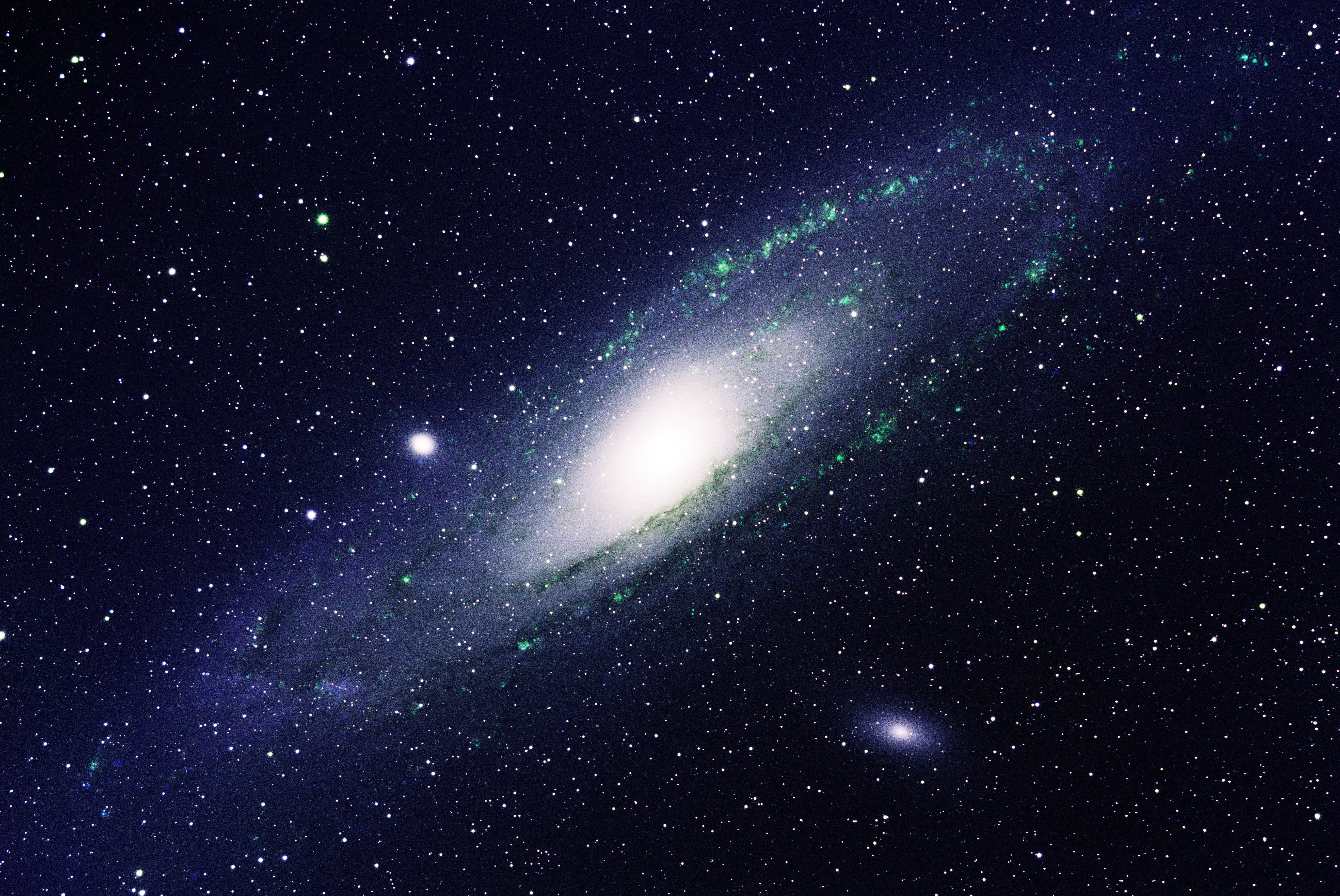
Scientists are exploring the period before the Big Bang, delving into the universe's origins from quantum fluctuations to the formation of galaxies. It is theorized that something occurred prior to the hot phase known as the Big Bang, setting the stage for cosmic evolution. Initially, the universe was remarkably homogeneous, with minimal statistical variations, appearing serene yet containing the seeds for all future structures. This uniformity, however, was a precursor to profound changes, with an immensely rich distribution of matter eventually giving rise to stars, galaxies, and cosmic voids.
Quantum mechanics suggests that the vacuum is not empty but filled with activity. The primordial plasma consisted of interacting particles undergoing transformations governed by the weak nuclear force. As the universe expanded, particle interactions decreased, leading to a 'cosmic winter' where neutrinos decoupled and propagated freely. Later, around 380,000 years after the Big Bang, photons decoupled, rendering the plasma transparent and allowing light to travel freely, observed today as the cosmic microwave background radiation.
The inflationary period, a fraction of a second of accelerated expansion, is crucial for understanding the Big Bang. Inflation explains the universe's homogeneity, its nearly flat spatial geometry, and the existence of small perturbations that grew due to gravity. This rapid expansion amplified primordial quantum fluctuations from subatomic scales to cosmic sizes, transforming them into large-scale density variations. Gravity then acted upon these variations, causing them to grow into the galaxies and galaxy clusters we observe today. These quantum fluctuations, imprinted on the cosmic microwave background, serve as evidence of this early, nearly homogeneous state.
This exploration into the pre-Big Bang era highlights the scientific endeavor to reconcile quantum mechanics with general relativity, particularly concerning the universe's initial conditions. The concept of cosmic inflation, while explaining observed homogeneity and structure formation, relies on hypothetical fields and energy dynamics that remain subjects of ongoing research and theoretical refinement. The amplification of quantum fluctuations into macroscopic density variations underscores the profound impact of quantum uncertainty on large-scale cosmic structure, suggesting that the universe's intricate organization may stem from fundamental probabilistic processes. Future advancements in observational cosmology and theoretical physics will be critical in testing these models and potentially revealing a more complete picture of the universe's genesis, bridging the gap between the quantum realm and the cosmos we inhabit.
AI-generated to prompt reflection — not editorial opinion, not advice, not a statement of fact. How this works.