Beijing AI Labs Deploy Autonomous Robotic Scientists for Material Discovery
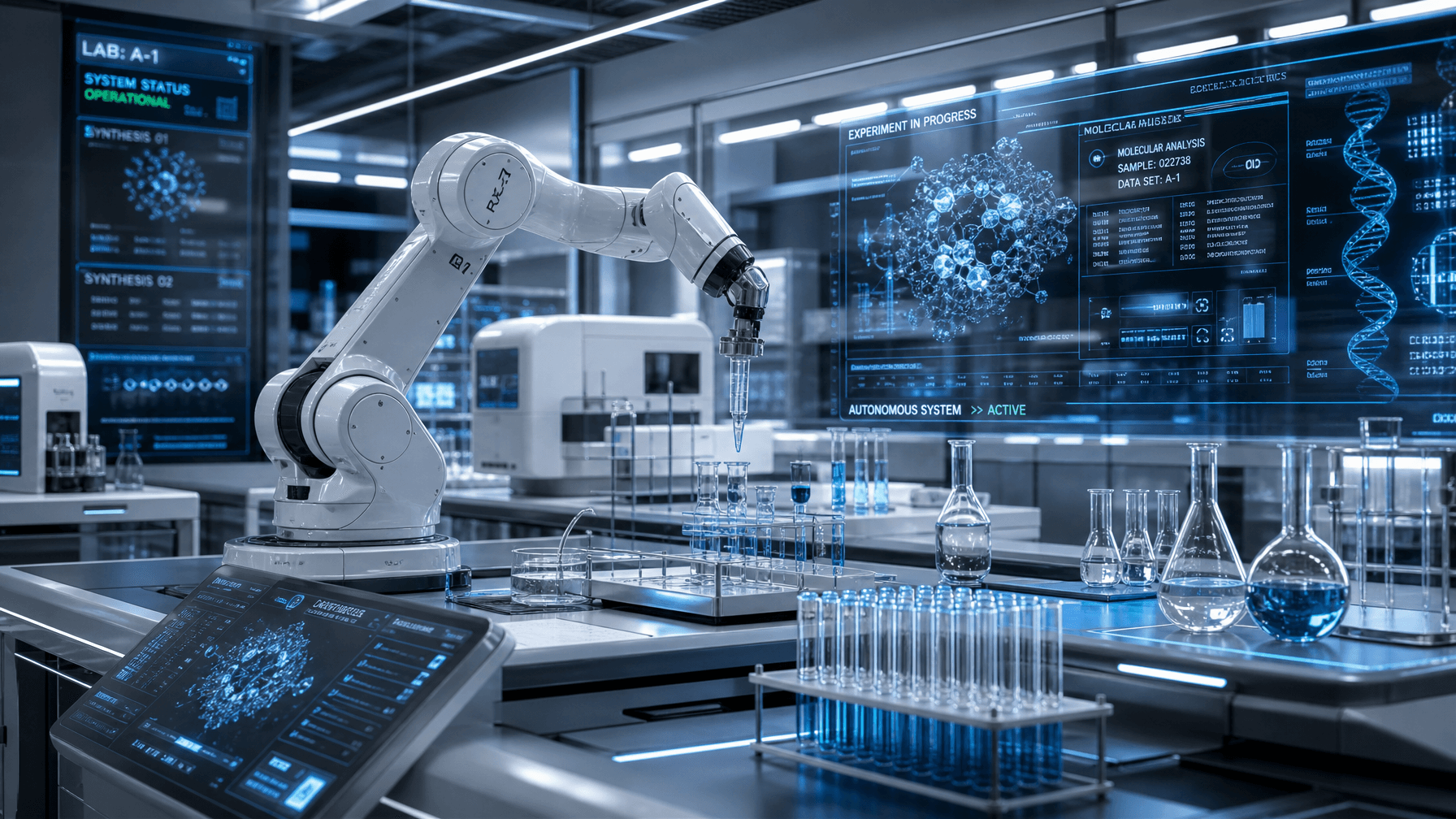
Artificial intelligence scientists are now actively working in Beijing, capable of performing complex research tasks. These autonomous robotic scientists, deployed by Beijing AI for Science labs, can independently design experiments, gather data, and discover new materials. This development signifies a significant transformation in the traditional research paradigm. The robots are reportedly able to mix conduction fluid in just 20 seconds, showcasing their efficiency. This advancement highlights the increasing integration of AI into scientific discovery processes. The labs aim to accelerate the pace of innovation through these advanced robotic systems. The deployment represents a new era in how scientific research is conducted, moving towards greater automation and speed. This initiative could lead to faster breakthroughs in various scientific fields.
AI-driven automation in scientific research, exemplified by Beijing AI for Science labs, represents a paradigm shift with significant implications for the future of discovery. By automating experimental design, data collection, and material identification, these systems promise to accelerate the pace of innovation and potentially reduce research costs. This trend raises questions about the evolving role of human scientists, the ethical considerations of AI in discovery, and the potential for intellectual property disputes. The efficiency gains, such as the rapid mixing of conduction fluid, underscore the competitive advantages that early adopters of such technologies may gain. As AI capabilities advance, the integration of these systems into global research infrastructure will likely reshape scientific collaboration, funding priorities, and the very definition of scientific progress over the next decade.
AI-generated to prompt reflection — not editorial opinion, not advice, not a statement of fact. How this works.