Belchior's 1988 Album 'Elogio da Loucura' Reissued on Vinyl
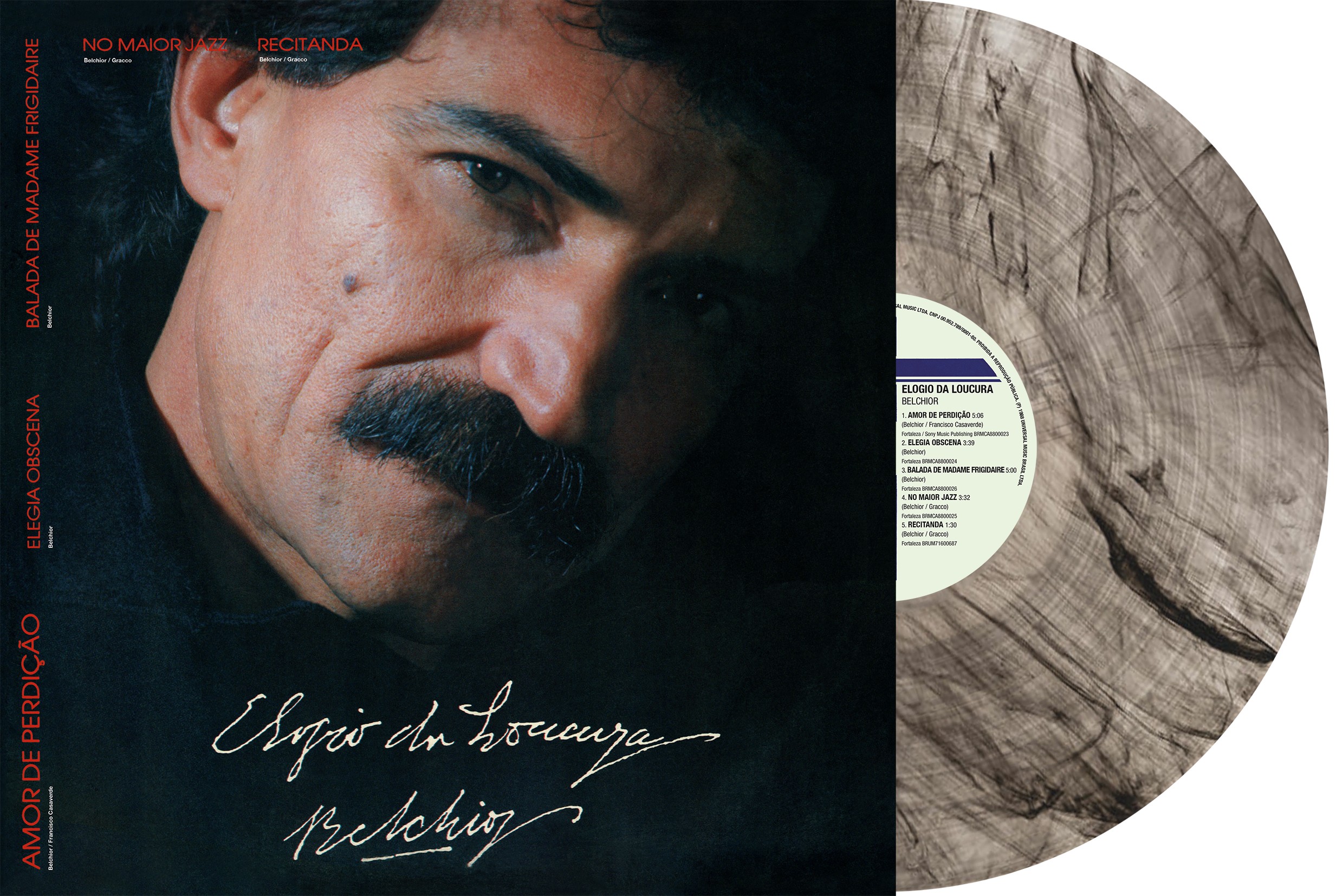
The 11th album by Brazilian artist Belchior, 'Elogio da Loucura,' originally released in 1988, has been reissued on vinyl. Recorded in July 1988 and produced by Antonio Foguete, this album offers fans a deeper look into a work often overshadowed by Belchior's more celebrated 1970s discography. The album features ten entirely original songs, none of which achieved significant individual recognition. It is suggested that the electronic production style characteristic of the 1980s may not have perfectly aligned with the artist's core musical essence. However, Belchior's critical and sharp lyrical style is evident in tracks like 'Balada de Madame Frigidaire,' 'Kitsch metropolitanus,' and 'Os profissionais.' These songs are rich with references, drawing from figures such as Bob Dylan, Martin Luther King Jr., poet Álvares de Azevedo, and psychoanalyst Freud. The title 'Lira dos vinte anos' was inspired by a 1853 anthology by Álvares de Azevedo, and the song is a collaboration with Francisco Casaverde. Another track, 'Amor de perdição,' shares its title with a 1862 book by Portuguese poet Camilo Castelo Branco. Belchior collaborated with Graccho Silvio Braz Peixoto da Silva (Graco) on four songs: 'Tambor tantã,' 'No maior jazz,' 'Recitanda,' and 'Arte final.' The reissue features translucent smoky vinyl. 'Elogio da Loucura' was released a year after 'Melodrama' (1987), marking Belchior's return to PolyGram, the label that released his seminal 1976 album 'Alucinação.' This iconic album will celebrate its 50th anniversary in 2026, solidifying Belchior's enduring legacy in Brazilian music.
The reissue of Belchior's 1988 album 'Elogio da Loucura' highlights the complex trajectory of artistic output beyond an artist's most commercially successful period. While the 1970s are identified as Belchior's 'golden decade,' this re-release provides an opportunity to re-evaluate a work from a later period, potentially showcasing evolving lyrical depth and thematic concerns. The analysis of the 1980s electronic production potentially clashing with the artist's 'soul' suggests a recurring tension in music history: the adaptation of established artists to contemporary sonic trends. This event prompts reflection on how market pressures and technological shifts influence artistic expression and legacy preservation. It also invites consideration of how critical acclaim and popular recognition are distributed across an artist's entire body of work, and whether later, less commercially dominant albums might hold significant artistic merit worthy of rediscovery.
AI-generated to prompt reflection — not editorial opinion, not advice, not a statement of fact. How this works.