Belgian Man's Son Disputes Spanish Authorities' Account of Deadly Forest Fire
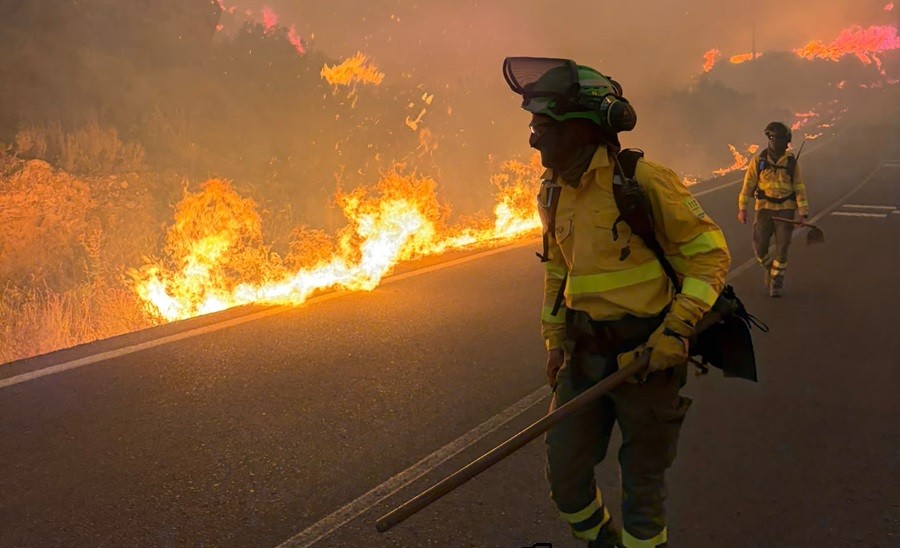
The son of a Belgian national who perished in a recent deadly forest fire in southern Spain has challenged official claims that his father and other victims ignored evacuation or shelter-in-place orders. Thomas-Wolf Verdonckt stated that emergency services provided no instructions to his father, Stanislas Verdonckt, 63, and his neighbors before the fire engulfed the mountainous village of Bedar in Almeria province on Thursday, September 9th. Stanislas Verdonckt was among eight victims found dead in a valley below his home, having attempted to flee as flames approached. His son, who lives in Belgium and traveled to Spain after the incident, spoke with survivors who corroborated his account, emphasizing that no warnings were issued about the approaching fire or guidance on how to proceed. The victims reportedly only began to run when the flames were nearly upon them, a last resort.
Spanish authorities, however, maintain that local officials and police conducted door-to-door visits and made phone calls to inform residents about evacuation or sheltering based on the fire's progression. The mayor of Bedar reportedly advised the group, including Stanislas Verdonckt, to remain sheltered. The regional government of Andalusia and the Spanish Civil Guard have not yet responded to requests for comment on Verdonckt's statement. The fire has claimed a total of 12 lives, primarily foreigners, as residents attempted to escape the advancing flames. The victims' identities are still being officially confirmed while firefighters continue their efforts to control the blaze.
This incident highlights critical communication breakdowns during natural disasters, raising questions about the effectiveness and clarity of emergency response protocols. The discrepancy between the authorities' claims of issuing guidance and the son's assertion of a lack of instruction points to a potential failure in disseminating vital information to vulnerable populations. In an era increasingly susceptible to climate-driven extreme weather events, robust and verifiable communication channels are paramount. Future preparedness strategies must prioritize redundant warning systems and clear, actionable instructions that reach all residents, regardless of their location or circumstances, to mitigate the risk of such tragic outcomes and ensure public trust in emergency management.
AI-generated to prompt reflection — not editorial opinion, not advice, not a statement of fact. How this works.