Belgium Protests FIFA's Reversal of Red Card for US Player Folarin Balogun
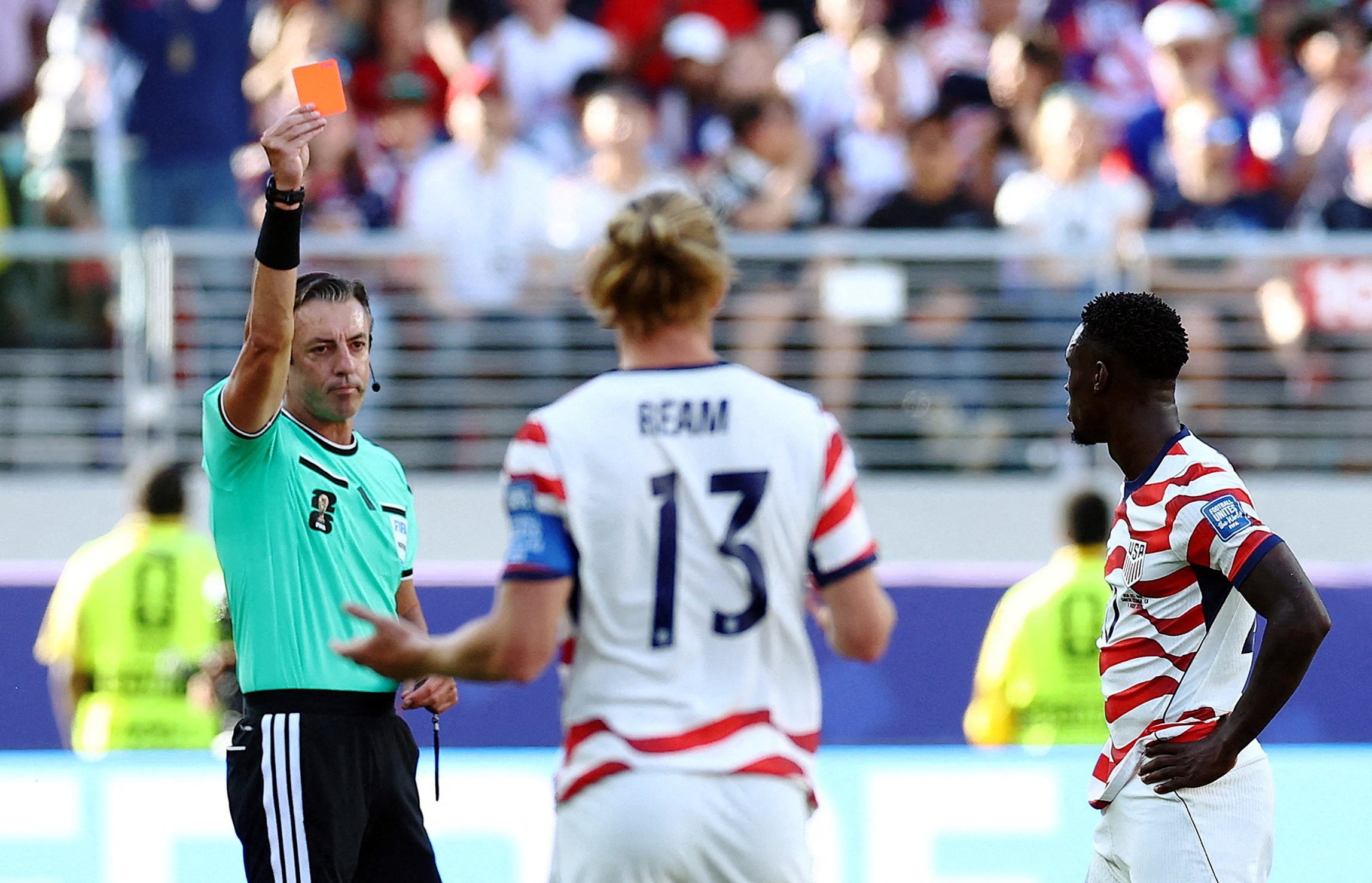
The Belgian Football Association has formally requested explanations from FIFA regarding the decision to overturn a red card issued to U.S. forward Folarin Balogun. Balogun received the red card during a match against Bosnia and Herzegovina for stepping on an opponent's ankle, an incident reviewed by VAR. Belgium argues that FIFA's disciplinary code, specifically Article 66.4, mandates an automatic one-match suspension for red cards, a precedent consistently applied in the current World Cup. They also cite Article 10.5 of the 2026 World Cup Regulations, which they claim reinforces the automatic nature of such punishments, as confirmed by FIFA circulars and official meetings. Belgium contends that Balogun's eligibility for the upcoming match against the U.S. on Monday, where a quarter-final spot is at stake, is contested due to this perceived violation of established rules. The Belgian federation stated they have not received any official decision or explanation from FIFA, leaving them with no recourse but to challenge the player's eligibility. They are exploring all potential options to uphold the principles of fair play and the rights of participating nations. Reports suggest that U.S. President Donald Trump contacted FIFA President Gianni Infantino to inquire about the red card. An anonymous U.S. official indicated that the U.S. government provided additional evidence for an appeal, though the appeal process is handled by an independent council. President Trump publicly thanked FIFA for reversing what he termed a "great injustice." U.S. coach Mauricio Pochettino also expressed satisfaction, calling the initial red card "completely unjust" and stating that most observers agreed with this assessment.
The Belgian Football Association's challenge highlights a potential conflict between FIFA's stated disciplinary regulations and its application in high-stakes international tournaments. The federation's reliance on specific articles of FIFA's Disciplinary Code and World Cup Regulations suggests a procedural dispute, questioning whether external influence or a reinterpretation of rules occurred. The involvement of a political figure like Donald Trump, even if framed as an inquiry, raises questions about the impartiality of FIFA's decision-making processes and the potential for governmental pressure to impact sporting outcomes. This situation underscores the ongoing tension between the autonomy of sports governing bodies and the expectations of transparency and consistent application of rules, particularly when national interests are perceived to be at stake. The Belgian federation's recourse to formal protest and exploration of options signals a broader concern about the integrity of competition and the precedents set for future disciplinary actions.
AI-generated to prompt reflection — not editorial opinion, not advice, not a statement of fact. How this works.