Bengali Cinema's Future Debated Amidst Short-Form Content Dominance
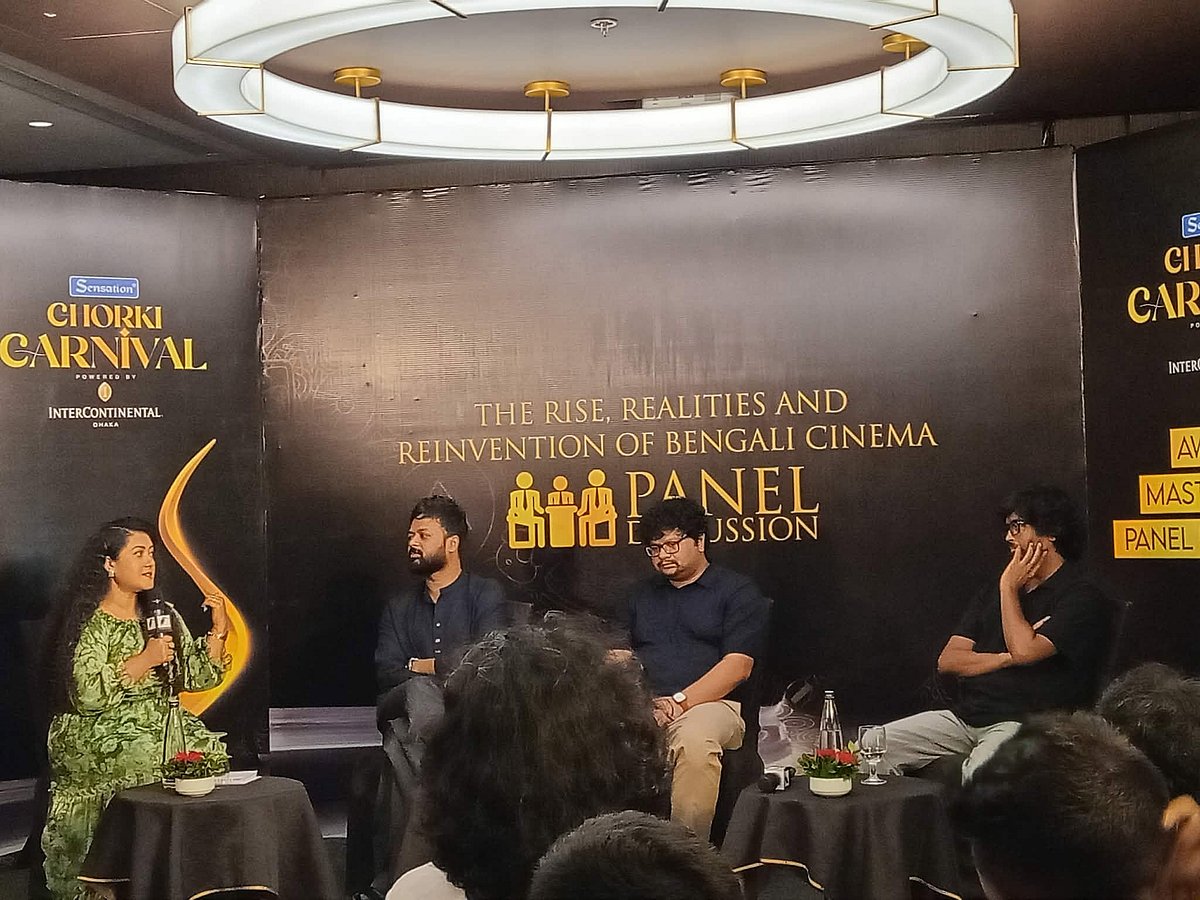
The relevance of three-hour-long feature films in the era of short-form video content like Facebook Reels and YouTube Shorts was a central topic at a panel discussion titled 'The Rise, Reality, and Reinvention of Bengali Cinema,' organized by Chorki in Dhaka.
Panelist Mezbaur Rahman Sumon argued that audiences will continue to watch longer films if they possess quality and depth, drawing parallels to viewers dedicating time to 8-12 episode web series. He emphasized that a content's strength lies in its inherent energy and honesty, not artificial twists. Sumon believes that genuine depth, whether visual or narrative, is crucial for audience engagement, and superficial attractions are insufficient to retain viewers. He stated that the length of a film is less important than its quality; a strong story, even if slow-paced, will hold attention for three hours, while a weak concept will fail to captivate for even five minutes.
Adnan Al Rajeeb added that viewers have numerous options and decide whether to invest time in a film based on its appeal. He noted that film pacing varies, and judging a movie solely on its speed is inaccurate. Rajeeb suggested that audiences typically decide within 10-15 minutes whether to continue watching. He proposed designing stories to draw viewers in from the beginning, perhaps with an earlier inciting incident, to enhance engagement without necessarily resorting to a fast pace. Nuhash Humayun also participated in the discussion, touching on topics including AI. Chorki CEO Redwan Roni expressed a desire for at least twenty more OTT platforms to operate in different genres, providing more opportunities for filmmakers and artists. The panel discussion was part of the Chorki Carnival, moderated by Sadia Khalid Riti.
The discussion highlights a critical tension between evolving audience consumption habits, driven by the prevalence of short-form digital content, and the traditional cinematic format. While proponents of longer films argue for the enduring power of quality storytelling, the reality of attention economy suggests that narrative design must adapt. Filmmakers face the challenge of captivating audiences within an increasingly compressed initial engagement window, necessitating innovative approaches to storytelling structure and pacing. The success of Bengali cinema in this new landscape may depend on its ability to blend artistic depth with the dynamic engagement strategies demanded by contemporary viewers, potentially exploring hybrid formats or refining narrative techniques to sustain interest across diverse viewing platforms.
AI-generated to prompt reflection — not editorial opinion, not advice, not a statement of fact. How this works.