Berlin plans housing on Hitler bunker site, sparking historical debate
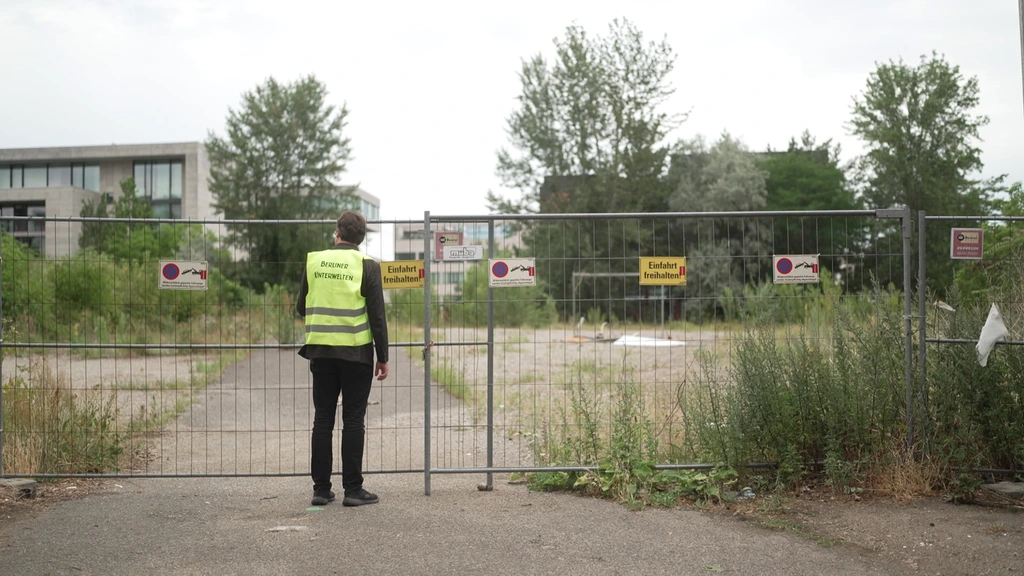
Berlin city officials are planning to construct 66 housing units on a vacant lot near tourist attractions like the Brandenburg Gate and Potsdamer Platz. The development faces a significant obstacle: the remnants of a bunker beneath the former New Reich Chancellery, Adolf Hitler's office, are located on the site. While the infamous Führerbunker was largely destroyed after the war, this section of the underground complex has survived. A Hamburg-based investor aims to demolish the bunker to facilitate the housing project. Historian Kay Heyne of Berliner Unterwelten, an organization that researches and opens underground structures, emphasizes the bunker's historical significance, noting that its rooms and entrances still exist. He advocates for preserving and opening the bunker to the public, arguing it tells a crucial story about the end of the war and Berlin's history. Heyne believes that leaving the site untouched could allow it to be appropriated by extremist groups, whereas presenting it in the correct historical context, potentially as a museum, would be more appropriate. He also points out that the bunker was used by ordinary citizens, offering multiple narratives. However, local councilor Christian Gaebler (SPD) opposes preserving the bunker for housing development, citing concerns that it might become a pilgrimage site for neo-Nazis. Heyne counters that proactive contextualization is the best defense against such misuse. Berliner Unterwelten is collaborating with the Holocaust Memorial foundation to propose a plan that would adapt the construction to preserve the bunker while still allowing for housing to be built above it, a solution Heyne believes is technically feasible.
The proposed housing development on the site of a Nazi-era bunker in Berlin highlights a recurring tension between urban development needs and the preservation of historical sites, particularly those associated with controversial pasts. While the city's housing shortage is a pressing concern, the historical and potentially symbolic value of the bunker warrants careful consideration. The debate over whether to preserve or demolish the structure reflects differing approaches to confronting historical memory: one that seeks to bury or redevelop over difficult legacies, and another that advocates for engagement and contextualization. The concern about the site becoming a neo-Nazi pilgrimage destination is a valid public safety consideration, but as historian Kay Heyne suggests, active historical interpretation and educational programming may be more effective in mitigating this risk than outright demolition. Future urban planning in such sensitive locations will likely require innovative architectural and curatorial solutions that balance contemporary needs with the imperative to learn from history.
AI-generated to prompt reflection — not editorial opinion, not advice, not a statement of fact. How this works.