Berlin's Echoes: A Return to the City Where History Was Made
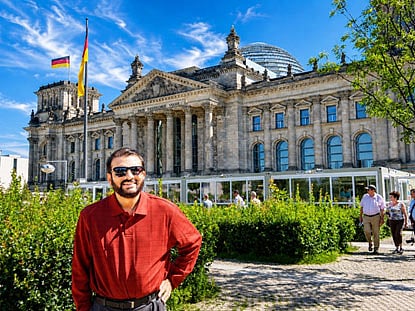
Returning to Berlin in July 2012, the author, a professor and researcher from Emory University in Atlanta, felt a profound connection to the city beyond that of a mere visitor. This visit coincided with his presentation at an international conference by the International Society for Eye Research (ISER). While the modern city exuded vibrancy with its blue skies, green trees, and lively cafes along the Spree River, the author perceived a deeper, more complex history beneath the surface. He recalled Berlin as it was thirty years prior: a divided, anxious city shadowed by fear, a stark contrast to the bustling tourist destination of 2012. The Brandenburg Gate, a site of historical significance and a symbol of Prussian royalty, served as a focal point for these reflections. The author stood in quiet contemplation amidst the crowds of tourists, photographers, and souvenir vendors, his mind transported to a time when the Berlin Wall stood where this monument to reunification now thrives. He vividly remembered the wall as a cruel barrier that not only divided a city but also a nation, separating people of the same language and culture due to political ideologies. The gate, once a silent witness to division, transformed into a symbol of reunion following the wall's fall in 1989, becoming a site of celebration and freedom.
The author's narrative powerfully illustrates how physical and political barriers, like the Berlin Wall, can profoundly impact human connection and national identity. While the fall of the wall in 1989 marked a significant geopolitical shift, the lingering effects on collective memory and individual experience are evident. The technological differences in railway gauges between Eastern and Western Europe, requiring physical reconfiguration of trains, serve as a tangible metaphor for the infrastructural and systemic divides that characterized the Cold War era. This highlights how political decisions necessitate complex, often cumbersome, adaptations in everyday life and infrastructure, shaping societal interactions for decades. The author's personal journey underscores the enduring human desire for connection and the transformative power of overcoming imposed divisions, offering a perspective on how historical legacies continue to inform present-day realities and future reconciliation efforts.
AI-generated to prompt reflection — not editorial opinion, not advice, not a statement of fact. How this works.