Beyond Dollhouses: The Enduring Importance of Architectural Models
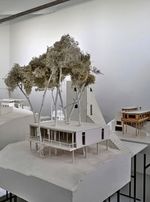
Architectural models are far more than simple miniature representations; they serve as indispensable tools in the field of architecture. An ongoing exhibition highlights the enduring value of constructing models of famous buildings, demonstrating why this practice remains one of the most effective teaching methods available. These models offer a tangible, three-dimensional understanding of spatial relationships, structural integrity, and aesthetic principles that can be difficult to grasp from two-dimensional drawings or digital renderings alone. They allow architects and students to explore design concepts, test different materials, and visualize the final product in a way that fosters deeper comprehension and innovation. The exhibition aims to showcase the evolution of architectural modeling, from early, simpler forms to sophisticated contemporary techniques, emphasizing its crucial role in both education and professional practice. By physically recreating iconic structures, designers gain invaluable insights into the challenges and successes of past architectural achievements, informing future design decisions. This hands-on approach cultivates a nuanced appreciation for scale, proportion, and the interplay of form and function. Ultimately, the exhibition underscores that architectural models are not merely decorative objects but essential instruments for learning, communication, and creative problem-solving in the architectural world.
The enduring relevance of physical architectural models, even in an increasingly digital design landscape, suggests a fundamental human need for tangible representation and spatial reasoning. While Building Information Modeling (BIM) and virtual reality offer powerful visualization tools, the tactile experience of constructing and interacting with a physical model can foster a deeper, intuitive understanding of form, scale, and material properties. This exhibition implicitly raises questions about the balance between digital efficiency and the pedagogical benefits of analog methods. Future architectural education and practice may benefit from integrating both approaches, leveraging digital tools for broad exploration and rapid iteration, while retaining physical modeling for critical analysis, client communication, and the development of spatial intelligence. The long-term value proposition of physical models lies in their ability to facilitate a holistic design process that engages multiple cognitive and sensory pathways, potentially leading to more robust and contextually sensitive designs.
AI-generated to prompt reflection — not editorial opinion, not advice, not a statement of fact. How this works.