Beyond Elections: Urgent Need for Democratic Reform of Constitution and State, Says Minister
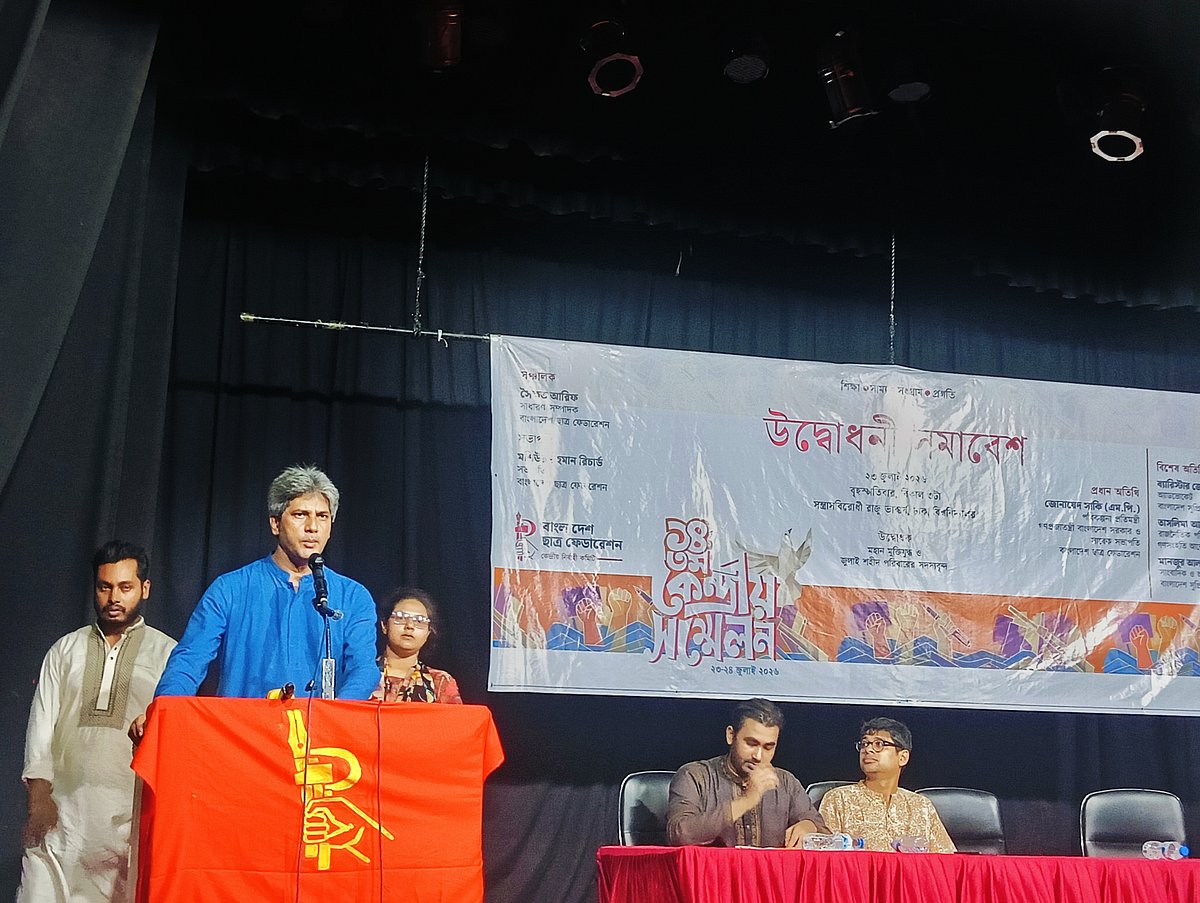
Planning Minister Junaid Saki stated that the "July popular uprising" in 2024 has created an opportunity to initiate a new journey for democracy in Bangladesh. He emphasized that seizing this chance requires completing the democratic transformation of the state's authoritarian power structure and undertaking national reconstruction. Saki, speaking as the chief guest at the inauguration of the 14th central conference of the Bangladesh Students' Federation at Dhaka University's TSC auditorium, asserted that democratic reform of the constitution and the state's power framework is crucial, not just elections. He drew parallels between the current opportunity and past struggles, including the 1971 Liberation War and the 1990 uprising, highlighting that the sacrifices of those who died in the July uprising have overcome public fear and paved the way for the downfall of fascism. The minister alleged that since independence, the state has been managed to centralize power within a single group, weakening democracy and turning the state into an instrument for group interests rather than public welfare. He further accused the Awami League government of damaging the economy through political repression, emptying banks, destroying the financial sector, money laundering, and widespread looting. Saki connected political fascism with economic plunder, arguing that a democratic state system is necessary for economic justice. He urged students to remain vigilant against any new extremist or divisive forces seeking to undermine the gains of the July uprising, warning against those who divide people in the name of nationalism or identity politics. He noted that a 31-point program for state reform, repair, and transformation has been developed by integrating the 14 points of the Gono Shonghoti Movement, the 14 points of the Gono-tantra Mancha, and the 27 points of the BNP. This program forms the basis of the anti-fascist movement and national reconstruction. Saki also mentioned the "July National Charter" as a result of efforts to build national consensus after August 5th, with unresolved issues to be decided by public vote. The goal, he clarified, is not anarchy but constitutional reform through parliament, building a production-oriented economy, increasing employment, and investing in education, health, housing, and social security. He stressed the need for justice for the "July genocide and killings" but cautioned against vengeful politics, urging vigilance against attempts to spread hatred, division, and extremism.
The Planning Minister's call for democratic reform extends beyond electoral processes, highlighting a perceived systemic issue of centralized power and group interest overriding public welfare in Bangladesh. This perspective suggests that historical governance patterns have concentrated authority, leading to economic exploitation and weakening democratic institutions. The minister's framing of recent events as a "popular uprising" and the subsequent call for national reconstruction and constitutional reform indicates a strategic effort to leverage popular sentiment for structural change. The analysis points to a potential conflict between existing power structures and the proposed reforms, with the success of such initiatives likely depending on broad political consensus and the ability to counter divisive forces. The emphasis on economic justice alongside democratic reform suggests a recognition of the interconnectedness of political and economic systems in achieving national development goals.
AI-generated to prompt reflection — not editorial opinion, not advice, not a statement of fact. How this works.