Beyond Memorization: Fostering Critical Thinking in Education
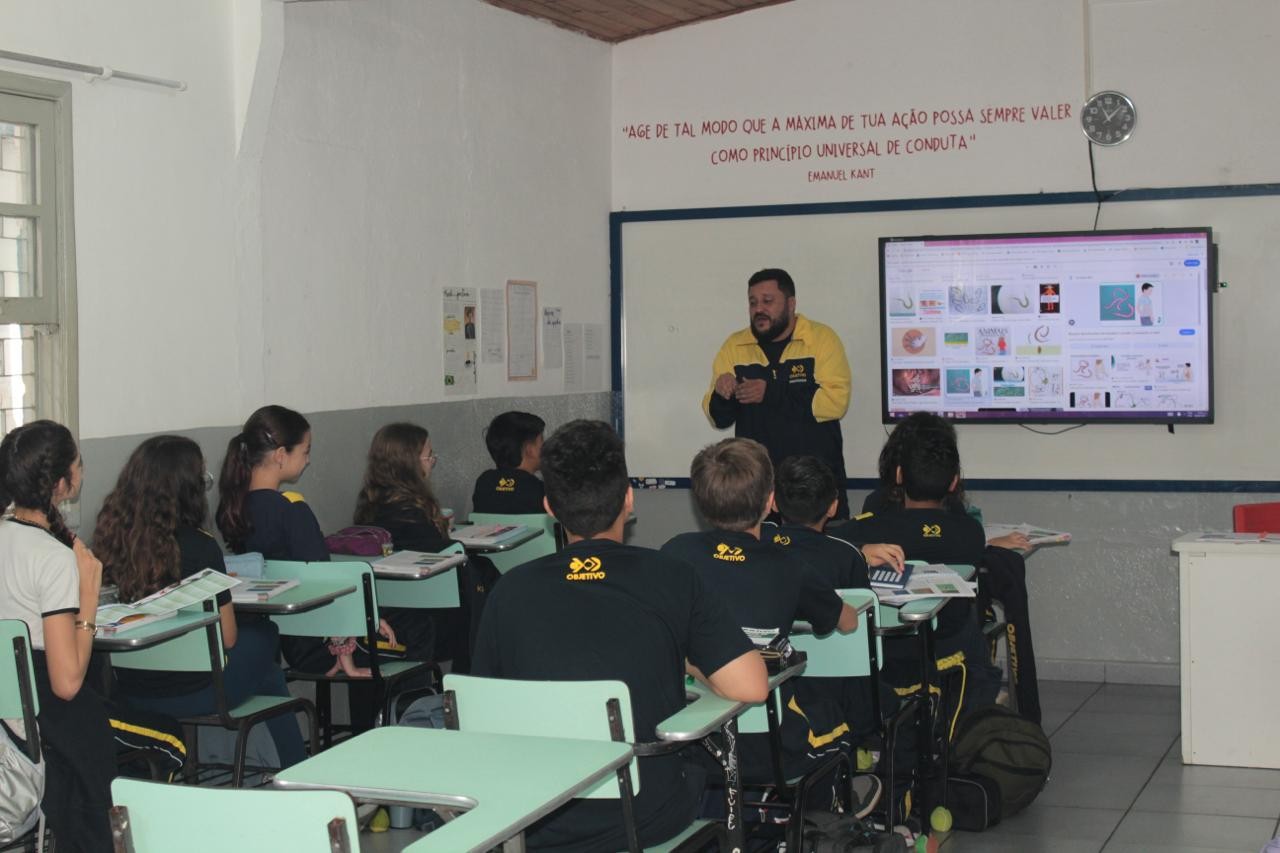
In an era of instant information access and AI integration, the focus of education must shift from mere memorization to deeper understanding and critical thinking. Families and educators are urged to consider whether children are being taught to simply recall facts or to develop the ability to analyze, relate ideas, and solve complex problems. While memory is a component of learning, true comprehension is demonstrated when students can explain concepts in their own words, connect them to other knowledge, and apply them to new challenges. Good grades are an indicator, but a child who truly understands a subject will ask questions, relate it to daily life, explain their reasoning, and use the knowledge in novel situations. Learning that relies solely on memorization risks information being forgotten shortly after assessment, highlighting the importance of engaging with the learning process beyond just grades. The Escola EMAK's pedagogical approach emphasizes developing students who can comprehend, argue autonomously, solve problems, and use knowledge consciously and responsibly, fostering meaningful learning through connections, explanations, and application.
Mistakes are acknowledged as a crucial part of education, offering opportunities for learning when approached with proper guidance. Instead of viewing errors as failures, analyzing them helps students develop resilience, perseverance, and flexibility by understanding that finding the right answer may require multiple attempts and reflection. In an increasingly complex society, the ability to argue and justify opinions is vital. Dialogue and idea exchange, as promoted at Escola EMAK, cultivate critical thinking and communication skills, teaching students to defend their views respectfully and consider diverse perspectives. Active student participation, through questioning, investigation, and problem-solving, deepens learning, with teachers acting as facilitators who create challenging situations and guide reflection. Problem-solving itself is central, equipping students with analytical, planning, and strategic revision skills essential for academic, personal, and professional life, especially as technology automates information-based tasks. Families can support this by encouraging children to think through problems, research, and explain their reasoning, rather than immediately providing answers, thereby fostering autonomy and a stronger connection to learning.
The contemporary educational paradigm faces a critical inflection point, driven by technological advancements that automate information recall. Traditional pedagogical models, heavily reliant on memorization, are becoming increasingly insufficient for preparing students for a future demanding adaptability and complex problem-solving. The emphasis on critical thinking, argumentation, and understanding over rote learning reflects a necessary systemic shift. Educational institutions and families must therefore re-evaluate assessment methods and teaching strategies to cultivate these higher-order cognitive skills. Failure to adapt risks creating a generation ill-equipped to navigate a rapidly evolving world where human ingenuity, creativity, and analytical prowess will be paramount, potentially exacerbating societal inequalities based on access to truly empowering education.
AI-generated to prompt reflection — not editorial opinion, not advice, not a statement of fact. How this works.