Beyond 'Sit Less, Move More': A Simple Office Habit to Combat Fatigue
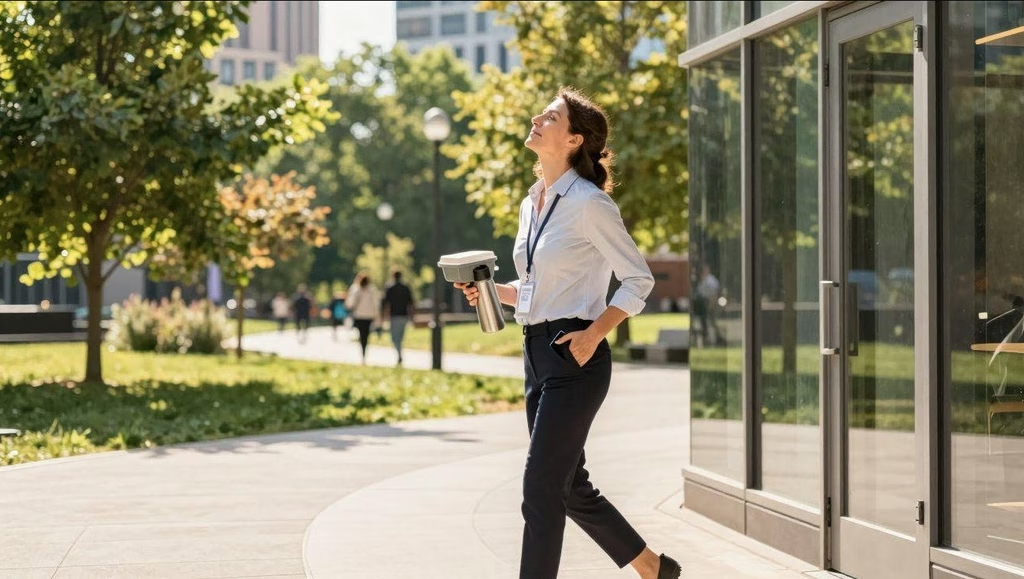
Most adults in the United States spend a significant portion of their day seated, whether at their desks, on couches, or driving. Scientific research has established a link between prolonged sedentary behavior and increased risks of chronic diseases, worsened mental health, and premature death. However, the common advice to 'sit less, move more' has not proven consistently effective in practice. This suggests that a more nuanced approach is needed to address workplace fatigue and the health implications of sedentary lifestyles. The article implies that a specific, simple habit can overcome office fatigue without consuming valuable time. While the full details of this habit are not provided in the excerpt, it is presented as a practical solution for individuals struggling with energy levels during the workday. The focus is on finding an efficient strategy that integrates seamlessly into a busy schedule, offering an alternative to the often-difficult directive of increasing physical activity during work hours. This approach acknowledges the realities of modern work environments and seeks to provide actionable advice for improving well-being.
The prevalent sedentary nature of modern work environments poses significant public health challenges, contributing to chronic disease and reduced well-being. While the directive to 'sit less, move more' is intuitively sound, its practical implementation in demanding professional settings is often constrained by time and logistical barriers. This highlights a systemic challenge in aligning individual health goals with occupational demands. Future workplace design and policy may need to explore integrated solutions that embed micro-breaks or movement opportunities seamlessly into the workday, rather than relying on voluntary, time-intensive physical activity. The effectiveness of such strategies will depend on their ability to demonstrably reduce fatigue and improve cognitive function without imposing undue burdens on employees or employers, thereby fostering a more sustainable and health-conscious work culture.
AI-generated to prompt reflection — not editorial opinion, not advice, not a statement of fact. How this works.