Bilawal Bhutto-Zardari Advocates for Dialogue to Resolve Balochistan's Issues
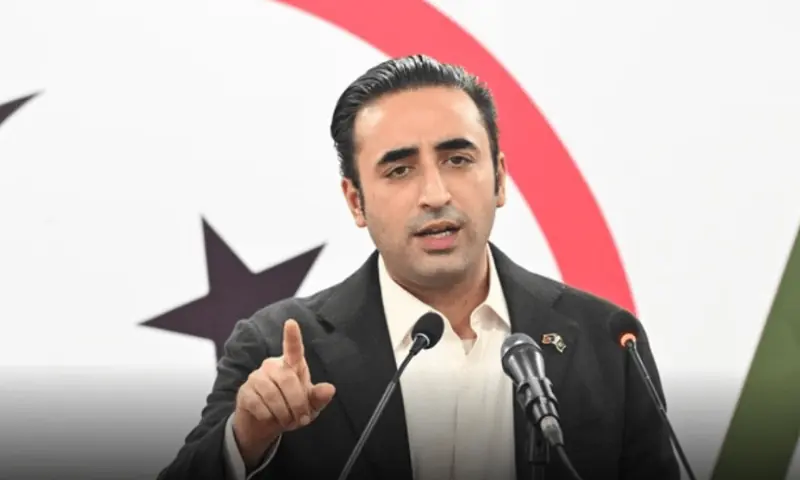
Pakistan Peoples Party (PPP) Chairman Bilawal Bhutto-Zardari has emphasized that political dialogue is the sole viable path to resolving the complex issues in Balochistan. He stated that the PPP supports constructive engagement with all political factions, irrespective of their position in government or opposition. Bhutto-Zardari reiterated the party's firm stance against terrorism, affirming their commitment to stand with state institutions and the public in combating militancy. These statements were made during a meeting with Balochistan Chief Minister Sarfraz Bugti in Islamabad on Saturday, July 19th, 2026. Chief Minister Bugti informed Bhutto-Zardari about the government's initiatives to aid families impacted by the Ziarat tragedy, including the establishment of a judicial fact-finding commission to investigate the incident at the families' request. The provincial government plans to convene a multiparty conference soon, inviting both parliamentary and non-parliamentary political parties to develop a joint strategy for peace and stability in Balochistan. Bhutto-Zardari also paid tribute to security personnel martyred in recent terrorist attacks and expressed solidarity with their families. He commended Chief Minister Bugti's efforts in addressing grievances and facilitating a peaceful resolution to a recent protest, also acknowledging the role of opposition parties in the successful dialogue process.
The call for dialogue in Balochistan reflects a recurring strategy to address regional instability, focusing on political engagement as a means to de-escalate conflict. The emphasis on inclusivity, inviting both parliamentary and non-parliamentary groups, suggests an acknowledgment of the need to incorporate diverse perspectives for sustainable peace. However, the effectiveness of such initiatives often hinges on the genuine empowerment of local communities and addressing underlying socio-economic grievances, which are complex and long-standing. The commitment against terrorism, while necessary, must be balanced with a political approach that does not alienate segments of the population. Future success will likely depend on the implementation of concrete policies that foster development and ensure equitable resource distribution, moving beyond symbolic gestures to systemic change within the next decade.
AI-generated to prompt reflection — not editorial opinion, not advice, not a statement of fact. How this works.