Binary Stars' Fatal Embrace Creates Unusual Supernova, Solving Cosmic Mystery
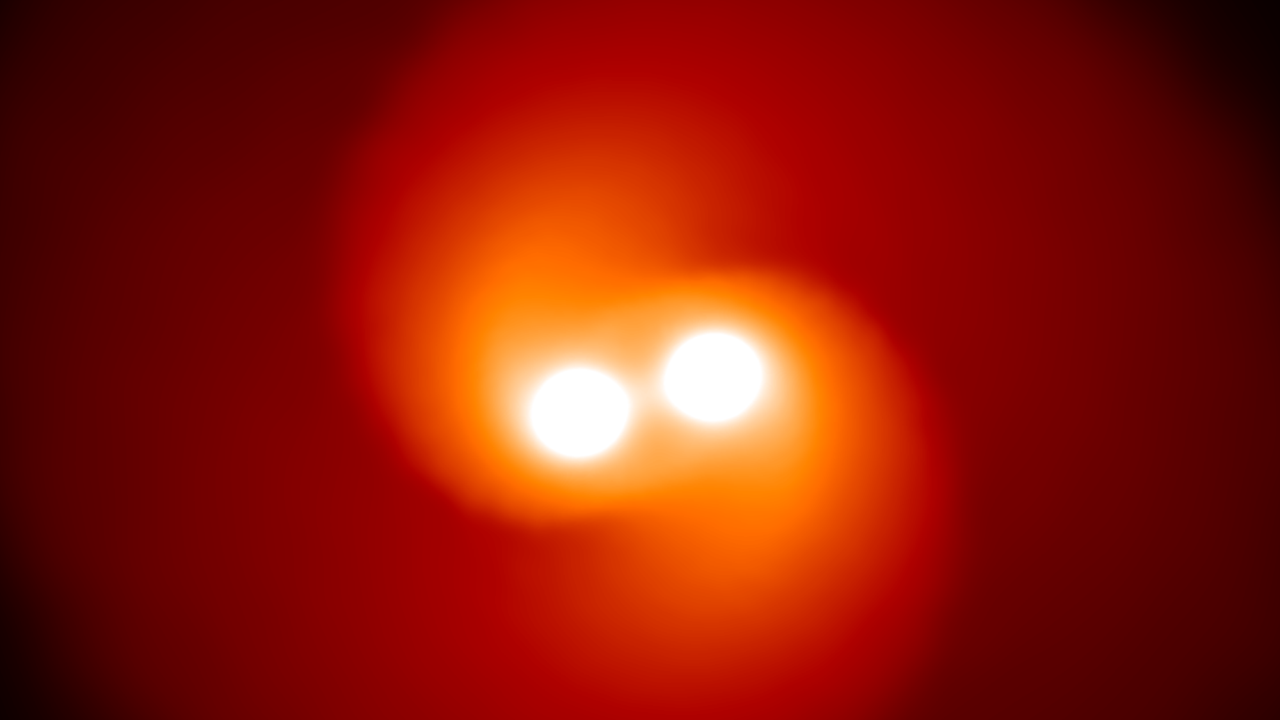
The death throes of some stars are not solitary events, offering a potential solution to a long-standing enigma surrounding a specific category of cosmic explosions known as interacting supernovae. This phenomenon involves the dramatic interaction between binary star systems as they reach the end of their lifecycles. The gravitational dance and eventual merger or destruction of one star by another can trigger a unique type of supernova. Scientists have long sought to understand the origins of these interacting supernovae, which differ from more common stellar explosions. The proposed mechanism suggests that the close proximity and intense gravitational forces within a binary system are key factors. As one star evolves and expands, it can be stripped of its outer layers by its companion. This interaction can lead to a more energetic or differently characterized explosion when the core eventually collapses. The study of these events provides valuable insights into stellar evolution and the diverse ways stars can meet their end. Understanding these rare supernovae also helps astronomers refine models of the universe and the processes that shape it.
The observation of interacting supernovae in binary star systems highlights the complex gravitational dynamics that govern stellar evolution. This finding offers a more nuanced understanding of stellar death, moving beyond solitary collapse models. The research suggests that the prevalence and characteristics of certain supernova types may be significantly influenced by the presence and orbital parameters of companion stars. Examining these interactions can provide crucial data for refining astrophysical models, particularly concerning the distribution of heavy elements and the cosmic star formation rate. Future research could focus on identifying more such binary systems and correlating their properties with observed supernova events to further validate this hypothesis and its implications for galactic chemical evolution.
AI-generated to prompt reflection — not editorial opinion, not advice, not a statement of fact. How this works.