Binary Stars Identified as Key to Prolonged Supernova Brightness
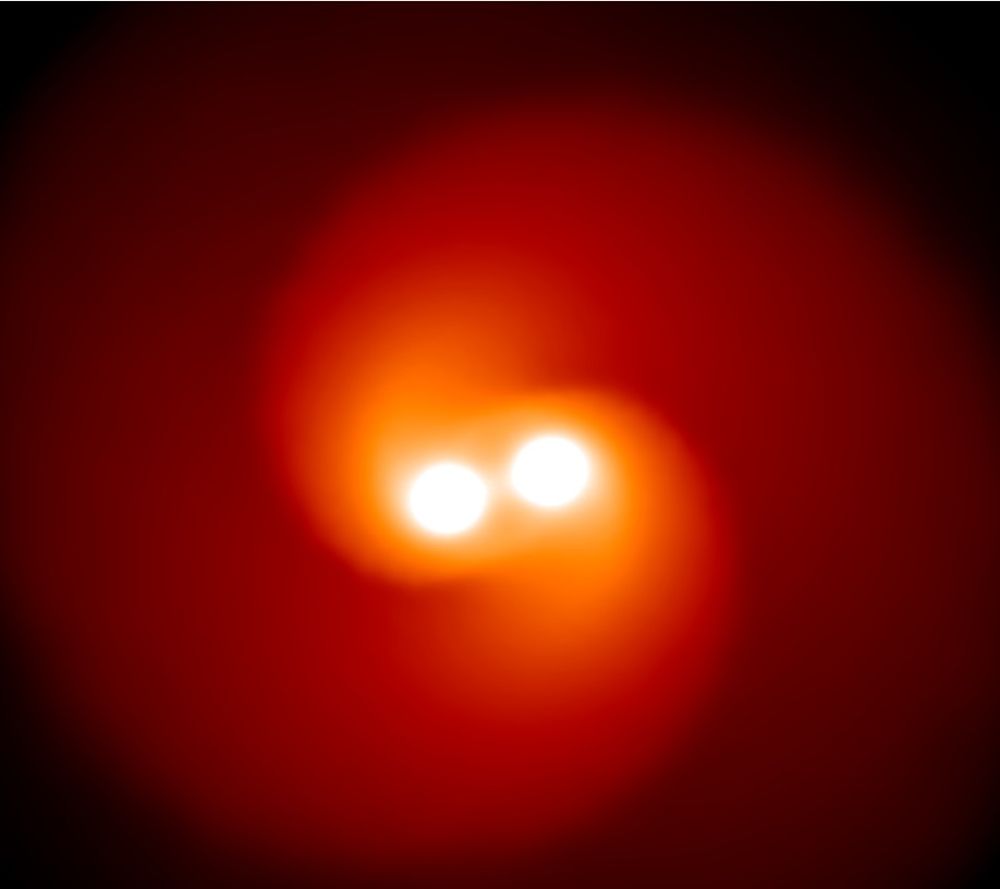
Astrophysicists have identified binary star systems as the likely cause for supernovae that remain luminous for extended periods. When a massive star nears the end of its life, it typically explodes as a supernova, a phenomenon that can illuminate the night sky for several months. However, certain supernovae exhibit unusually long-lasting brightness, a puzzle that has long intrigued researchers. The latest findings suggest that in binary systems, one star ejects material shortly before its companion's explosive demise. This ejected material forms a dense cocoon of circumstellar medium around the dying star. This cocoon then interacts with the supernova's shockwave, significantly prolonging the visible light emission.
This research reframes the understanding of supernova luminosity by highlighting the crucial role of binary star interactions. The presence of a companion star, and its pre-explosion mass ejection, introduces a variable that influences the observable duration of a supernova event. This finding has implications for astrophysical modeling, suggesting that future simulations must account for the complex dynamics of binary systems to accurately predict supernova behavior. The extended brightness may offer new opportunities for studying the composition and evolution of stellar remnants, providing a longer observational window for scientific inquiry.
AI-generated to prompt reflection — not editorial opinion, not advice, not a statement of fact. How this works.