Biologist Explains Tick Infestation on Yellow Anaconda
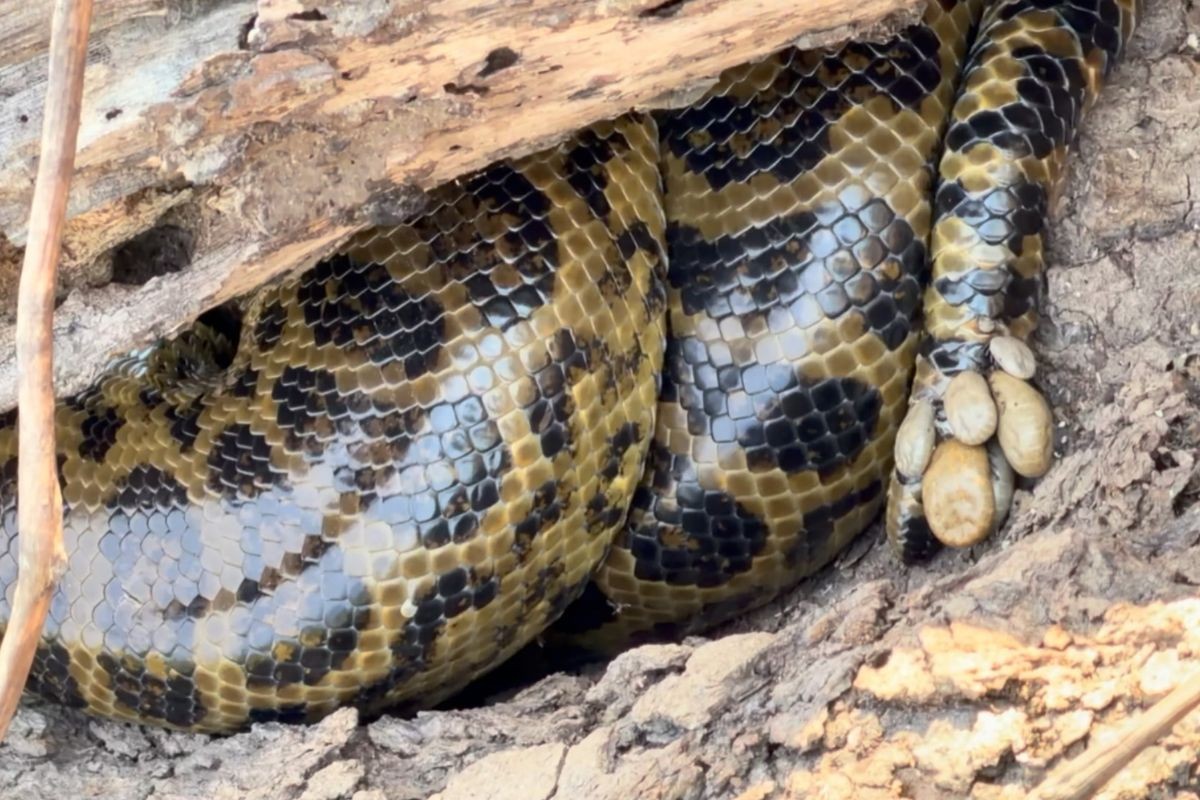
A viral video showing a yellow anaconda heavily infested with ticks has surprised many viewers. Biologist Henrique Abrahão explained that while alarming, this is a natural phenomenon for snakes. Ticks typically attach to areas with thinner scales to feed, and the snake likely remained out of water for an extended period, facilitating the infestation. Yellow anacondas, being semi-aquatic, can shed some ticks by staying submerged for long durations. The snake's shedding of skin also helps remove many attached parasites. While a few ticks pose little risk, a heavy infestation, as seen in the video, can lead to injuries, blood loss, and severe infections. The video was recorded by guide Zé Mineiro in the Pantanal region. The yellow anaconda, smaller than the green anaconda, is non-venomous and kills prey by constriction. It typically measures 2.4 to 4.6 meters and weighs around 30 kilograms, with females being larger than males. This species inhabits swamps and marshes, but can also be found in forests and caves, preying on birds, eggs, fish, reptiles, small mammals, and occasionally larger animals like deer and capybaras.
The viral spread of the yellow anaconda video highlights public fascination with wildlife and natural phenomena, even when those phenomena involve parasites. The biological explanation provided by the expert de-dramatizes the event, framing it as an interaction governed by the snake's behavior and environment, specifically its time spent out of water. This incident underscores the ecological pressures faced by wild animals, where factors like prolonged drought or altered habitats could exacerbate such infestations, potentially impacting animal health and survival. Understanding these dynamics is crucial for conservation efforts, as it reveals how environmental changes can directly affect individual animals and, by extension, populations.
AI-generated to prompt reflection — not editorial opinion, not advice, not a statement of fact. How this works.