Birth Order Linked to Disease Risk Across Human Traits
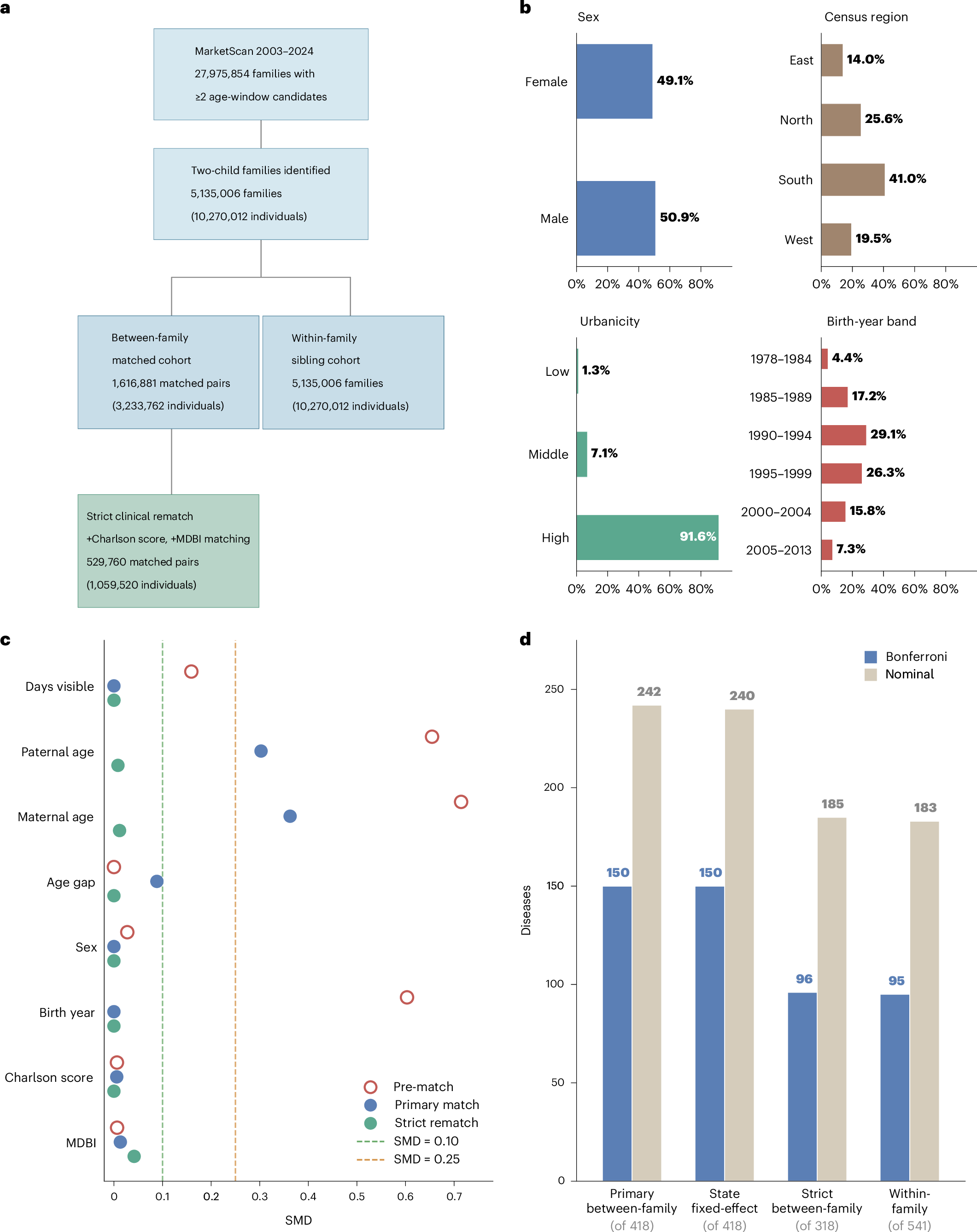
A comprehensive study has explored the relationship between birth order and the risk of developing various diseases across the human phenome. The research analyzed how being the firstborn, middle child, or lastborn might influence an individual's susceptibility to a wide range of health conditions. This investigation aimed to uncover potential biological or environmental mechanisms that could explain these associations. The findings suggest that birth order is not merely a demographic factor but may have subtle, yet significant, implications for long-term health outcomes. Researchers considered a broad spectrum of diseases, from common ailments to rarer conditions, to provide a holistic view of the impact. The study's methodology likely involved large datasets to ensure statistical power and the identification of robust correlations. Understanding these links could inform public health strategies and personalized medicine approaches. Further research is anticipated to delve deeper into the specific pathways through which birth order exerts its influence.
This research investigates the potential influence of birth order on disease susceptibility, a factor that could be mediated by prenatal conditions, early childhood environments, or epigenetic modifications. Examining this demographic variable across the entire human phenome offers a novel lens for understanding health disparities. The study's findings may highlight subtle, long-term effects of early life experiences, prompting a re-evaluation of how societal structures and family dynamics interact with biological predispositions. Future implications could involve refining risk assessments for certain conditions and exploring interventions that mitigate potential negative impacts associated with specific birth orders, particularly in the context of evolving family structures and increasing parental age.
AI-generated to prompt reflection — not editorial opinion, not advice, not a statement of fact. How this works.
