Bison Tosses Tourist 8 Feet in the Air During Yellowstone Attack
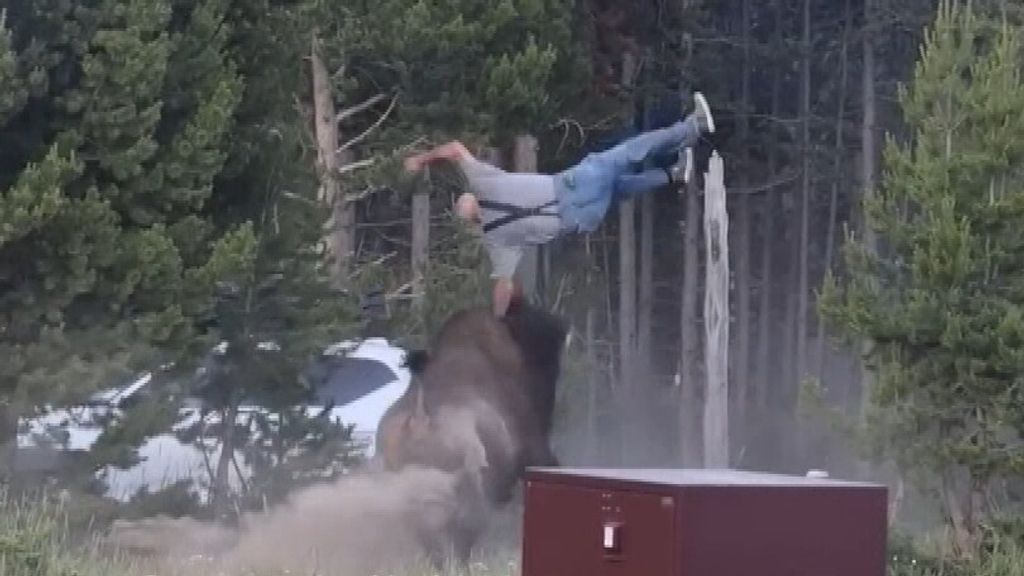
A tourist sustained severe injuries in Yellowstone National Park on Friday evening after being violently tossed approximately 2.5 meters (8 feet) into the air by a bison. The man was gored by the bull's horn and landed on his side. The incident occurred at a campsite within the renowned park in Wyoming. Photographer Mike MacLeod, from Montana, captured the attack on video and reported that the bison appeared agitated and aggressive towards people and objects. MacLeod observed the bison charging at a white pickup truck, which drove away, and then turning towards the area where the injured man and his grandson had sought cover behind trees. Although the grandson managed to escape, the older man was pursued and gored by the bison's left horn near his hip. MacLeod intervened by running towards the bison to distract it, with other bystanders joining in, eventually causing the animal to retreat. Emergency services then attended to the injured man, whose grandson later informed MacLeod that he was in critical condition with serious injuries. MacLeod believes visitors maintained a safe distance and warned each other about the bison's presence. He suggested that the annual bison rut, occurring between June and September, may have contributed to the animal's aggressive behavior as males compete for dominance. This marks the second bison-related injury in Yellowstone within a few weeks, following an incident on June 26 where a 12-year-old child was injured.
This incident highlights the inherent risks of wildlife encounters in protected natural areas and underscores the critical importance of adhering to park safety guidelines. While the photographer suggests visitors maintained distance, the bison's aggressive behavior, potentially exacerbated by its rutting season, indicates a complex interplay of animal instinct and environmental factors. The park service's recommendation of maintaining at least 20 meters distance and recognizing warning signs is crucial for mitigating such events. Future management may need to consider enhanced monitoring of animal behavior, particularly during peak seasons, and potentially more robust visitor education strategies to prevent future conflicts. The long-term challenge lies in balancing public access and enjoyment of these unique ecosystems with the imperative of ensuring both human and animal safety, especially as visitor numbers continue to grow.
AI-generated to prompt reflection — not editorial opinion, not advice, not a statement of fact. How this works.